
All guides and recommendations
Best swim mesh bags – Our recommendations in 2026

A swimming snorkel is one of the absolute best tools to use when you want to improve and maintain your swimming technique. That applies to both your arm stroke and the often-overlooked kick technique.
Even so, the snorkel is an often-overlooked piece of swimming gear for beginners, and even for some more experienced swimmers and triathletes.
I frequently use a swimming snorkel in my own swim training. And in this guide, I’ll tell you why—and why you should use one too. On top of that, I’ll also share how you can use a snorkel in your own training, how to choose the right one, and which snorkels we recommend based on experience, customer reviews, and insights from Watery.
Specifically, in this guide I’ll cover:
Let me also make it clear that to get the most out of your technique training with a snorkel, you need dedicated swimming snorkels designed for swim training. A diving snorkel won’t work properly for a swimmer’s needs.
 Best for fitness/competitive training (16+ years)
 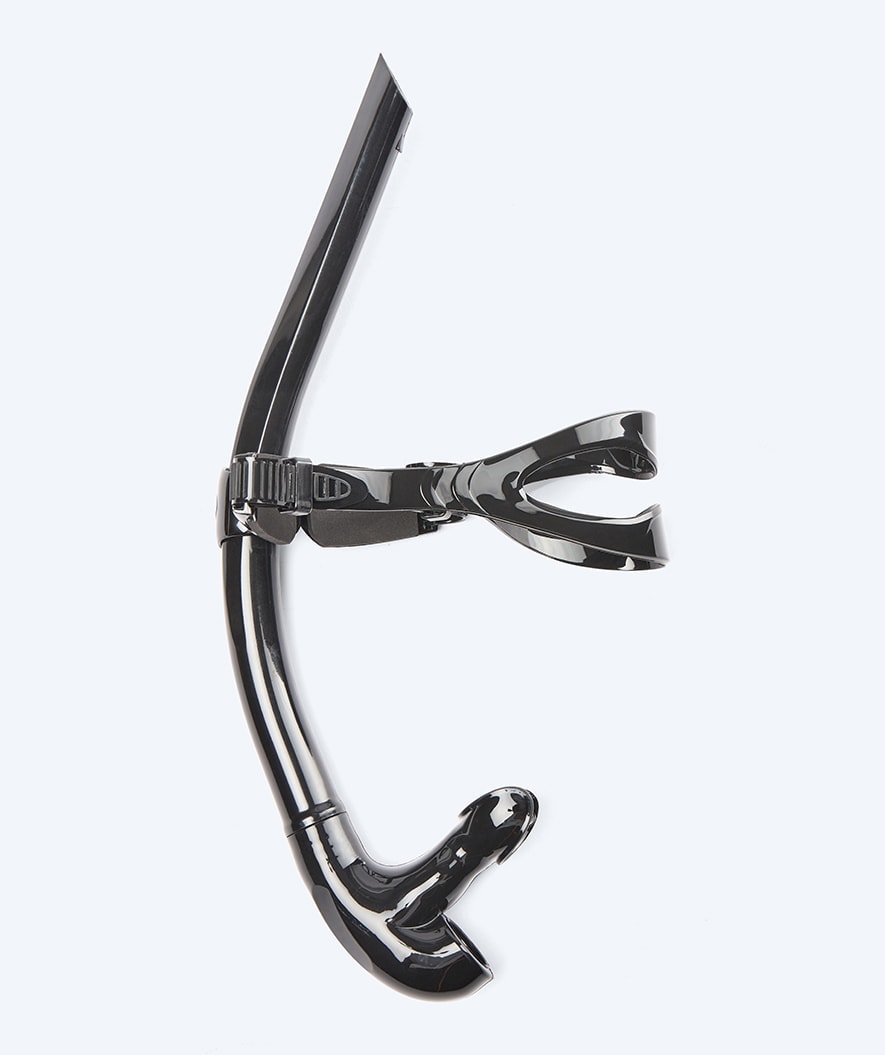 THE BEST FOR ADULTS (+16 YEARS)
 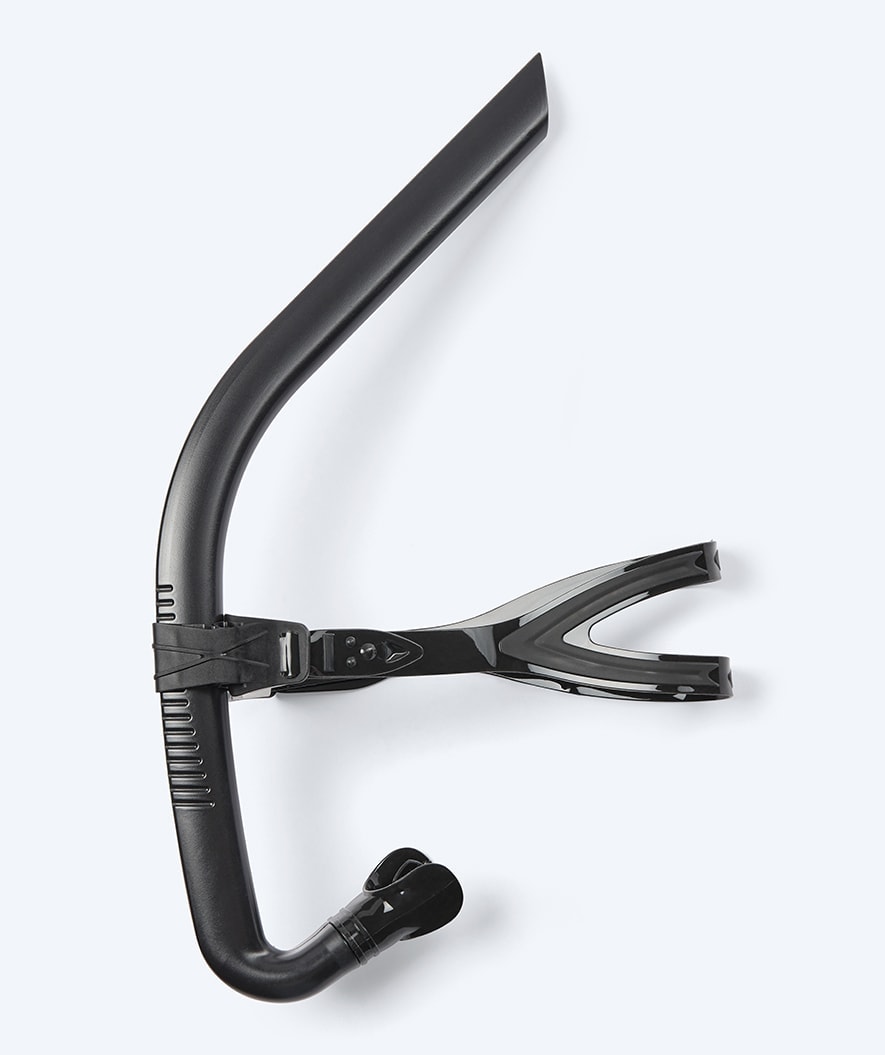 Best for fitness/competitive training (under 16 years)
 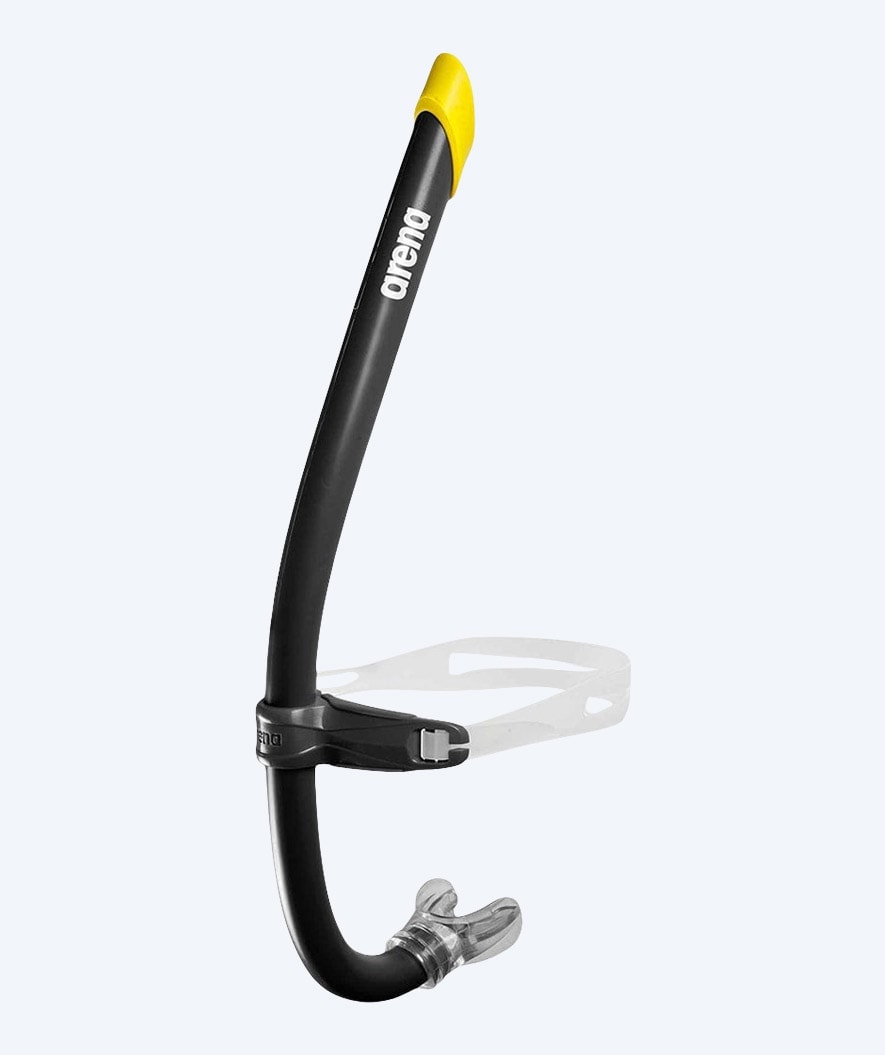 Watery centre snorkel for kids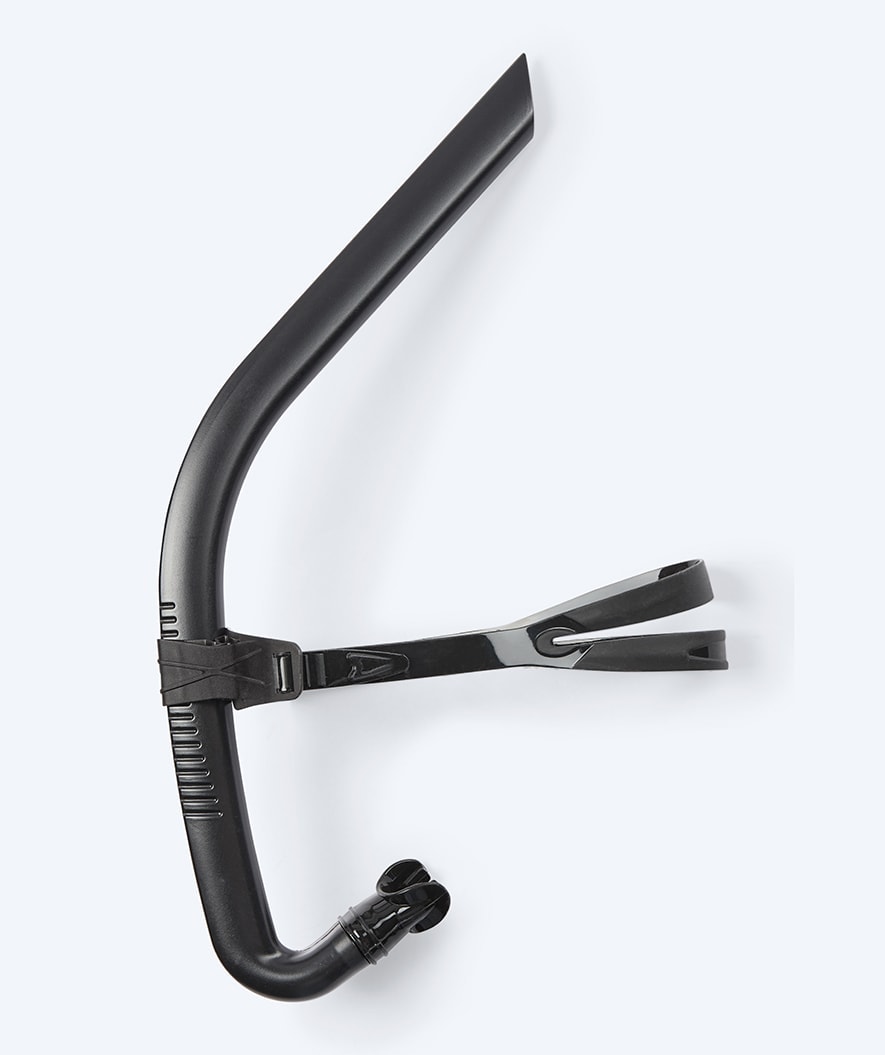
With the plan for this guide set, I’ll start by explaining who needs a swimming snorkel in their training. And the answer is simple: every swimmer and triathlete who wants to improve and maintain their swimming technique.
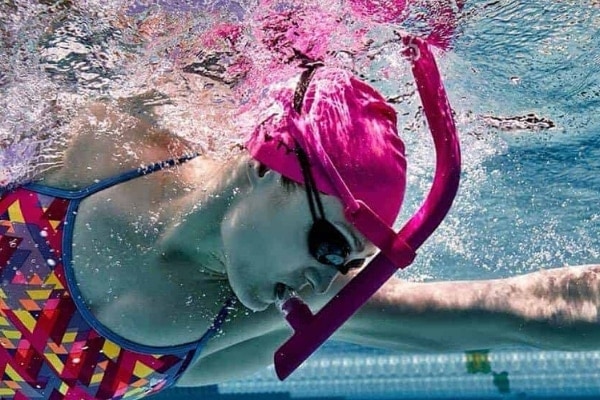
Whether you’re a beginner, experienced, an elite athlete, or even a pro, the snorkel helps you keep full focus on your specific technique work in the water.
The biggest obstacle when learning and focusing on new techniques is breathing. With a snorkel, you take the breathing element out of the equation so you don’t run out of breath and break your technique by turning your head to the side to breathe.
There’s no doubt that swimming with a snorkel takes a bit of getting used to. I had to swim quite a few times with the snorkel in my mouth before I got used to breathing through it without taking in water.
But once I got past those first few almost nightmarish tries with my snorkel, I could clearly feel a difference in how I performed my technique drills. And I’m sure you will too.
So whatever your swimming level, you’ll get a huge amount out of using a snorkel during part of your technique work.
As I briefly mentioned in the previous section, the snorkel serves one big and important purpose: removing the breathing element from your technique work. The snorkel allows you to keep your head in the correct position for longer, without having to turn it to the side to breathe.
Breathing is a real rhythm killer, and you often tend to lose a bit of balance when turning your head to the side. You completely avoid this with a snorkel in your mouth, so you can focus 100 per cent on your technique.
That’s why a swim snorkel is one of the absolute most essential tools when you want to improve your technique.
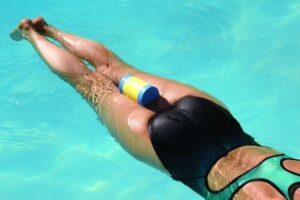
What’s more, the snorkel can be used for both leg and arm training. Arm training is often done in shorter sets with a snorkel in your mouth and a pull buoy between your legs to take your legs out of the technique equation as well.
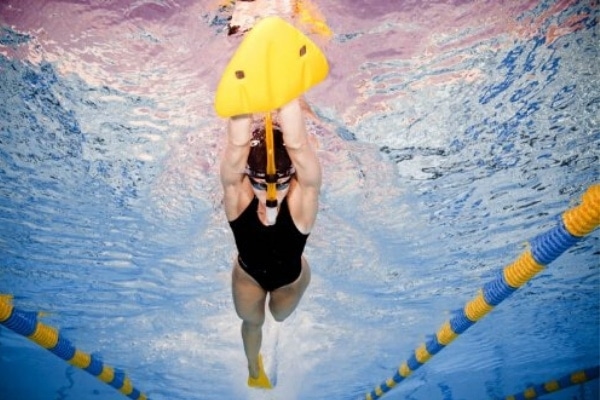
This allows you to focus fully on your entire arm cycle. That means your entry, catch, pull, finish and recovery.
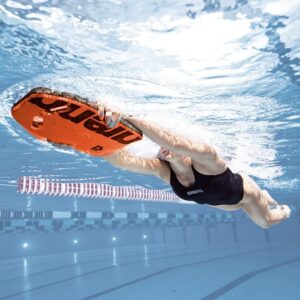
For leg training, the snorkel is used with a kickboard, where you hold the board out in front of your head with outstretched arms. Just like standard kick sets. With a snorkel, you once again remove the breathing element, so you don’t have to lift your head to breathe.
By keeping your head down throughout your leg training, you’ll maintain a much more natural body position in the water. Quite simply, your legs won’t sink when you have to come up for air. This helps you improve your kick technique in the exact same position you normally swim in.
You can also add training fins to get a better feel for the movement in your legs.
Some sets – whether focusing on arms or legs – might just be 25 metres at a time, while others can be up to 100 metres. The main point is that you should be able to hold the most natural position in the water without breaking your rhythm.
In short, that’s exactly what the snorkel helps you with: training your technique without interruptions to your rhythm.
Now we’ve established why a snorkel is so great to use and why you should use one too. So it’s time to figure out which snorkel is the right one for you.
There are a few different types, each with their own pros and cons. And I’ll go through them here.
If you’ve already had a look at the snorkel market, you might have noticed that some models have a swivel head bracket while others don’t. But which one should you choose?
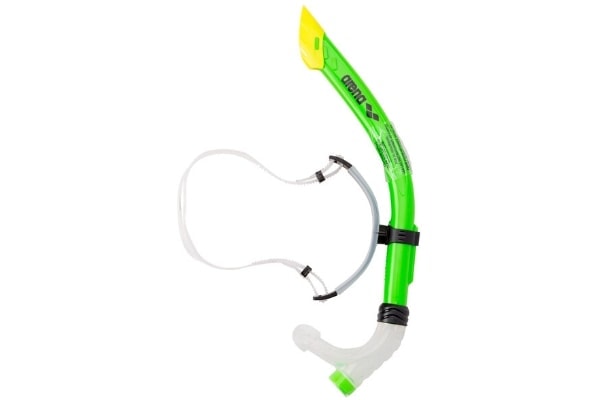
My answer is that it’s mostly a matter of personal preference. Naturally, the swivel head bracket has the advantage of making it easier to move the snorkel away from your mouth when you’re chatting with your coach on the edge.
However, it’s not something I personally think too much about. If the head bracket doesn’t rotate, I just tilt the mouthpiece out beside my cheek. But it’s certainly a handy feature when the head bracket can rotate.
As a general rule, it’s only Arena’s snorkels that have a swivel head bracket, while other snorkels, such as this popular model from MP, do not.
You might not think so, but the weight of a swim snorkel can actually make a difference to how it feels to use. Even though you’re practically weightless in the water.
Among other things, a lightweight snorkel makes it easier to do tumble turns. It also feels more natural to swim with, as you barely notice it’s there.
A snorkel in the lightweight category is, for example, this TYR Ultralight snorkel. Among the slightly heavier snorkels, there’s this MP Focus snorkel.
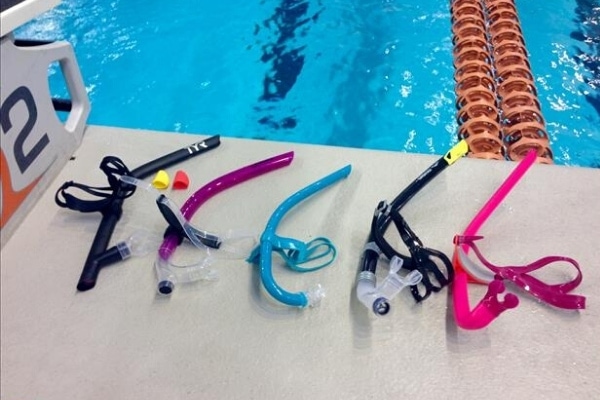
When it comes to water resistance, the shape of the snorkel makes a big difference. A round snorkel traditionally has the most water resistance, while a triangular snorkel traditionally has the least.
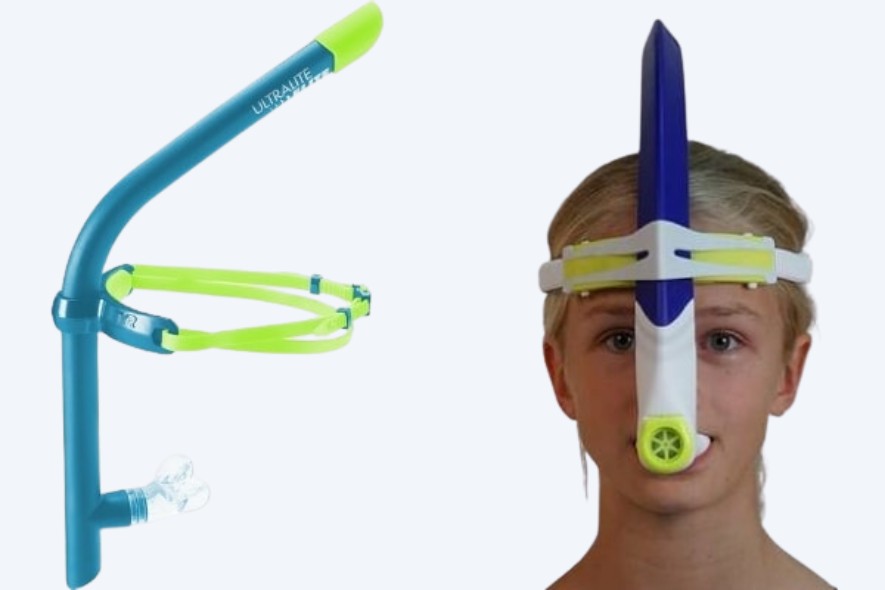
You can naturally debate the importance of water resistance in a snorkel when you’re not using it in competitions. But the less water resistance you have, the less you have to work to move forward. And that can also be great during technique training.
A snorkel with low water resistance is this triangular MP snorkel, and a snorkel with more water resistance is this round snorkel from Speedo.
If you want to get a bit extra out of your swimming with a snorkel, you can easily use different resistance caps. Many competitive swimmers and keen fitness swimmers use these to challenge their breathing more, thereby improving the body’s oxygen uptake.
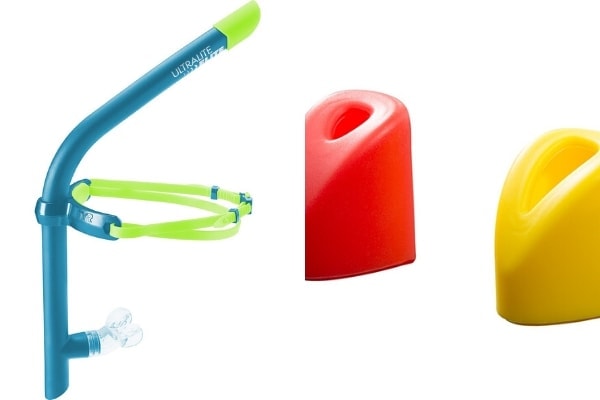
However, these resistance caps aren’t included with all snorkels. There are even snorkels that don’t have extra caps available at all.
For instance, with the super-light TYR Ultralight 2.0 snorkel, the resistance pieces are included, while it’s not possible to get resistance pieces at all for this otherwise excellent Speedo centre snorkel.
If you plan to swim a lot with your snorkel, it might be a good idea to choose one with a soft head bracket. A soft head bracket is simply more comfortable over time.
Of course, it might be limited how much you’ll actually end up using a snorkel in the grand scheme of things. But what do you prefer for a pillow when you go to sleep? A firm one or a soft one?
Whether you prefer a soft head bracket is mainly a matter of taste. But below, I’ve still gathered a few pros and cons for both types.
We’ve now covered the essentials when it comes to swim snorkels. I hope this makes it easier for you to get an overview of the different types available – and maybe you’ve already got an idea of which snorkel you should go for.
I’d still love to help you a bit further along in your buying process by giving you some clear recommendations based on experience with several different snorkels of all types.
The two recommendations I have to share are divided into what we consider the best choices in the categories: fitness and elite training (16+ years) and fitness and elite training (under 16 years).
That’s because there’s a small, but not insignificant, difference between snorkels for adults and snorkels for juniors.
To select the recommended models below across the different categories, I’ve tested a wide range of the most popular swim snorkels in Ireland and abroad at the pool – comparing hands-on experience with customer reviews and product knowledge – to give you the most honest recommendations. These are the snorkels we recommend:
Watery centre snorkel – Hydrolite
The assessments are based on factors like shape, size, weight, price, material, and an overall evaluation of using each snorkel. It’s this combination of personal experience and broad insight that forms the basis for the recommendations below.
The Watery centre snorkel – Hydrolite is without doubt our most recommended pick. It simply does what it’s supposed to do. And once you’ve got it on and have swum the first couple of lengths, you barely notice you’re wearing it.
It has lovely soft head padding, and the triangular shape minimises water resistance. It’s also easy to do tumble turns with without it slipping off your head.
On top of that, the triangular profile of the tube itself naturally helps train oxygen uptake and how your body uses oxygen. The mouthpiece is made of soft silicone too, so your jaws don’t get tired from biting down on a hard piece.
All in all, it’s the snorkel we rate as the obvious choice if you’re looking for an effective and comfortable snorkel for technical swim training.
So if you want to get the absolute most out of swimming with a snorkel, we definitely recommend the Watery centre snorkel – Hydrolite
It’s not just us who love this snorkel, either. This is easily one of the most popular snorkels on the market.
If you’re under 16, you can still get massive benefits from swimming with a snorkel. However, standard swim snorkels will usually be too big for younger swimmers’ faces.
Luckily, Arena have created a junior version of their popular adult snorkel with all the same features. It’s lovely and soft on both the head support and the mouthpiece. It also comes with a one-way purge valve, making it easy to clear water out of the tube if any gets in.
Snorkels with a valve are definitely preferable over those without. Especially when it comes to junior models.
If you’re under 16 and need a new snorkel, I definitely recommend this type of snorkel!
I’ve already touched on this briefly earlier. But now I’ll get a bit more specific about which gear you can usefully use together with a snorkel.
A snorkel on its own can help you quite a bit with your technique, but if you want to get the absolute most out of it, it’s a great idea to combine it with the equipment below.
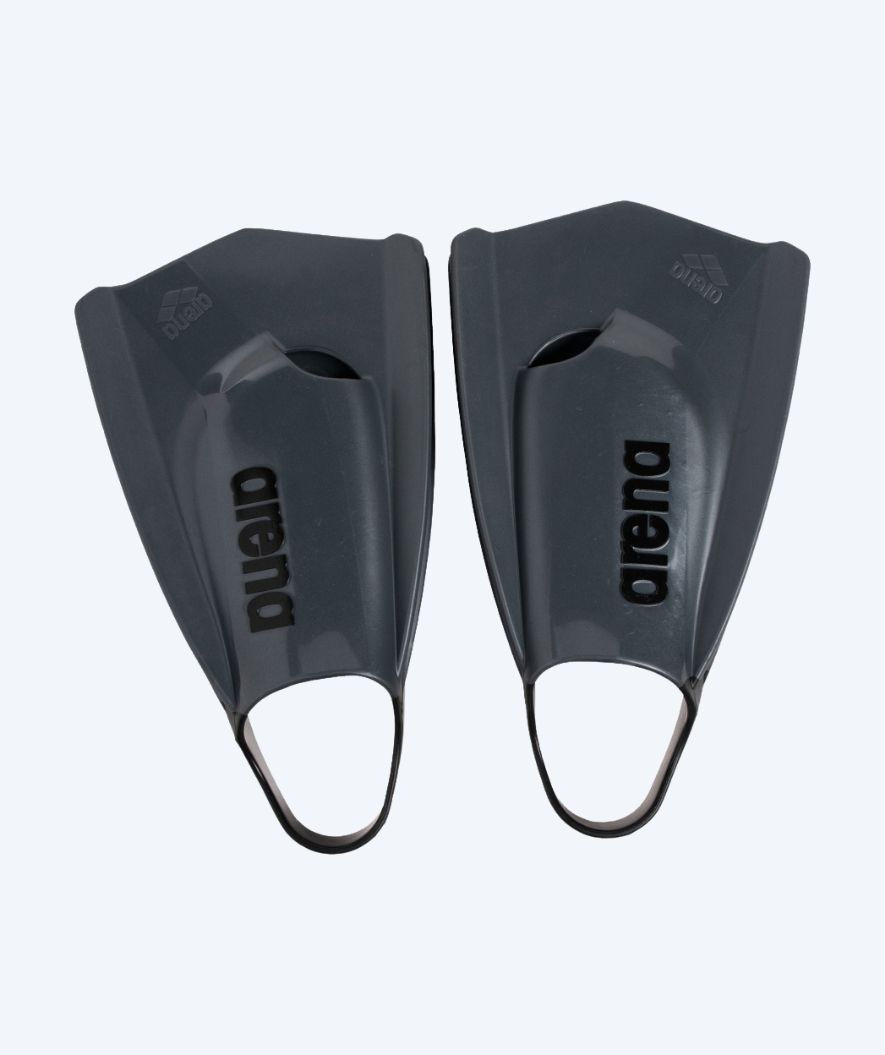
When you use fins, you move forward more easily and quickly. That gives you more energy to focus on the technical side of your swimming.
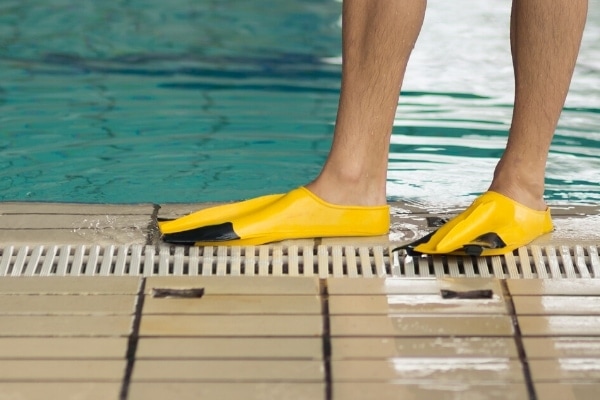
For example, if you need to practise a specific point in your arm stroke, you can benefit greatly from using fins along with your snorkel. You’ll glide more easily and faster through the water, while the snorkel lets you keep your head steadily in the same position the whole time.
That way, you can concentrate much more easily on your technique.
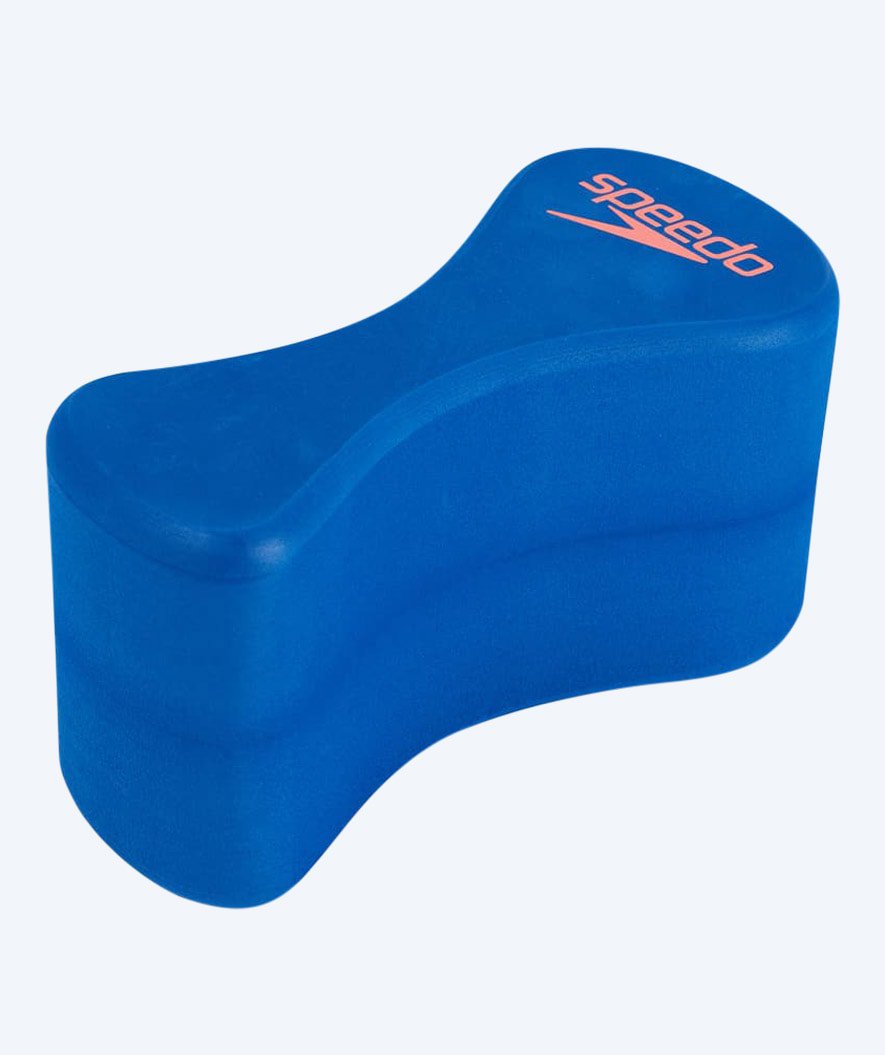
Just like fins, a pullbuoy also helps you with your legs. But instead of kicking to move forward, the pullbuoy allows you to stop using your legs entirely.
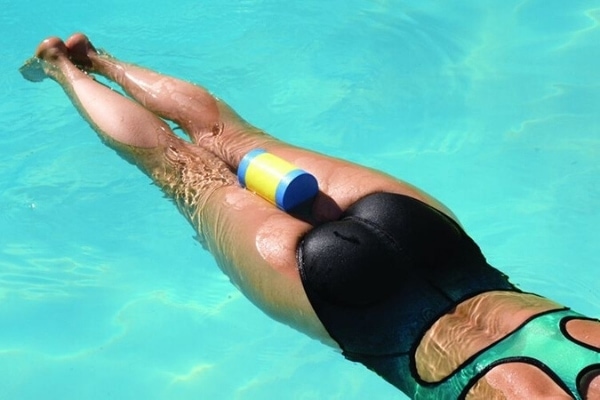
By not using your legs for propulsion, you can instantly feel whether the work you’re doing with your arms is driving you forward. And combined with a snorkel, you don’t have to turn your head to breathe.
In this way, a pullbuoy can also help you with your technique work. On top of that, your leg kick is the biggest culprit when it comes to getting out of breath during swimming, so when you don’t have to use your legs, it’s easier to get the oxygen you need through the snorkel.
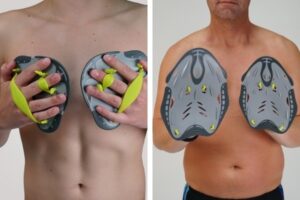
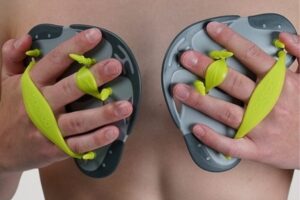
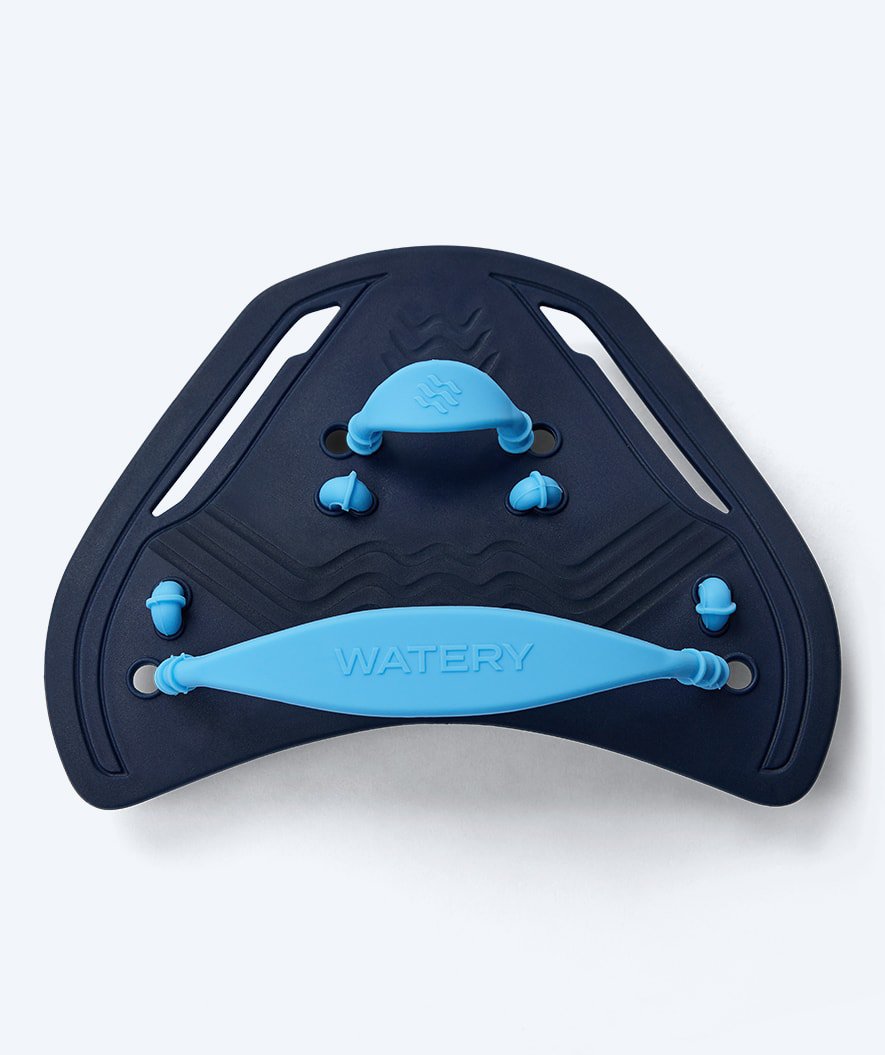
With a pair of finger paddles on your hands, it’s really easy to feel if you’re making mistakes in your stroke cycle. That’s why a set of finger paddles is a brilliant tool on its own if you want to improve your arm technique.
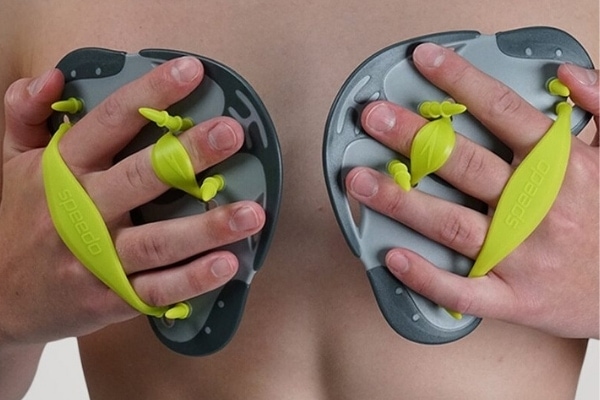
If you combine the use of paddles with a snorkel, the snorkel will let you properly feel whether you have dead spots in your stroke cycle. Quite simply because you don’t have to think about turning your head to the side to breathe.
In itself, a snorkel is quite solidly built and they often last for years. However, you can significantly extend its lifespan by cleaning it after every use and storing it properly.
Cleaning is pretty straightforward. Just rinse the tube, mouthpiece and head strap with fresh water right after use. This removes chlorine and prevents it from breaking down the snorkel’s materials.
When the snorkel isn’t in use, keep it in a dry place that doesn’t get too warm. This will really extend its lifespan, letting you enjoy your new snorkel for years to come.
If you want a top-quality swimming snorkel – which we definitely recommend – you should buy it from a swim specialist. With a swim specialist, you’re guaranteed that your new snorkel meets the demands of a swimmer.
That’s why we recommend buying your snorkels and other swim gear from us. As part of Watery, we’re run by former elite swimmers who know exactly which gear works – and which doesn’t.
On top of that, our prices are generally very fair, and with fast delivery, you’ll typically have your gear right away.