

Open water gear
Make the most of the many opportunities in the water

Not so many years ago, you never saw neoprene swimming shorts (also called neoprene jammers) being used. But in the last couple of years, these buoyant swim shorts have really become popular, especially among fitness swimmers and triathletes.
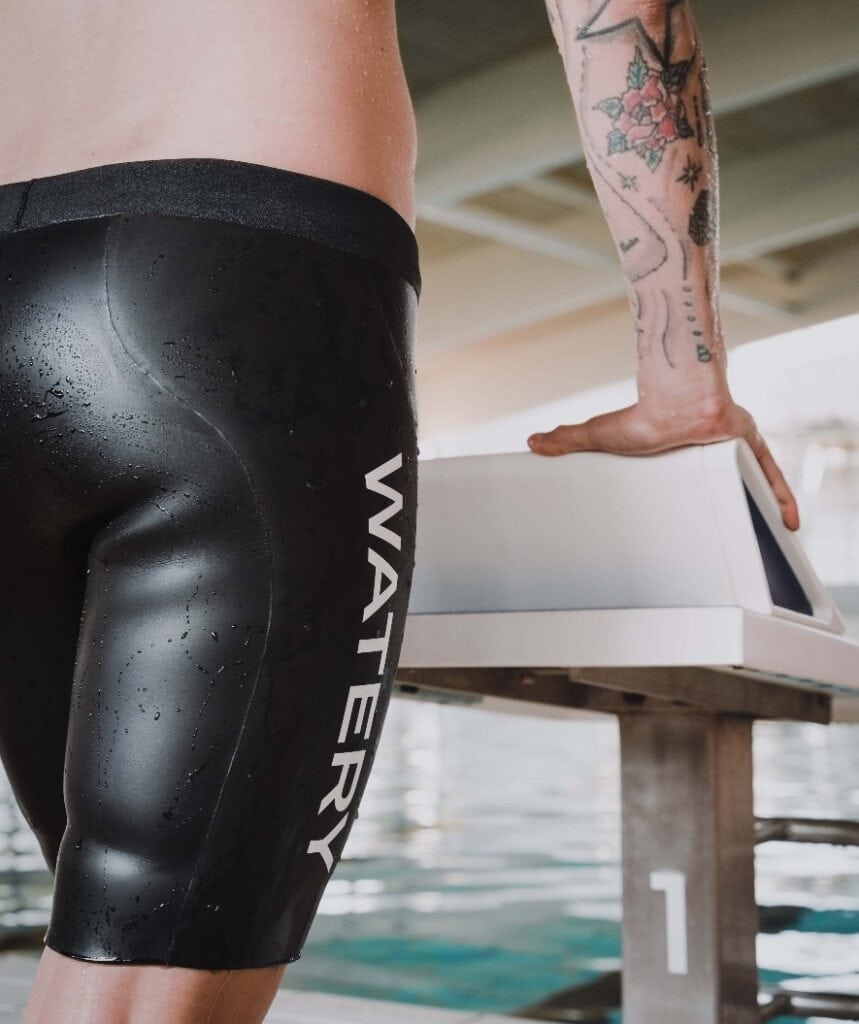
But why so suddenly? I’ll explain that in this guide, where – based on experience with several models – I’ll give you my top recommendation for which model you should choose if you’re thinking about getting a pair yourself.
In this guide, I’ll cover:
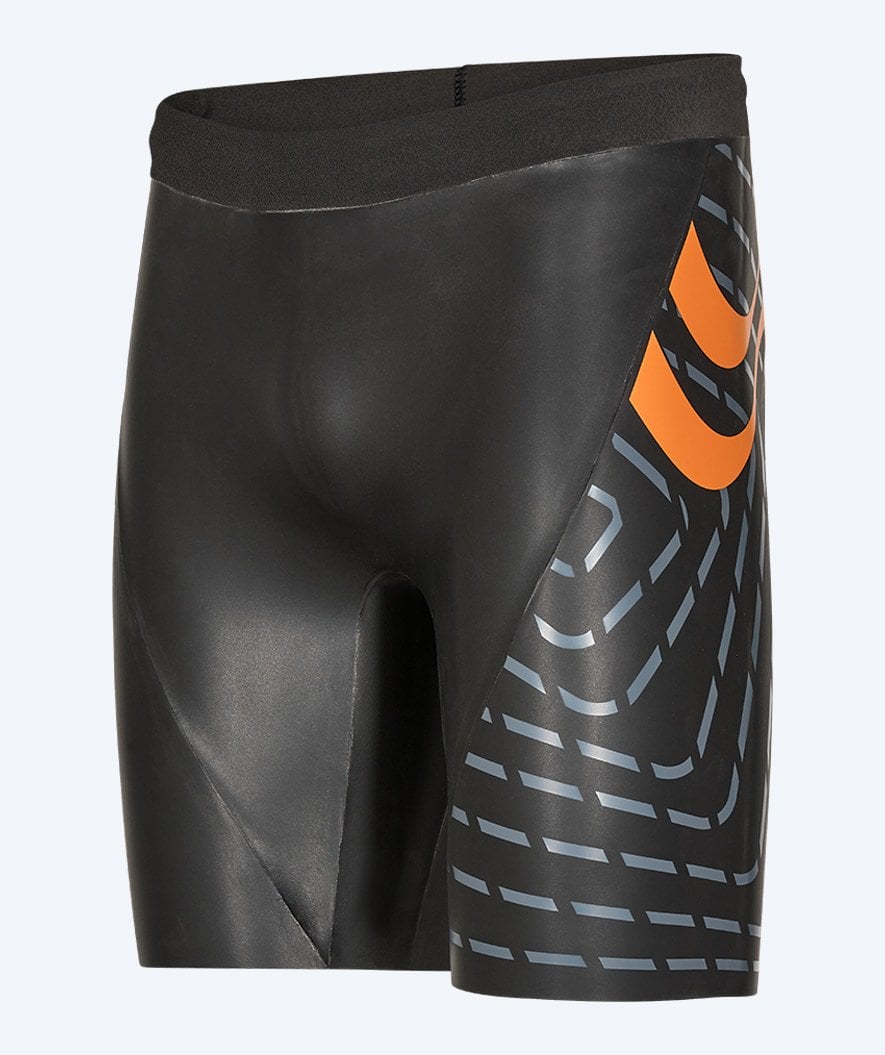
Let me start by explaining why using neoprene jammers can be so useful. After all, why spend quite a bit of money on a piece of neoprene when your regular swim shorts fit just fine?
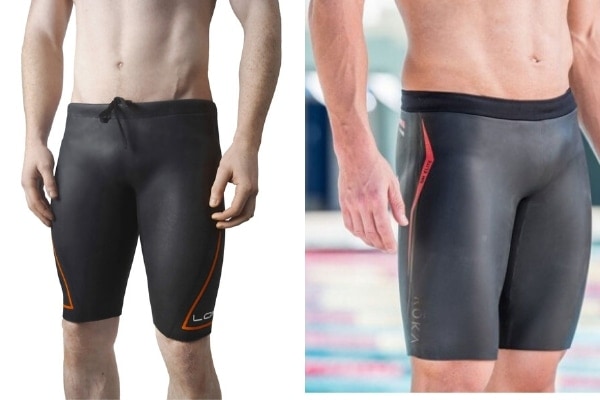
The answer is both simple and two-fold.
You’ll benefit from using neoprene swim shorts if you:
In practical terms, neoprene swim shorts give you the same benefits as a wetsuit, just limited to the hip area and thighs. This means you get insulation in that exact area, along with a significant boost in buoyancy for your legs.
Particularly in triathlon, the goal during swim training is often to save your legs as much as possible so they stay fresh for cycling and running sessions.
Before neoprene swim shorts arrived, pull buoys were widely used to keep the legs afloat without kicking. But now that neoprene jammers are around, many swimmers have swapped their pull buoy for jammers.
If you want to use jammers to save your legs, you’ll still need to engage your core as you swim. Otherwise your legs will still drag a bit, though not nearly as much as without the extra buoyancy.
Looking at the previous section, there are certainly great benefits to using neoprene jammers. But it’s not all plain sailing. There are also disadvantages to these buoyant swim shorts.
That’s why I want to give you my absolute best advice on using neoprene swim shorts. And that is: if you don’t just want to be good in open water, but also in the pool, you shouldn’t use neoprene jammers too often.
Neoprene jammers are a great idea for those who primarily swim in open water with a wetsuit, but occasionally head indoors to swim in a pool. Their focus is already set on an environment where it’s completely natural to get assistance from the neoprene in a wetsuit.
However, if you want to become a strong pool swimmer, frequently using neoprene swim shorts isn’t the best idea.
HOWEVER, they can be especially useful for new swimmers, even in the pool, who struggle to keep their legs up near the surface while swimming. Here, a pair of neoprene swim shorts can make a significant difference in naturally bringing your legs to the surface.
As a pool swimmer, using swim aids isn’t permitted in competitions. So when training, you need to practise what you’ll actually be doing during a race, which includes building a strong and efficient kick.
You won’t get that if you exclusively wear neoprene swim shorts during your pool sessions.
Therefore:
Basically, all types of neoprene swim shorts do the same thing: they help your legs stay afloat. This is something both budget and premium models handle quite well.
However, there are still some fairly significant differences between the top models and the cheaper ones.
The higher-end versions on the market, which naturally also cost a bit more, are made from a superior type of neoprene with better buoyancy. The neoprene used is often Yamamoto, which contains thousands of tiny air bubbles.
As you know, air provides buoyancy. So the more trapped air you have helping to lift you, the better.
Cheaper models are often made from standard neoprene, which still offers decent buoyancy. It just isn’t quite as effective as the premium Yamamoto neoprene.
If you take a pair of scissors and cut straight across the waist and just above the knees of a wetsuit, you are essentially left holding a pair of neoprene jammers. That’s because the design and structure of jammers are pretty much identical to the hip and thigh section of a wetsuit.
The purpose is the exact same too: to provide maximum buoyancy to the heaviest part of your body; your glutes and thighs.
To achieve the best buoyancy, you’ll find the thickest layer of neoprene on the front, while the layer on the back is slightly thinner. That’s because it’s easier for the neoprene to give you lift when it supports your weight from beneath you, rather than having to “pull you up”.
On the inside of neoprene swim shorts—the part touching your skin—the neoprene is lined with a thin layer of nylon. At least on most models. The nylon has no real buoyant effect, but it gives you a massive boost in comfort compared to having your skin in direct contact with the neoprene.
On top of that, nylon makes your jammers much more durable, as neoprene on its own is quite fragile.
So do yourself a favour and get a pair of neoprene shorts lined with nylon on the inside. Both for your comfort and for durability.
If you’re thinking of getting a pair of neoprene jammers, keep in mind that they’re banned in competitions. That means if the event you’re entering is a non-wetsuit race, you can’t wear neoprene shorts.
You’re not allowed to wear neoprene shorts under your wetsuit during races either, as there are strict rules on how thick your neoprene can be. If you wear neoprene shorts underneath your wetsuit, you’ll significantly exceed the maximum 5 mm neoprene thickness limit.
That’s why neoprene jammers are strictly for training. And nothing else.
Most people using these jammers also wear a pair of regular swim shorts underneath for extra comfort. However, neoprene jammers can also be worn on their own.
I’ve now told you the most important things about using and designing neoprene swimming shorts. Now I’d like to introduce you to the pair of neoprene swimming shorts that we, based on expert knowledge and customer reviews, rate as the very best.
These neoprene swimming shorts we recommend
Based on our assessment of the most popular neoprene swimming shorts at home and abroad, we’ve selected the models below across different categories. The recommendations are based on a combination of product knowledge, customer feedback, and hands-on experience with neoprene gear.
Watery neoprene swimming shorts – Pelican 3/5mm
The neoprene swimming shorts are evaluated on factors such as size, price, buoyancy, quality, and the overall experience with each pair. It’s this overall assessment – based on expert knowledge and customer reviews – that forms the basis for the recommendations below.
It’s not always the case that the most popular models are also the best. But in this case, they really are.
There’s no doubt that Watery Pelican neoprene swimming shorts are among the most popular – and based on an overall assessment of a range of models, they stand out as one of the absolute best choices on the market.
First of all, they have a snug fit without feeling tight. They feature a high cut at the back and a low cut at the front, ensuring they sit comfortably around your hips without restricting your breathing.
And the distribution and use of different neoprene types clearly helps provide outstanding buoyancy.
On the sides, 5 mm thick neoprene panels made from premium Yamamoto Nano Aerodome neoprene have been used, while 3 mm thick neoprene is used on the front and back.
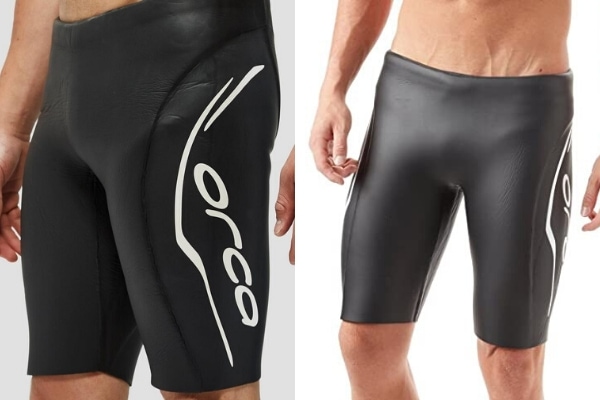
This provides fantastic hip stability in the water, without compromising on your freedom of movement.
Compared to all the other neoprene swimming shorts on the market, these Orca Pro neoprene swimming shorts are simply in a league of their own!
If you want the absolute best neoprene jammers to help with your buoyancy, you can find them here!
When it comes to sizing your new neoprene swim shorts, getting it right matters. They should fit snugly, but they shouldn’t be too tight, as that makes it harder for blood to circulate to your legs. And you definitely don’t want that, or you’re bound to get cramps!
Feel free to use the size guide below for Watery neoprene jammers as a guideline.

All you need to do is measure all the way around your waist and hips in centimetres. Then you’re good to go.
If you’ve watched swimmers during training and competitions, you might have noticed that they don’t train and compete in the same types of swim shorts. And you’ve most likely never seen a competitive swimmer (at least in pool swimming) wearing neoprene jammers. There’s a very good reason for that.
In short, there are three types of swim shorts:
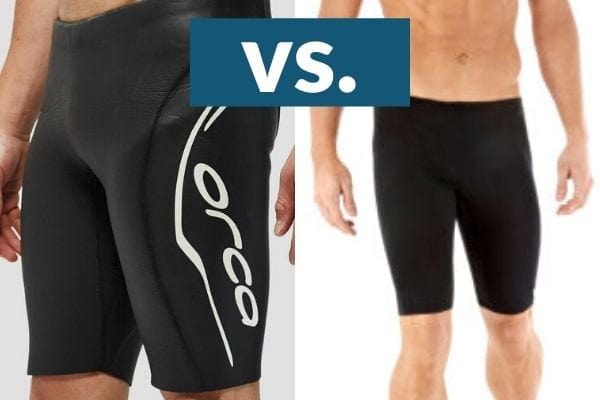
Regular swim shorts look like standard underwear, either boxer-style trunks or classic briefs. Racing swim shorts are longer and look similar to cycling shorts. That means they have longer legs that reach down to the knees, just without the bib straps and padding found in cycling shorts.
And last but not least, neoprene swim shorts look almost identical to racing jammers, but they’re made of neoprene and are therefore significantly thicker.
So, what are the pros and cons of the different types? Here’s the breakdown below:
Pros and cons of regular swim shorts:
Pros and cons of racing jammers:
Pros and cons of neoprene swim shorts:
Neoprene swim shorts work brilliantly on their own, but they’re also great when combined with other neoprene gear. Especially when it comes to open water swimming.
Here’s the gear that works best alongside your neoprene jammers:
Neoprene swim shorts give you largely the same benefits as a wetsuit – buoyancy and insulation. But they only cover your legs, so if you want full buoyancy and insulation across your whole body, you’ll need either a wetsuit on its own or a combination of a wetsuit and neoprene shorts.
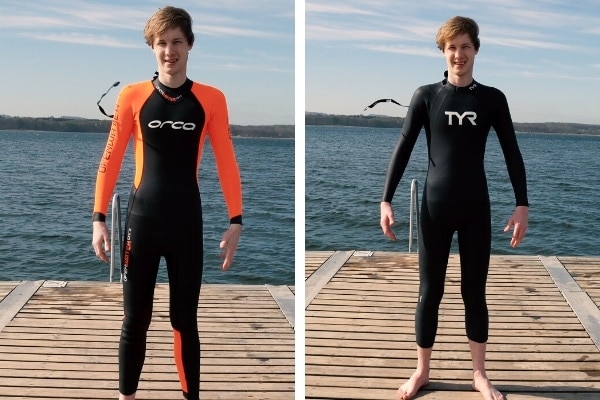
In open water, you’ll really benefit from wearing both a wetsuit and neoprene jammers at the same time.
A wetsuit gives you insulation and buoyancy all over. By wearing neoprene shorts underneath, you boost insulation around your hips and legs, while significantly increasing buoyancy in the same area.
If you want to pair your neoprene jammers with a wetsuit, you can buy a wetsuit here to get the best possible advantage!
For most of the open water swimming season, Irish waters can be pretty chilly. That’s why pairing neoprene jammers with a wetsuit really comes into its own.
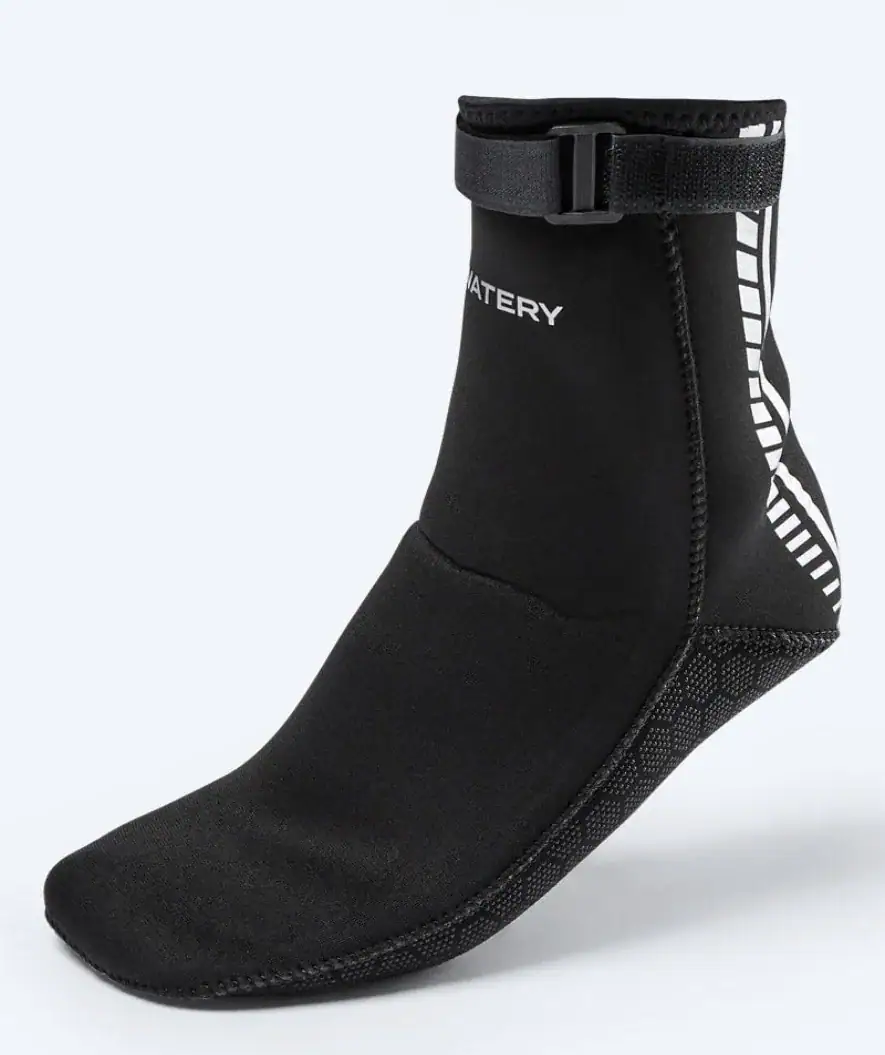
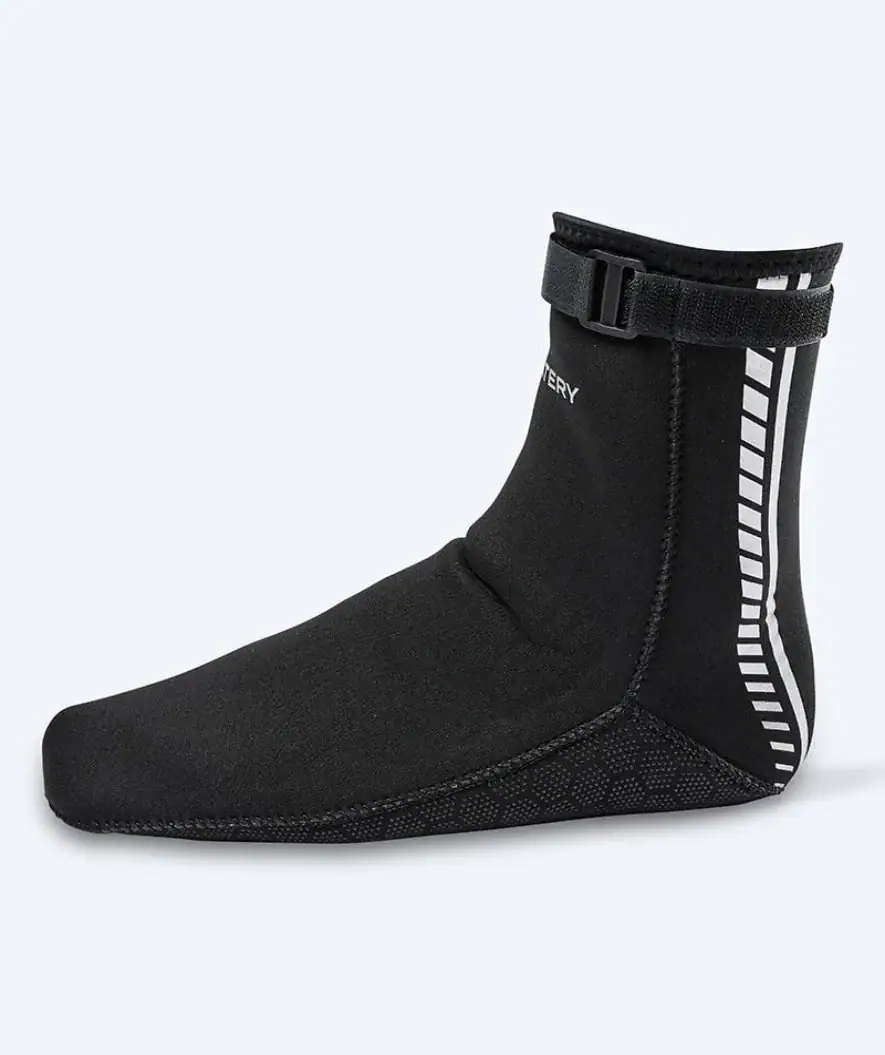
To maximise your comfort (and safety), you can also wear neoprene swim boots to help keep you warm in the water. You pull these boots on over your feet just like socks, and they help keep your feet warm in cold water.
This is especially handy during the shoulder seasons (spring, early summer, late summer, and autumn). Once your feet get cold, the rest of you quickly follows.
You can buy neoprene swim boots here.
Just like swim boots, neoprene swim gloves help keep your hands warm. It’s the same principle – when your hands get cold, it won’t be long before the rest of your body feels it too.
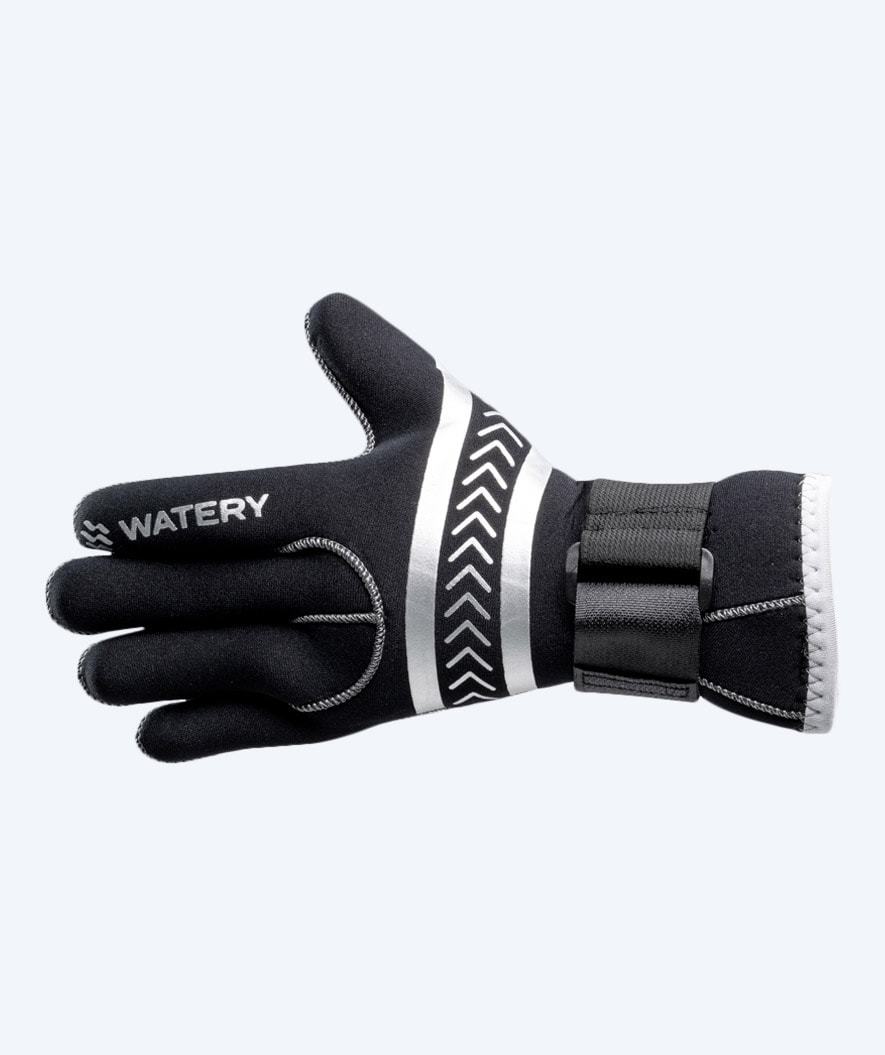
Keep in mind that neoprene swim gloves slightly reduce your feel for the water. It really comes down to personal preference. During the colder months, they’re definitely a great idea regardless, as the minor loss of feel is easily outweighed by the warmth, letting you swim for longer without numb hands.
More time in the water means better swimming results! If you want to extend your swims, you can buy neoprene swim gloves here.
The last of the four products I recommend using with your neoprene swim shorts is a neoprene cap. It gives you the same benefits as the boots and gloves—namely insulation—just for your head.
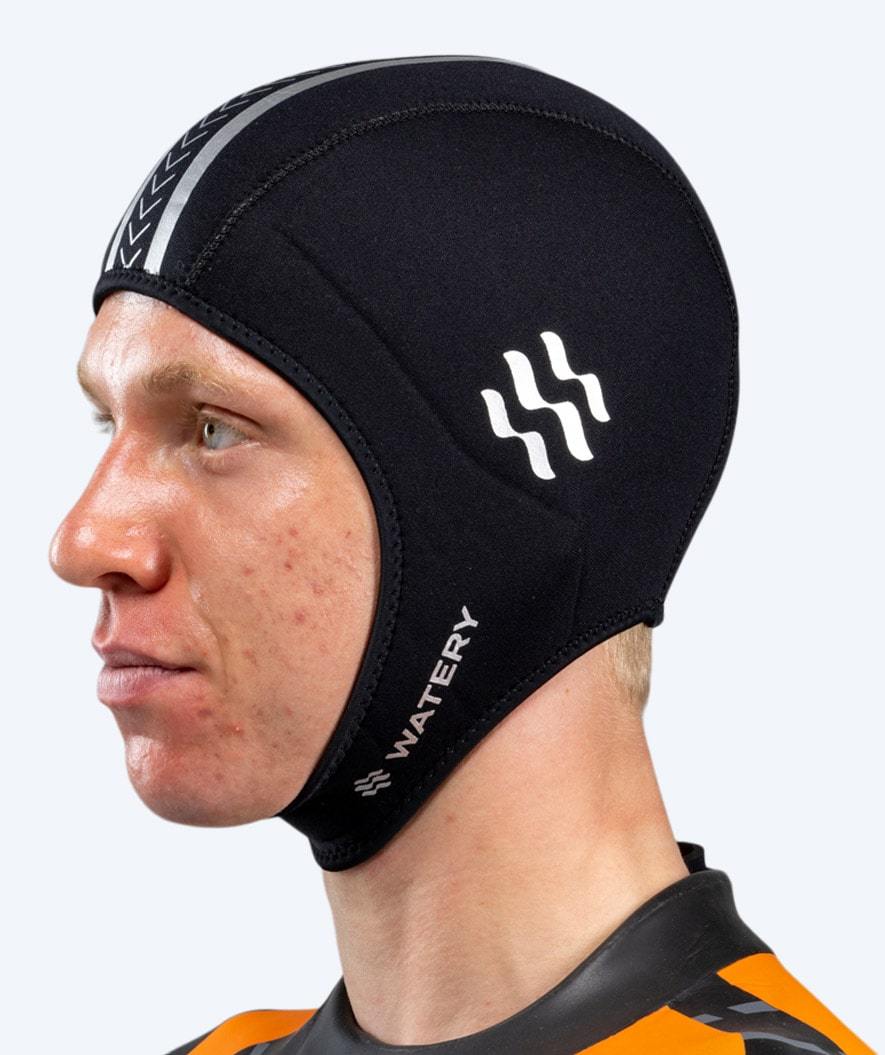
Many open water swimmers actually consider a neoprene cap the most important piece of gear besides the wetsuit when it comes to staying warm in the water.
I don’t necessarily agree that a cap is better than boots and gloves, as I see all three pieces of kit as equally important.
When your head gets cold, it’s incredibly tough to stay focused. And if your ears, forehead, and crown are freezing, the rest of your body tends to get cold quickly too. On top of that, you simply can’t think clearly when your head gets too chilly.
With a neoprene cap, it’s much easier to keep your head warm. That means you can stay in the water much longer before the cold forces you out.
If you want to keep your head warm during open water swims, you can buy a neoprene cap here.
If you want to take advantage of either the buoyancy or the insulation—or perhaps even both—in a pair of neoprene swim shorts, it can be tricky to figure out where to buy them.
There are plenty of retailers out there, but the real question is what level of quality they offer.
We recommend buying your neoprene jammers from us at Watery.ie. We’re swim gear specialists and know inside out which products work and which don’t. We also stock Orca Pro Neoprene Jammers—one of the models we rate among the very best.
A quick look at Trustpilot shows that our customers are delighted with their purchases. So if you’re looking for neoprene jammers or other swim gear, we recommend shopping with us at Watery.ie.