

Open water gear
Make the most of the many opportunities in the water

A tow float for open water swimming is a relatively new invention, but despite being such a recent piece of gear, it’s becoming more and more popular. And there are several great reasons for that. In this guide, we’ll walk you through the best tow floats for different needs. We’ll look at various types, features and materials, and of course share our own experiences and reviews so you can easily find the bag that suits your needs best.
👆 Click on each model to jump straight to the section where we review each one in detail.
 Most popular swim buoy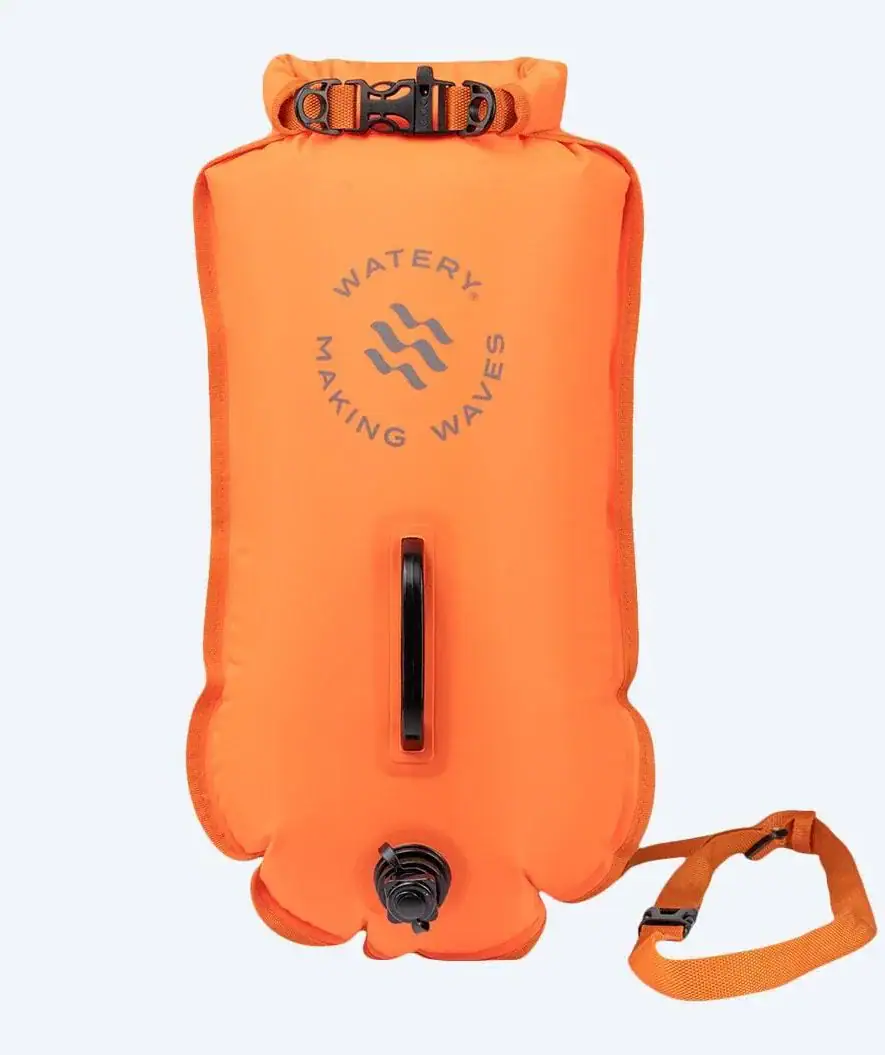
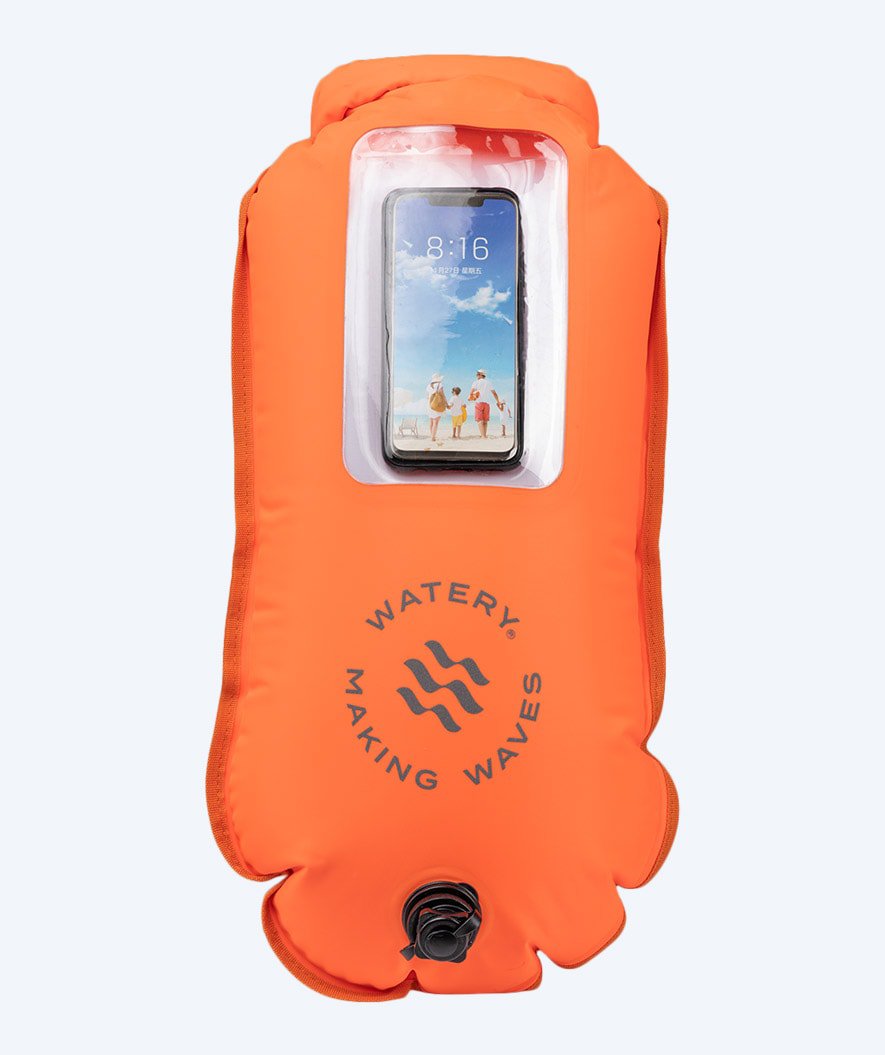
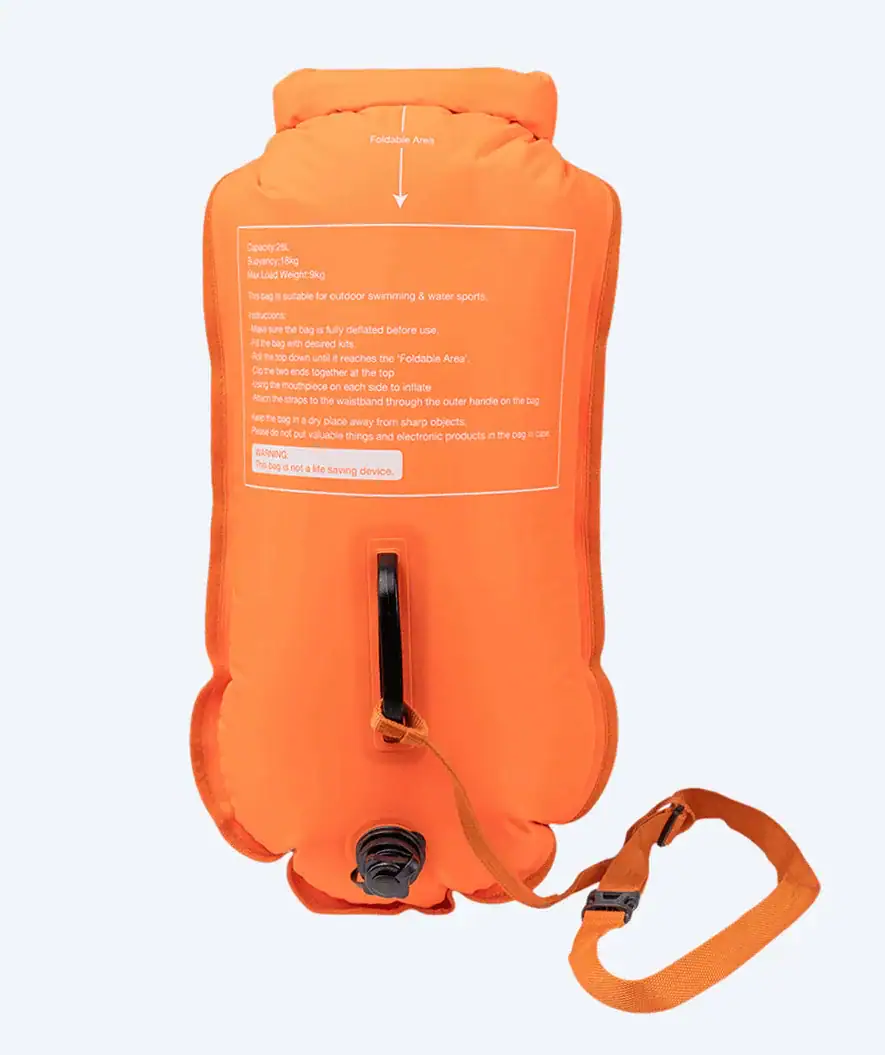 Best with a clear phone window
  Best tow float with water bladder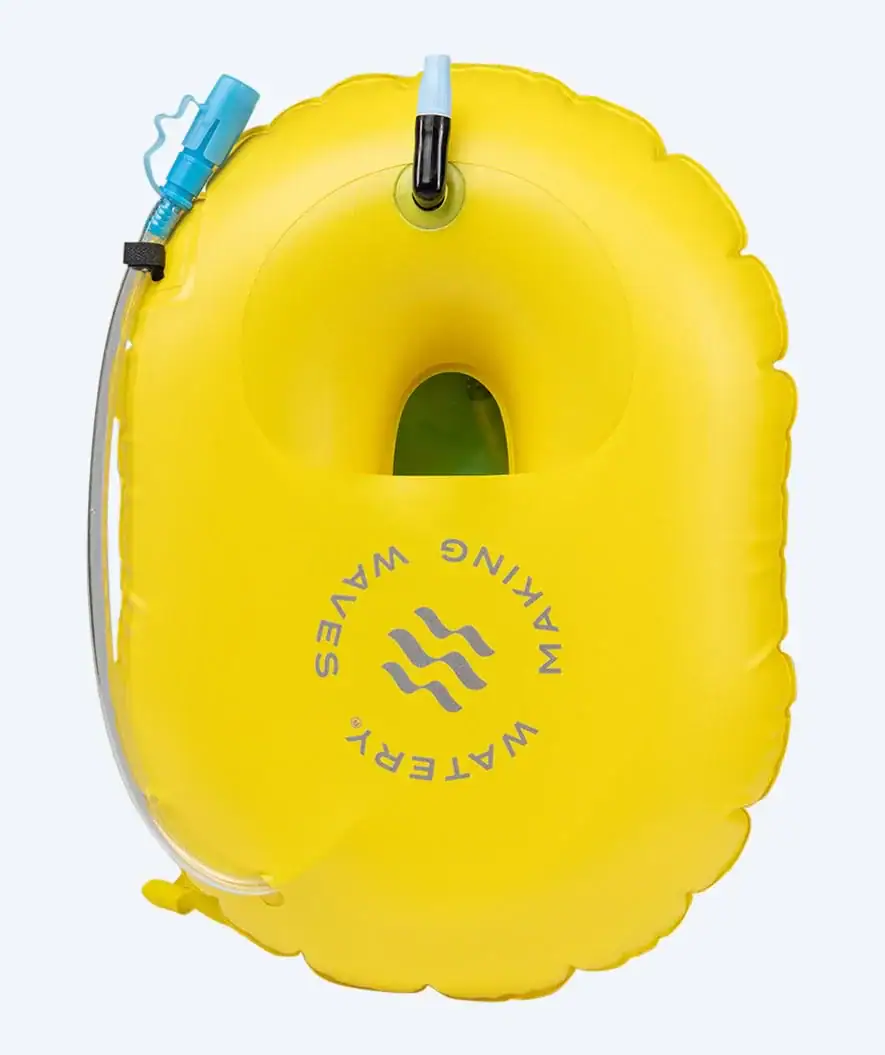
 The best tow float with shoulder straps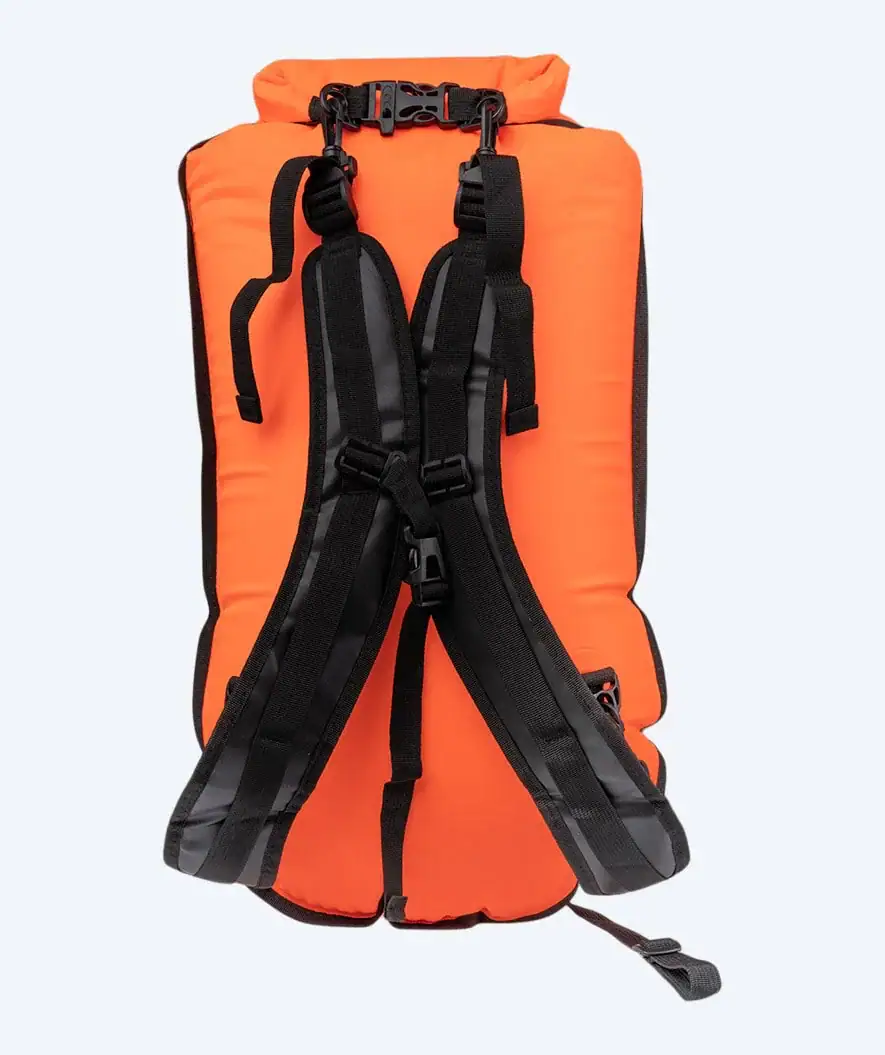
Jump to section 👇:
Finding the right tow float can feel a bit overwhelming – after all, what features do you actually need? But don’t worry, we’ve done the hard work for you. Below you’ll find our top recommendations for the best tow floats on the market right now.
Our selected models have been thoroughly evaluated based on functionality, user reviews and hands-on experience from the team behind Watery.ie, and we’re sharing them with you completely honestly and without filter.
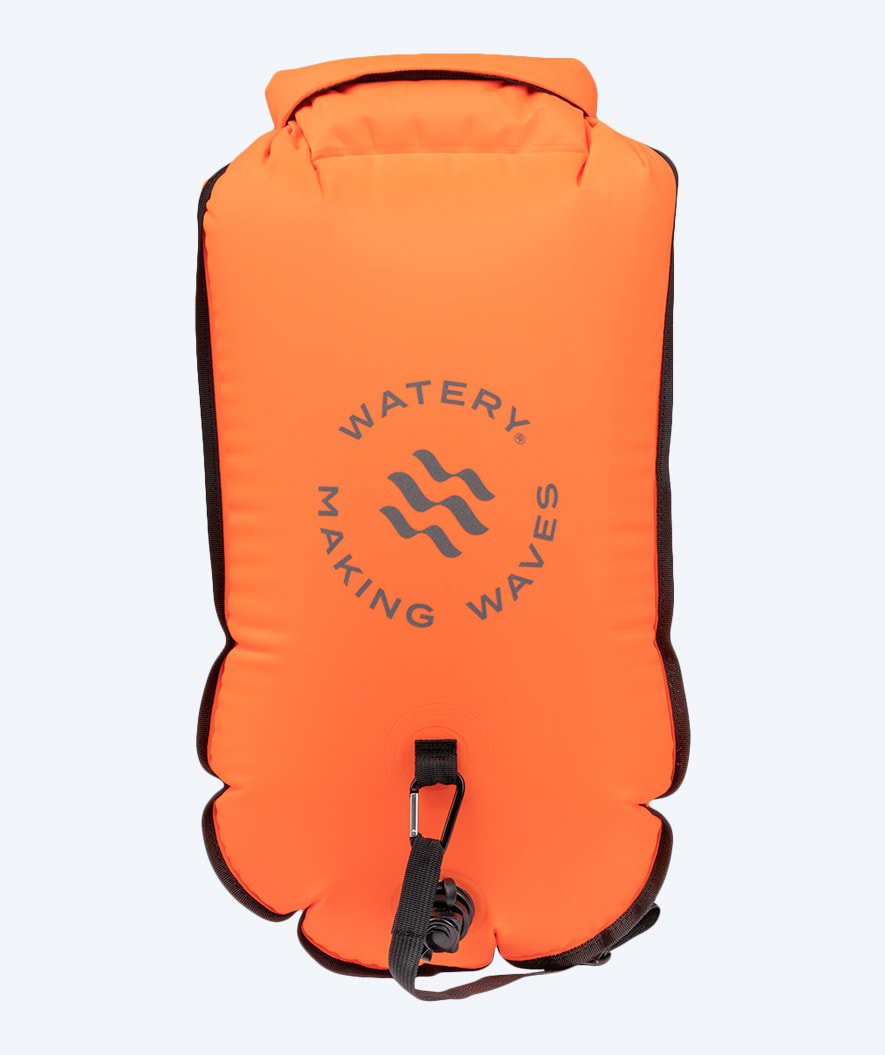
If you, like me, love the feeling of gliding through open water but also want both safety and practical storage with you, then this Watery Swim Buoy Dry Bag 28L is an absolute must-have. The bright orange colour (or one of the other colours) makes you highly visible to both boats and other swimmers, giving you great peace of mind when you’re out in the middle of the bay or open sea.
I’m especially a fan of it doubling as a dry bag, so you can bring your keys, phone and towel along without worrying about them getting wet. It’s easily worn around your waist, and even though I first thought it might get in the way, you actually quickly forget it’s even there.
“Very high quality buoy. I am very satisfied and would buy it again anytime. The delivery was also quick and easy.” – Sabrina
If you, like me, enjoy going for a long open water swim or simply want to keep your gear safe while paddleboarding or snorkelling, then this swim buoy is definitely worth checking out.
I’ve used it for everything from trips to the beach to swim training, and I think it’s brilliant because it combines two things: a highly visible safety buoy and a waterproof dry bag in one.
It has 28 litres of space to play with, so I usually pack a towel, phone (in the small pocket), keys, car key and anti-chafe cream, and there’s still plenty of room left over if I want to toss in a bit extra.
If you’re looking for a great all-round swim buoy, this one comes highly recommended!
“Fantastic swim buoy with a handy mobile phone pocket. I bought it as a gift for an enthusiastic swimmer. She thinks they are great.” – Antonie R.
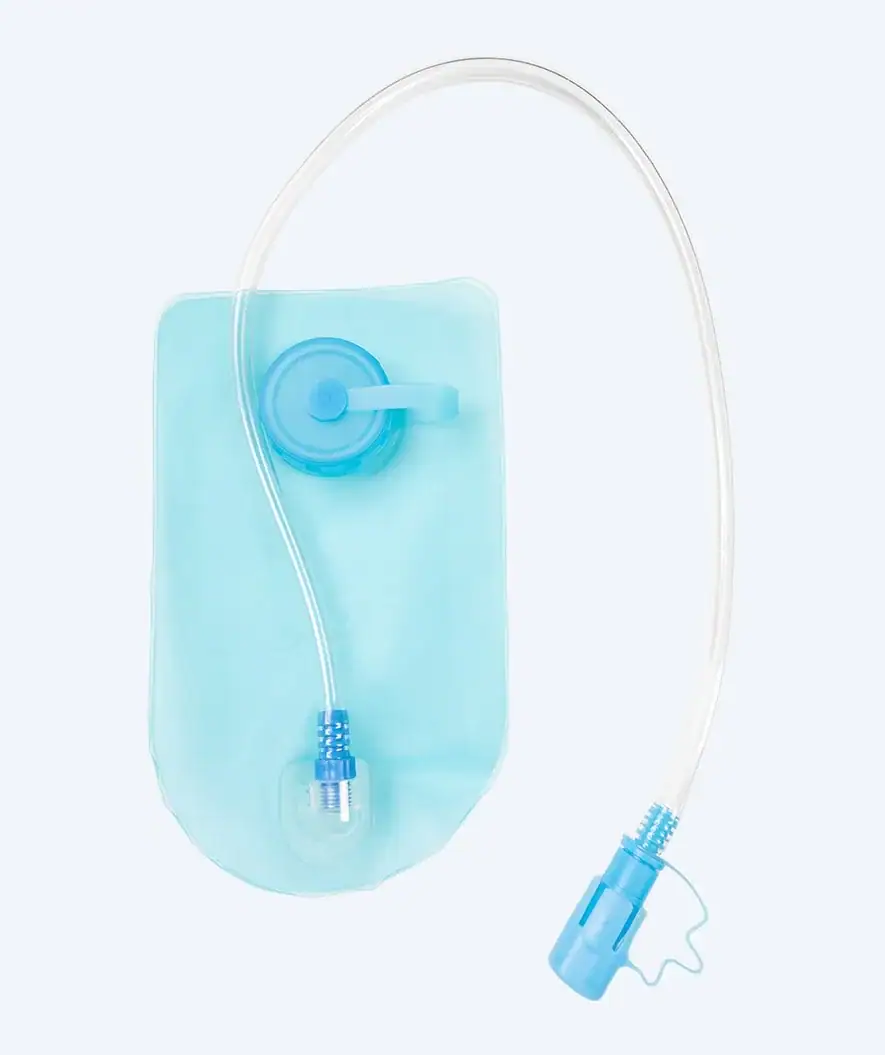
I have to admit – this is one of the cleverest and most practical tow floats I’ve tried. If you swim longer distances and want to bring fluids along or need to take in carbs during your swim, this buoy is worth its weight in gold.
It functions as both a standard safety buoy and a floating water bottle, and that’s really handy when you get a dry throat out in open water.
I’ve used it on warm summer days as well as during training sessions, and it’s great how easily you can grab the bottle, take a sip, and just keep swimming. The belt sits comfortably, and the buoy itself doesn’t take up much space, so it’s never in your way in the water.
It’s available in yellow, orange, and pink
“Really good tow float! I like that the tow float is on the “flat” side, so it doesn’t bounce around nearly as much on the water when there are waves.” – Louise R.
If you want a bag that can do it all and more, this swim bag is a truly solid choice. What I especially love is how easy it is to throw over your shoulders, for example when you get straight out of the water and need to move on quickly – perfect for open water events or triathlons. And the bright orange colour isn’t just great to look at; it also makes you super easy to spot, both on the beach and in open water.
On top of that, the comfortable shoulder straps mean the bag can also be used for hikes or similar activities where you want to keep your gear dry.
“A product that is perfect for triathlon and gives high visibility. Can definitely recommend this product to others” – Mette
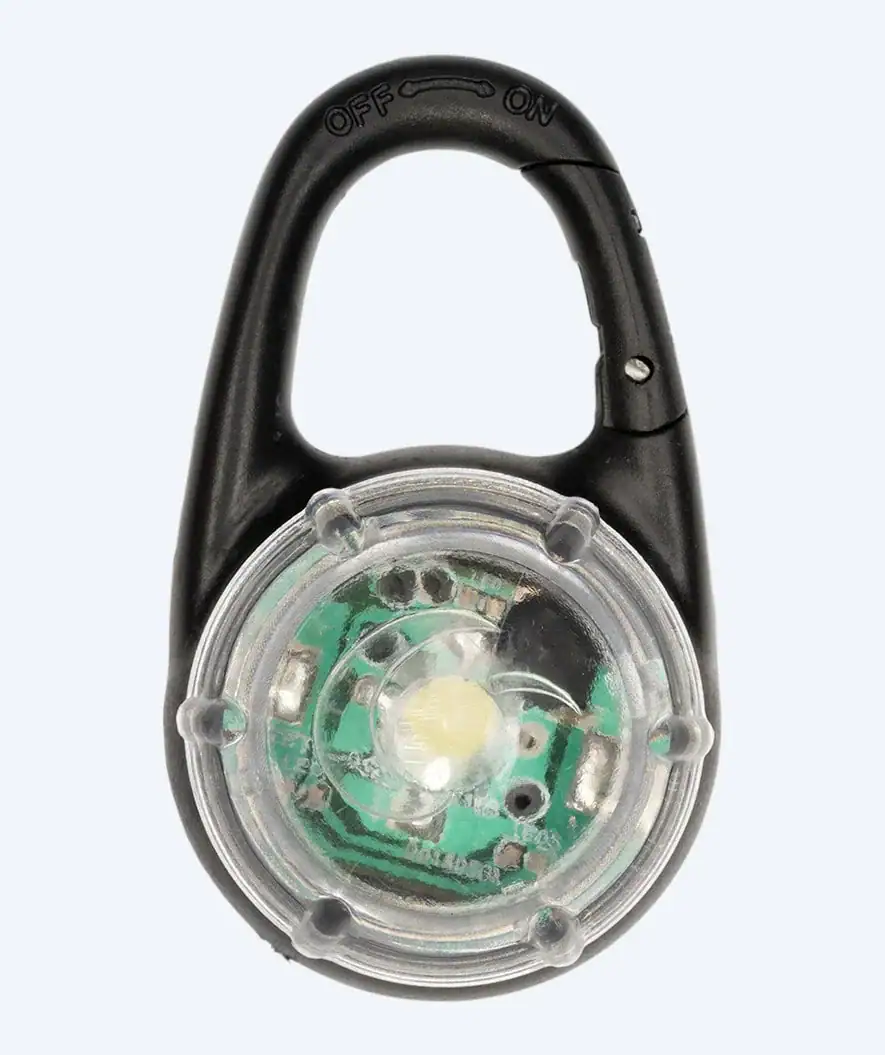
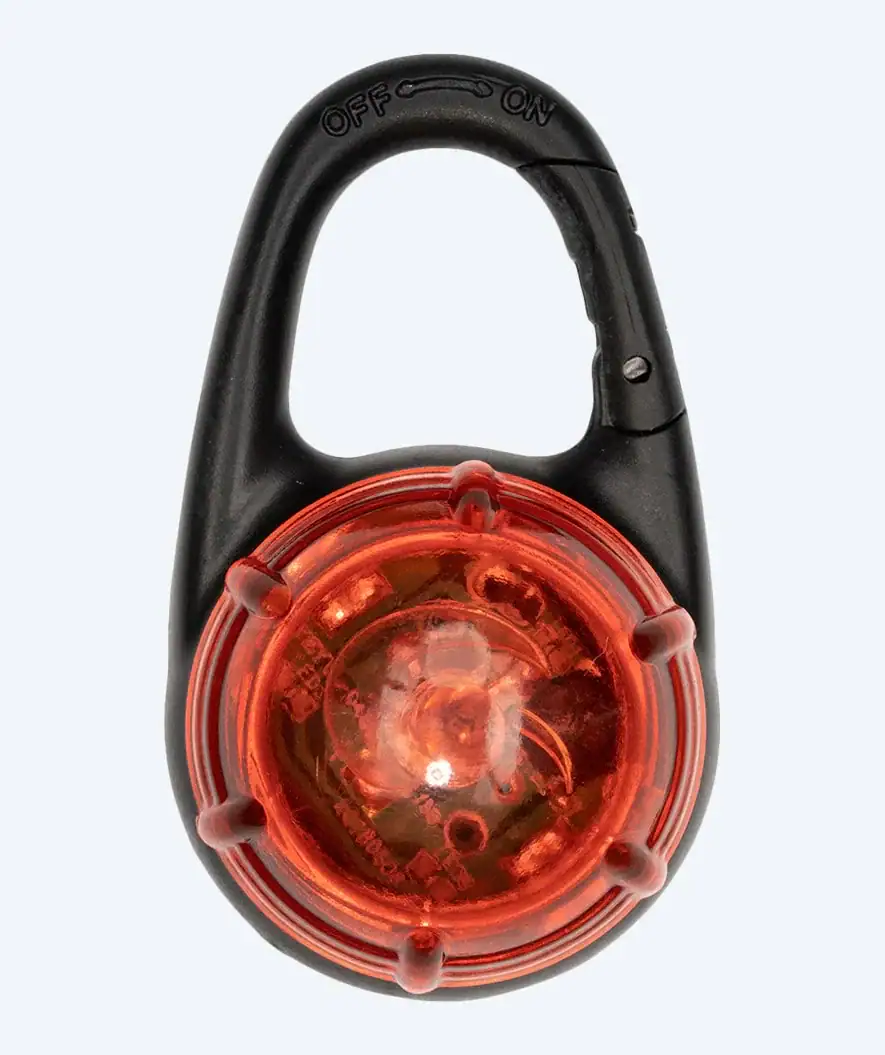
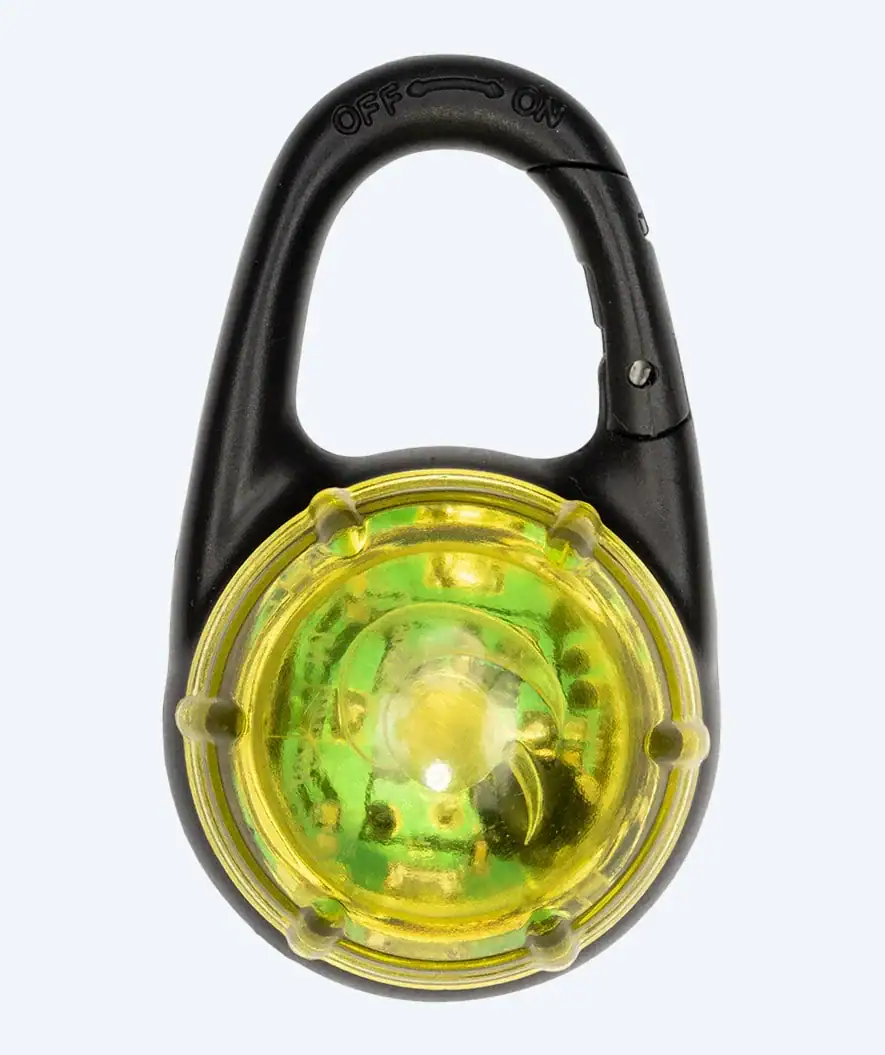
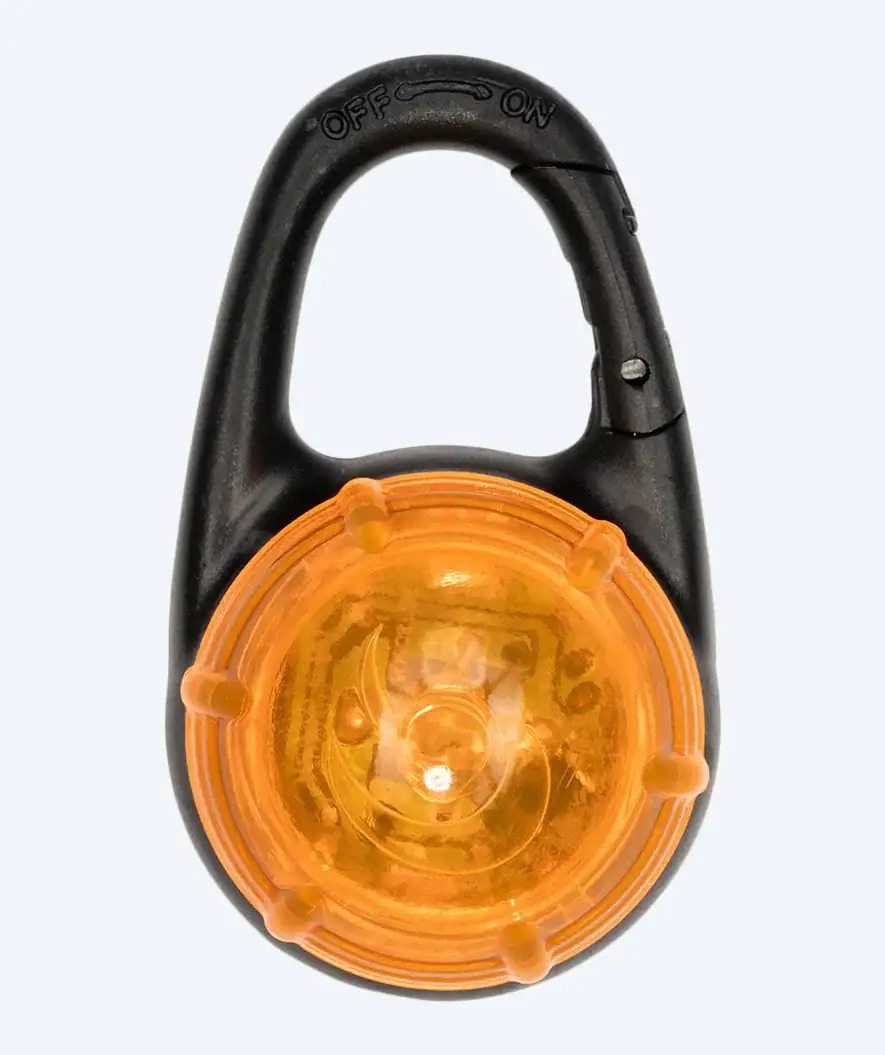
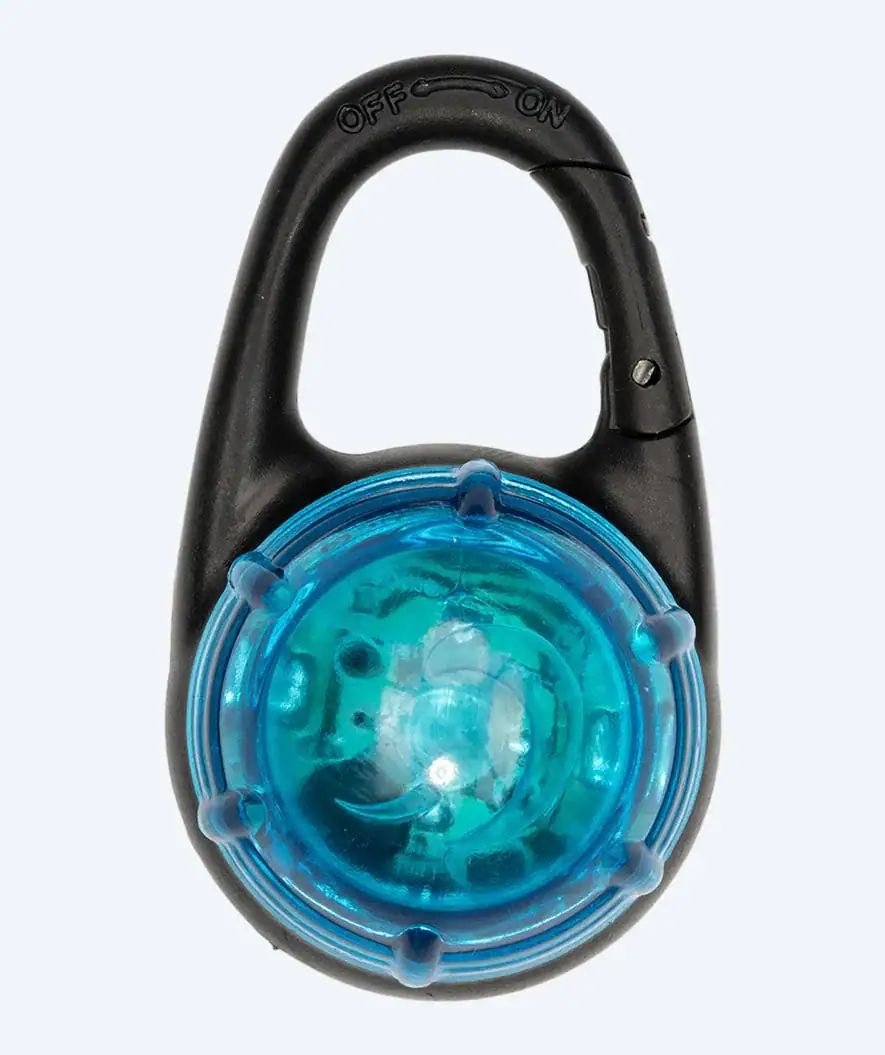
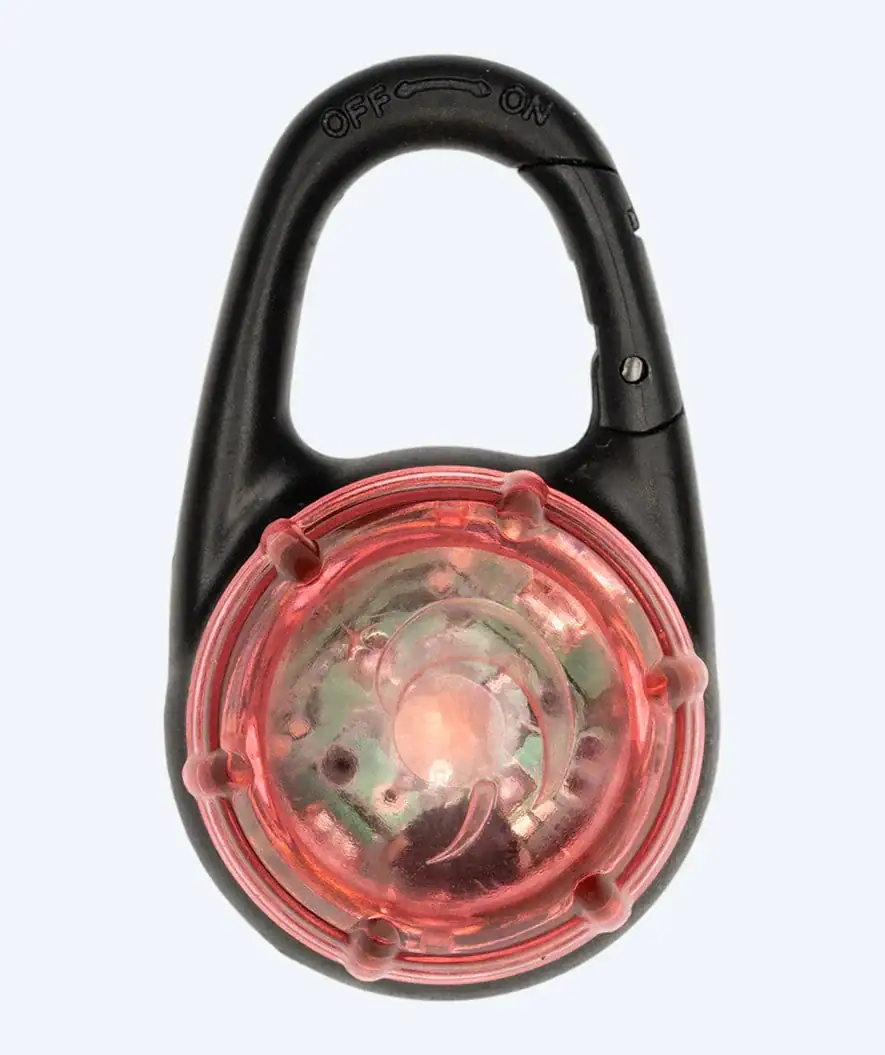
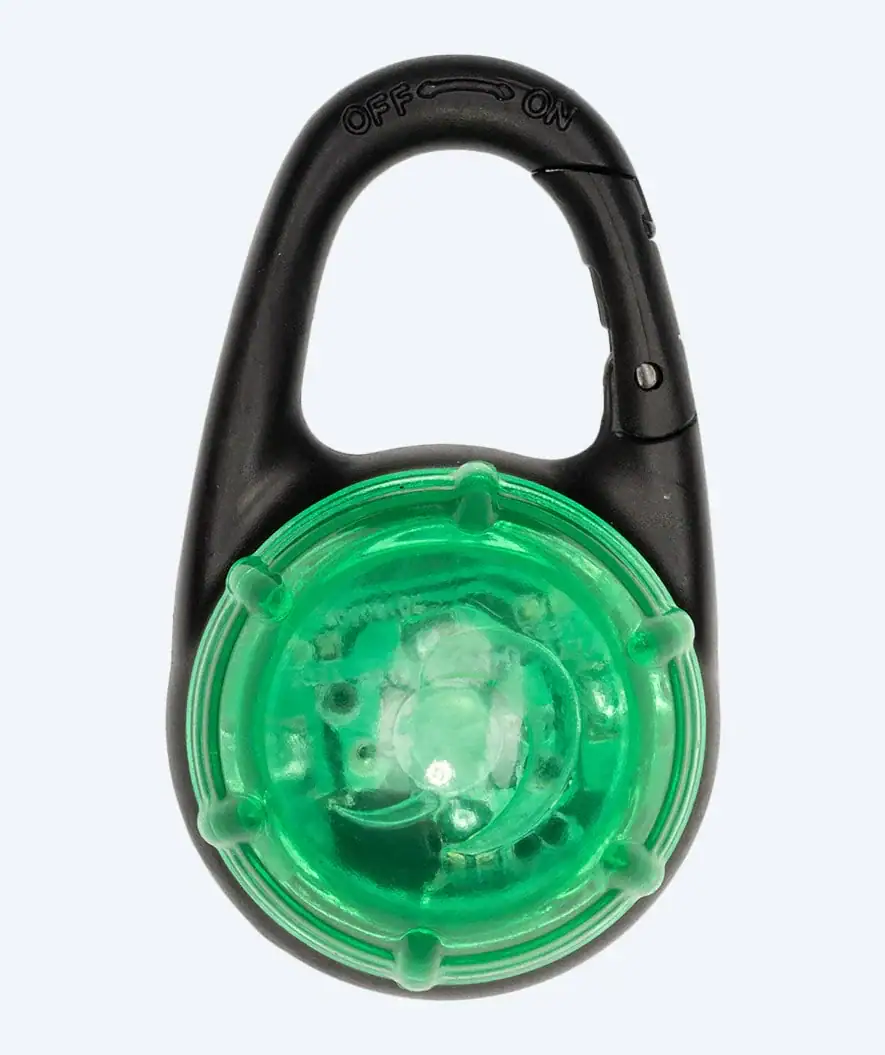
Okay… this obviously isn’t a swim buoy, but I’d still warmly recommend considering adding it to your kit if you swim in open water.
An Open Water Safety Light is small and weighs next to nothing, but it makes a massive difference to your safety. It shines brightly, can be seen from a great distance, and helps both boaters and other swimmers spot you well in advance.
I use it myself on all my open water swims, especially in overcast weather or when the sun is setting. It’s a small investment, but it gives great peace of mind.
You simply turn it on and pop it into your swim buoy, lighting up the whole bag and making you significantly easier to spot in the water. (See image below)
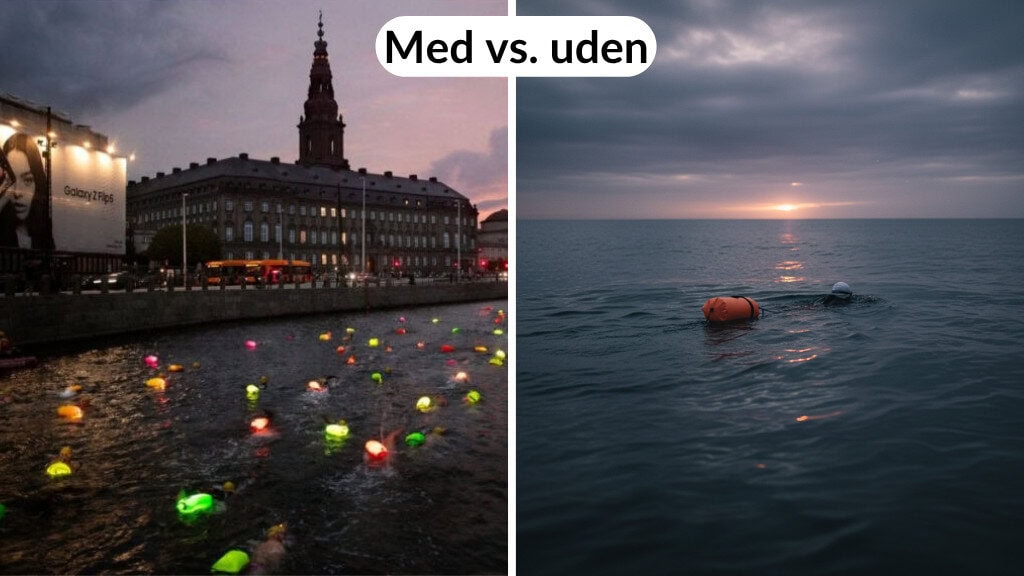
One thing is the theft protection of being able to take your phone and keys with you into the water. Another is the personal safety a swim buoy provides. And it’s precisely the latter that makes a swim buoy a must-have for all open water swimmers.
In this section, I’ll tell you exactly why and how it helps keep you safe.
When you’re lying in your dark wetsuit in the dark water, it can be extremely difficult for other water users to spot you. Even if you’re splashing with both your arms and legs.
All swim buoys on the market are made in bright, high-visibility colours that are easy to spot in dark water. This makes it much easier for motorboats, sailing boats, and other swimmers to see you.
Since a swim buoy is inflatable, it naturally floats on its own. This gives you a great opportunity to take a rest out in the water without having to tread water (which can be quite tiring in itself).
If you get cramps or anything else forces you to stop, the swim buoy lets you stay afloat without expending any energy. That’s a crucial safety feature that makes a swim buoy essential for every open water swimmer!
Besides its large air pocket that keeps it afloat, a swim buoy also has a waterproof compartment, allowing you to take items like your wallet, keys, phone, and clothes with you out onto the water.
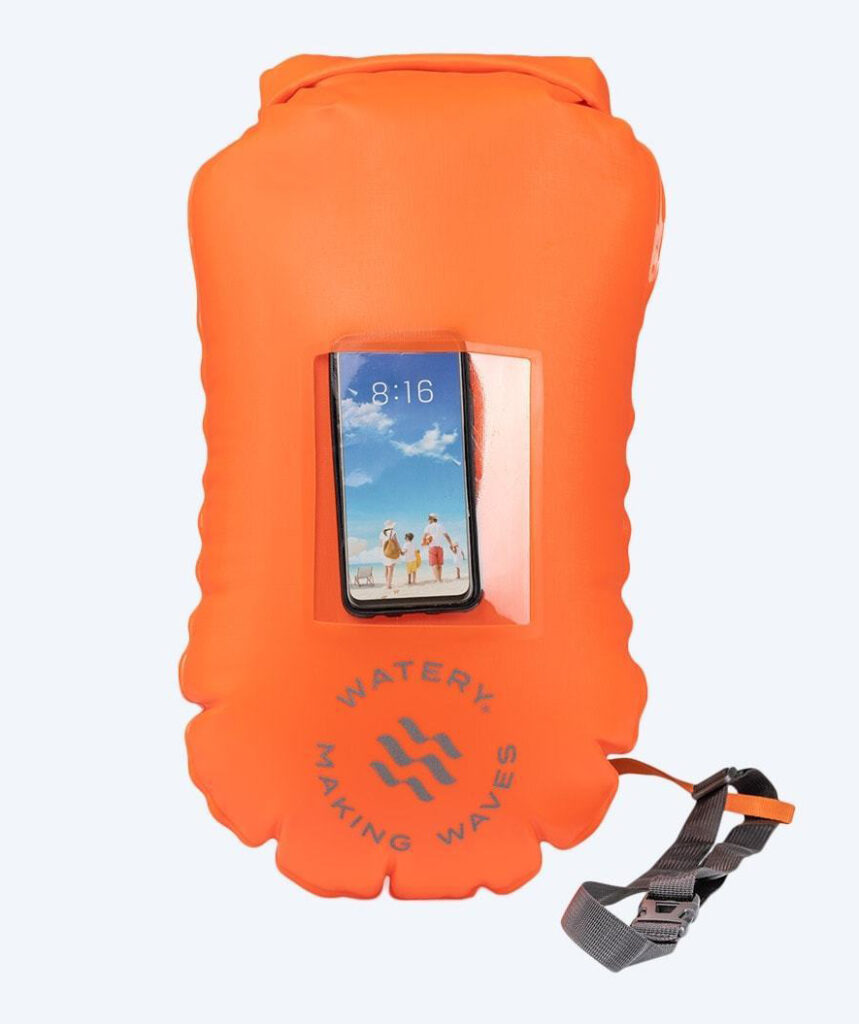
It only takes a few seconds of distraction for someone to steal your belongings on the beach. But by bringing your things into the water with you, you automatically protect your most valuable items from theft.
I hope you now have no doubt about why you should use a swim buoy when swimming in open water. But before you rush out to buy one, there are a few things you should keep in mind.
I’ve listed those things below.
To easily be seen by other water users, it’s important that your tow float has a colour that’s easy to spot in dark water. And here, orange is definitely the most visible colour. That’s the same reason why life jackets are also orange.
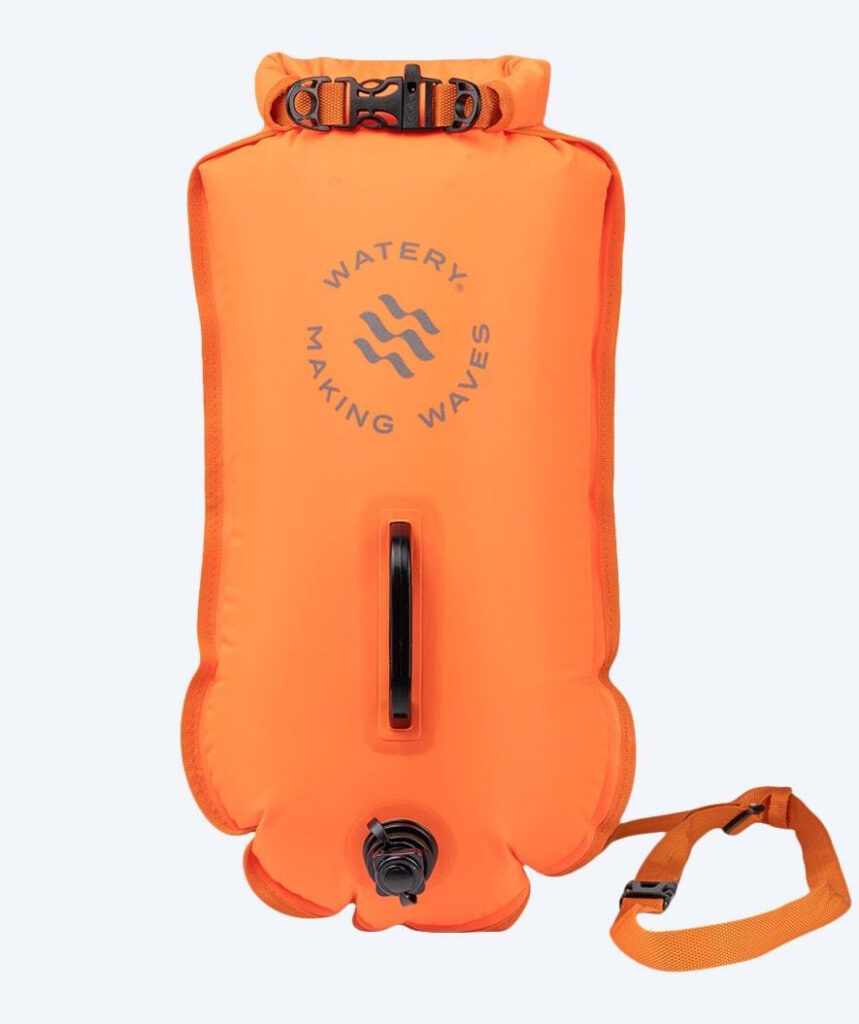
In general, bright, fluorescent colours are easy to see in dark sea water. But as a rule of thumb, stick to orange, as it’s the easiest to spot.
If orange really isn’t your thing, pink and green work well too. They’ll also be very clear in the water, though not quite as visible as orange.
The bigger your tow float is, the more safety it gives you. That’s why I recommend that your new tow float has a capacity of at least 20 litres.
A large tow float can hold more air and therefore gives you better buoyancy when you rest on it. Plus, a large tow float can also hold more of your belongings, so you have to leave as little as possible behind on the beach.
On top of that, a large tow float is also much easier to spot. So the bigger your tow float is, the greater your safety will be.
To ensure maximum safety, it’s important that your tow float is made from a strong material. Some tow floats are made of nylon, which is very durable in itself. On the other hand, it makes the tow float quite heavy and hard to inflate.
I therefore recommend buying a tow float made from durable PVC. This makes it just as strong as the nylon ones, but they weigh significantly less and are much easier to inflate.
If you want to take your mobile phone out on the water, a tow float will generally protect it well enough. But accidents can happen where water gets into the otherwise waterproof storage pocket.
That’s why I always recommend putting your phone in a waterproof pouch or case first, and then placing it inside the tow float afterwards. That way, you’re sure your expensive phone won’t get damaged if any water gets into the storage compartment.
I personally use this waterproof pouch for my mobile phone.
When you’re swimming with a swim buoy, there are a few simple tips to help you get the most out of it. Instead of reading through endless text, do yourself a favour and watch the video below from Swimout.
When you’re heading out for an open water swim, a swim buoy alone isn’t enough. You’ll also need a few other pieces of kit to stay safe in open water. I’ve listed that gear below.
A wetsuit is an essential piece of kit for open water swimming. It helps you stay warm and gives you extra buoyancy. Buoyancy is especially vital for your safety, and it also helps you swim faster.
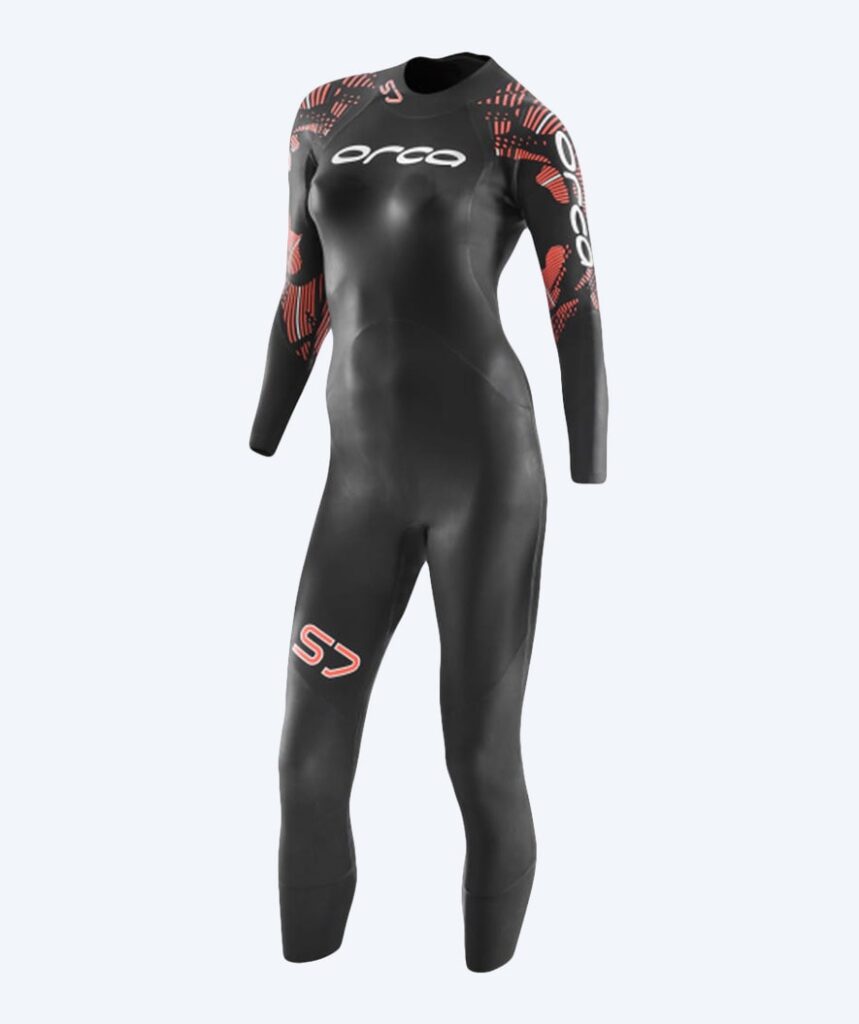
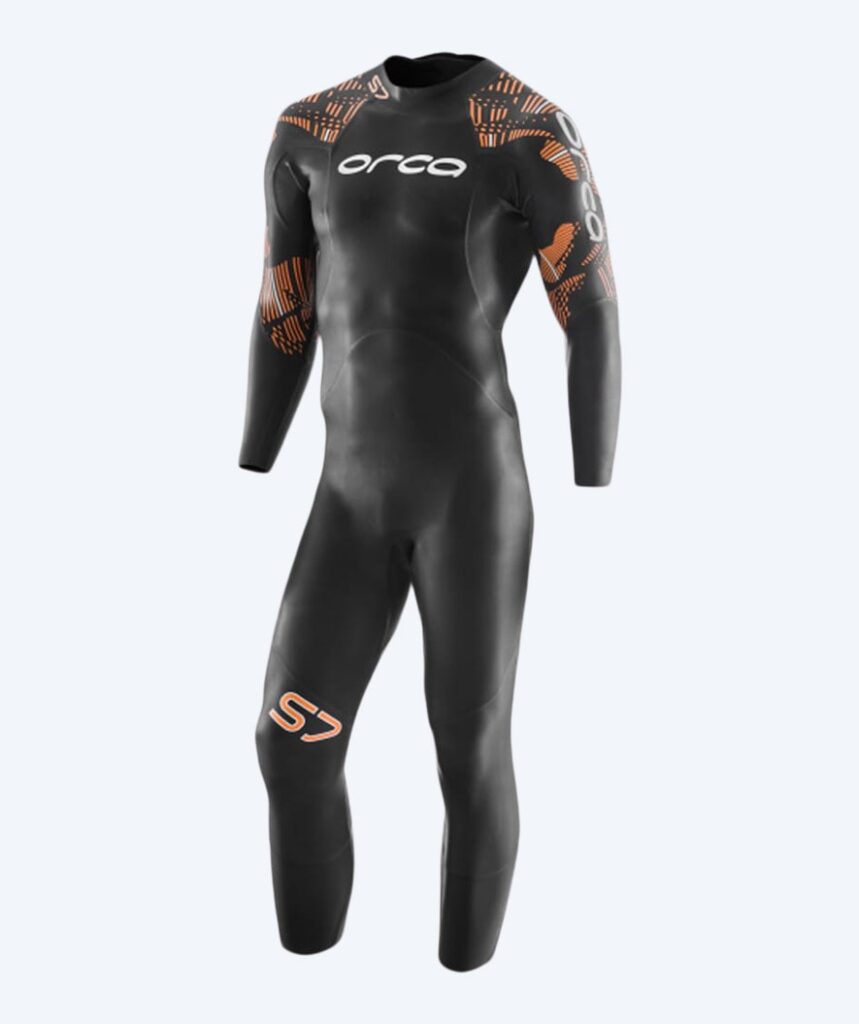
There’s a wide range of wetsuits available across various price points. Which one you should choose depends on your level and ambitions. Take a look here to get a good idea of what a wetsuit does and what they cost.
A neoprene cap helps keep your head warm. Once your head gets cold, it’s hard to think clearly and make the right decisions if you find yourself in an emergency.
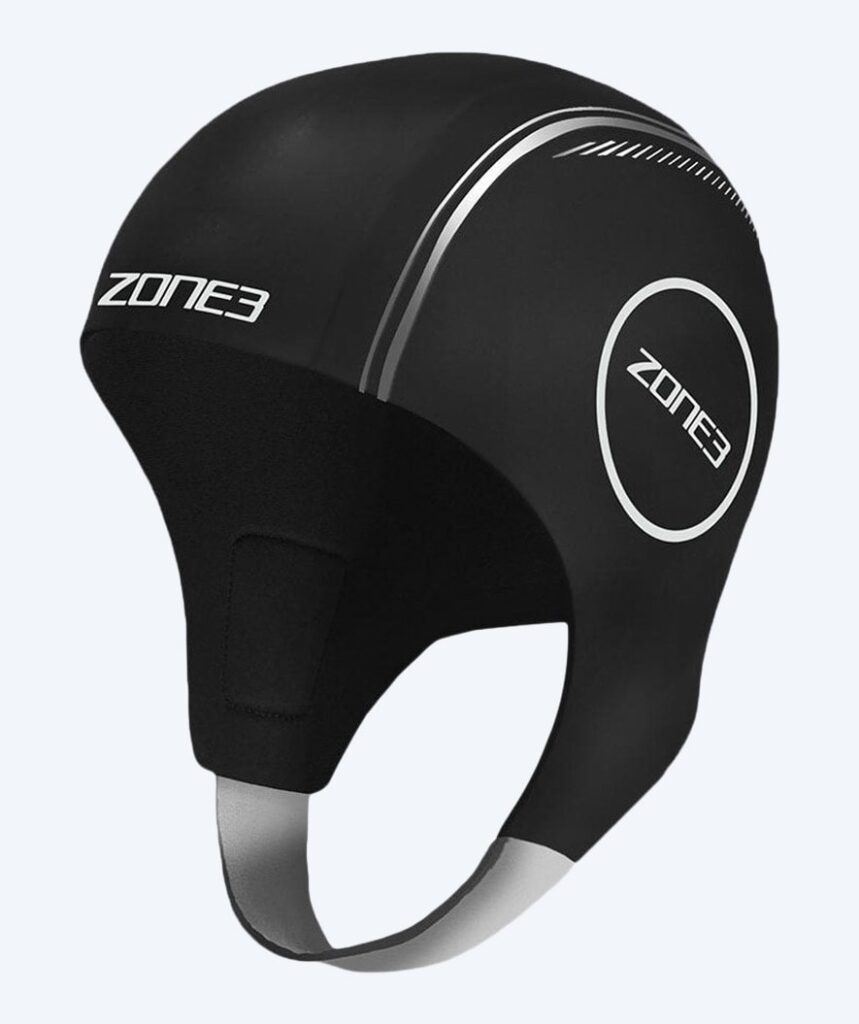
A neoprene cap helps keep your head warm. Once your head gets cold, it’s hard to think clearly and make the right decisions if you find yourself in an emergency.
It’s mostly needed in the shoulder seasons (spring, early summer, late summer and autumn), when the water is relatively cold. Some open water swimmers also wear a neoprene cap in the peak of summer, but be careful not to overheat.
You can buy a neoprene cap here.
Just as a neoprene cap helps your head retain heat, a pair of neoprene boots helps keep your feet warm. Once your feet get cold, it doesn’t take much for the rest of your body to start freezing. A pair of neoprene boots helps you prevent just that.
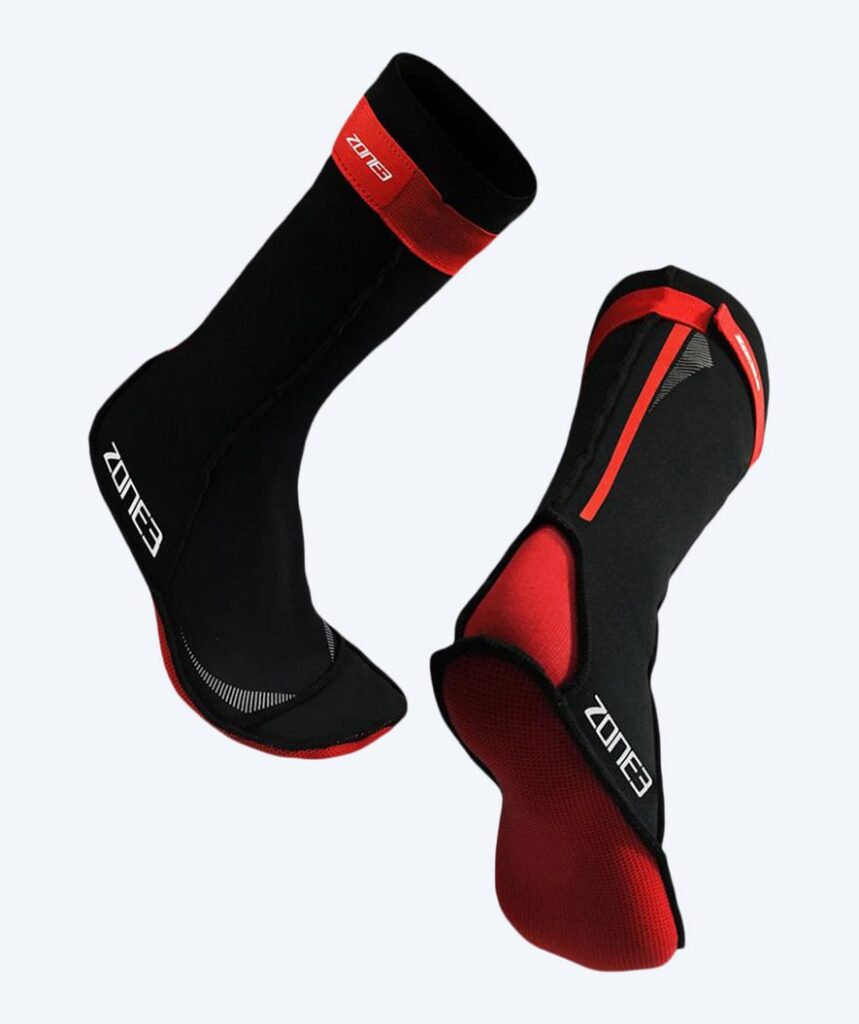
Neoprene boots are primarily designed for use in the shoulder seasons when the water is relatively chilly. Once the water reaches 16–18 degrees, I’d say it’s too warm for neoprene boots. But that’s a matter of personal preference.
If you want to help keep your feet warm, you can buy neoprene boots here.
With a pair of neoprene gloves on your hands, you’ll prevent them from getting cold when swimming in open water. Exactly like neoprene boots do for your feet and a neoprene cap does for your head.
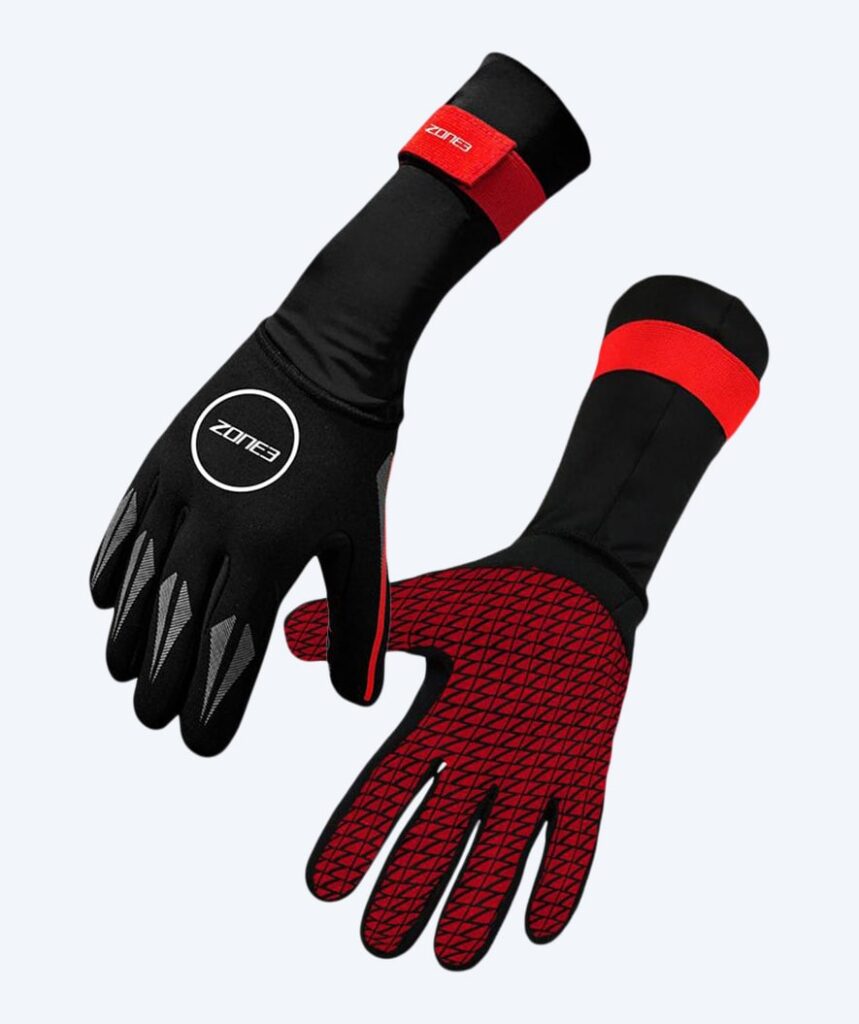
It’s primarily in the shoulder seasons, when the water isn’t quite warm yet, that neoprene gloves are a must. They can also be used in warmer water, but make sure you don’t overheat. You’ll also lose some feel for the water when wearing neoprene gloves.
You can buy neoprene gloves here.
A tow float for open water swimming can be hard to find in regular sports shops, as it’s simply too niche. That’s why we recommend buying it from a specialised swim shop like us at Watery. Here you can be sure that the tow float you choose is genuinely suited for proper open water swimming.
Based on our high Trustpilot score and my own experience, I recommend buying your tow float from us at Watery.ie. Besides the high Trustpilot rating, our prices are very fair and we offer fast delivery. So you’ll have your new tow float in your hands in no time.
That’s why I recommend buying your tow float (and all your other swim gear) from us at Watery.ie.