
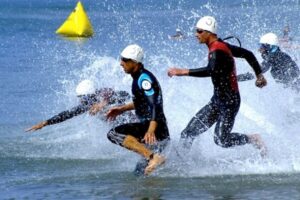
Open water gear
Make the most of the many opportunities in the water

Confused about wetsuits, goggle lenses, and that pull buoy? Don’t worry, we make it simple. Here is a beginner-friendly guide to triathlon swim gear: which wetsuit suits you, which goggle lenses you should use based on light conditions (clear, dark/mirrored, or photochromic), and small game-changers like anti-chafe balm and earplugs.
This is the ultimate guide to all triathlon swim gear. From race-day must-haves to training gear for the pool and open water. We focus on selection criteria, who each product is best for, and how to avoid buying the wrong gear.
Best triathlon wetsuits
Best triathlon swim goggles
Recommendations for swim caps, comfort, warmth, and safety
Best training gear – Prepare yourself as best as possible
Must-have vs. nice-to-have
Clothing
Goggles & swim cap
Skin & comfort
Timing & essentials
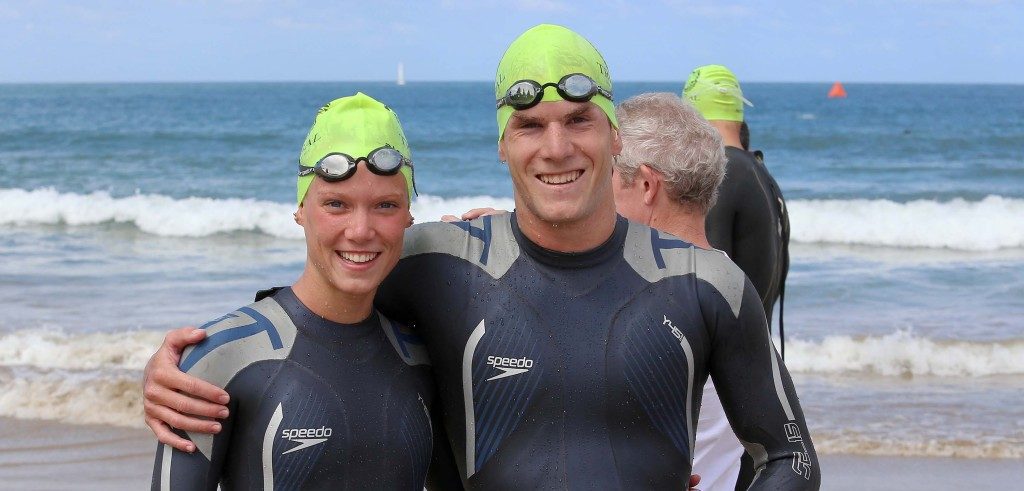
When looking for the wetsuit that fits you best, it’s not about finding the one with the most millimetres on paper, but the one you can move freely in. Check if you can raise your arms all the way up without anything pulling at your neck and shoulders, and whether you lie comfortably and horizontally in the water without feeling stiff.
Think about your choice in three ways: If you’re a beginner or simply want confidence and warmth, an “Entry/Value” suit with great buoyancy and comfort is often the most sensible choice.
If you want one suit for everything—both training and racing—an “Allround” suit with better shoulder flexibility and balanced buoyancy is the safest middle ground.
If you’re chasing maximum freedom across the shoulders and low drag, “Performance” is the way to go, but it requires the fit to be absolutely spot on.
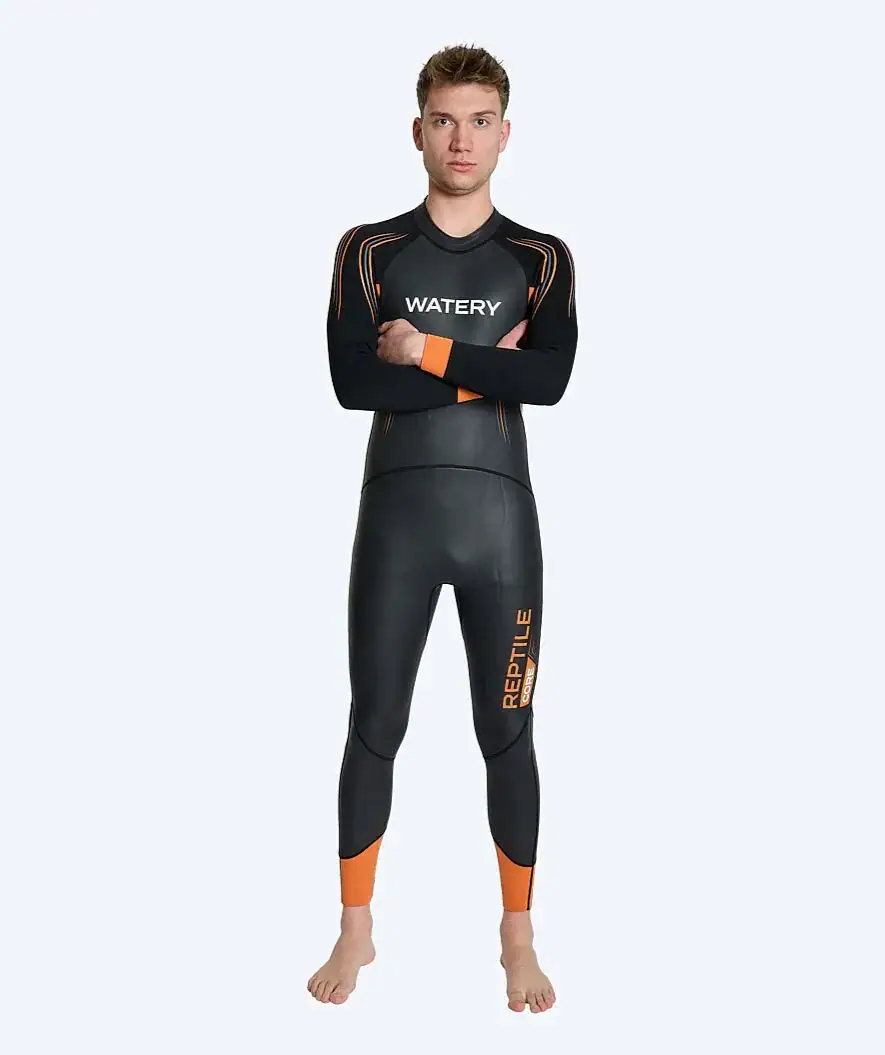
Reptile Core is our go-to beginner suit: great value and easy to swim in.
2 mm Yamamoto arms provide free shoulder movement (and also work for a bit of breaststroke), while the suit lifts you and keeps you warm in the water without feeling heavy.
A lowered collar and “no-leak” cuffs fit comfortably, speed cuffs make T1 quick, and orange details enhance visibility. YKK back zip with pull cord for easy on/off. Recommended in approx. 10–26 °C.
In short, a perfect choice for new triathletes and open-water swimmers.
– The suit is also available for women
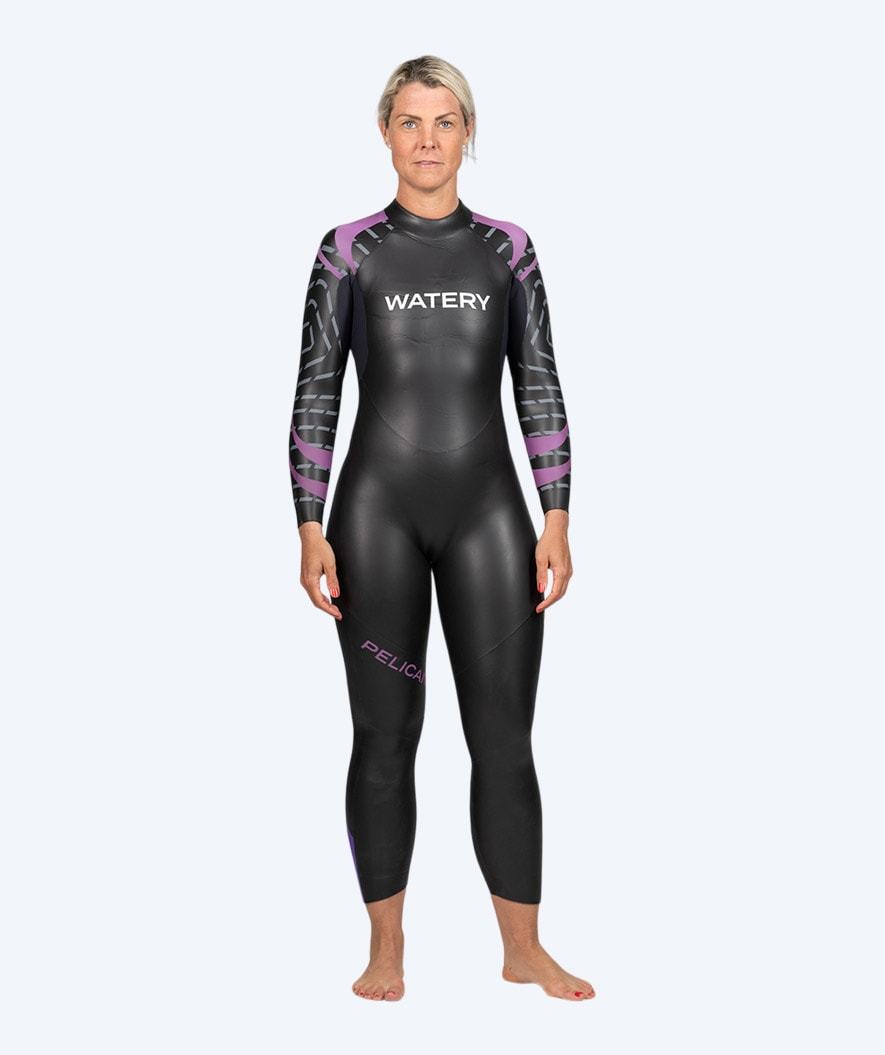
If I had to point to one wetsuit that just works for everything, it’s Watery’s “Pelican”, available for both men and women. It feels light across the shoulders (with more flex in the shoulders and back), while slightly thicker neoprene around the hips and thighs lifts you up to keep your body line flat and fast. Smooth-skin Jako neoprene doesn’t absorb water and glides effortlessly, while the neck and openings fit comfortably without leaking. In T1, it comes off quickly thanks to speed cuffs and a YKK back zip. It covers approx. 10–26 °C and features high-visibility colour details so you stay seen.
In short: comfort and performance for the price, making it easy to love for both training and racing.
– The suit is also available for men
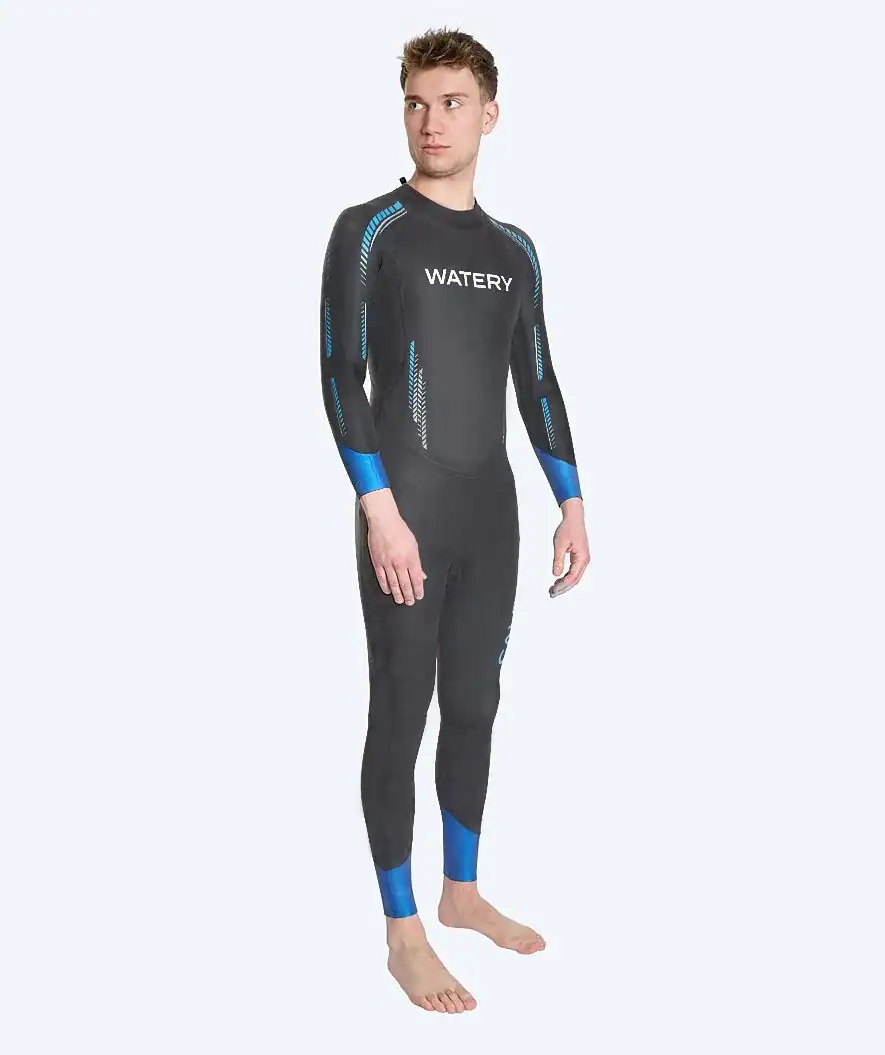
If you are a confident swimmer chasing seconds, the Calder Rapid is the suit I would choose for you. It is made from Yamamoto #39 across the board, making it feel stretchy and light, yet still durable. The panels are configured for experienced swimmers: 1.5-2 mm across the shoulders/neck/armpits for maximum freedom of movement, 3 mm on the chest/back, and 2.5-3.5 mm on the legs/thighs for a natural, high body position without “too much” buoyancy.
In the water, you’ll notice low drag thanks to the SCS surface and better water feel from the speed cuffs on the forearms, making each stroke feel more effective. In T1, it comes off quickly with a breakaway YKK zipper and thin transition panels at the calf, while the low, soft collar takes the edge off that classic “tight neck” feeling.
In short: a fast, flexible race suit for those who already have good body position in the water and want uncompromising performance. (For more beginner-friendly buoyancy and warmth, the Pelican or Reptile Core are often a better match.)
– The suit is also available for women
To find the best fit for swimming goggles, you can do a quick “suction test”: put the goggles on without the strap and see if they stay in place on their own for a moment. They shouldn’t pinch hard on the bridge of your nose or create pressure points in the corners of your eyes. The strap should fit securely, but not too tight. Also, consider the field of view. In open water, slightly wider goggles give peace of mind because you can see the pack, buoys, and landmarks without turning your head as much. Narrow “pool” goggles can be fine for training, but for triathlon, many (including myself) prefer a model with wider vision and a softer gasket against the cheekbones.
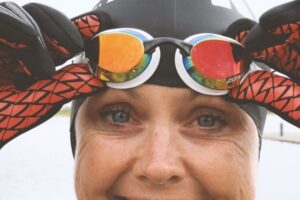
I recommend bringing two pairs of swimming goggles on race day. If it’s sunny or there’s low morning sun causing glare on the water, a dark/mirrored lens (preferably polarised) is easiest on your eyes. If it’s overcast, an early start, or hazy, you’ll see best with a clear or light-tinted (e.g. amber) lens.
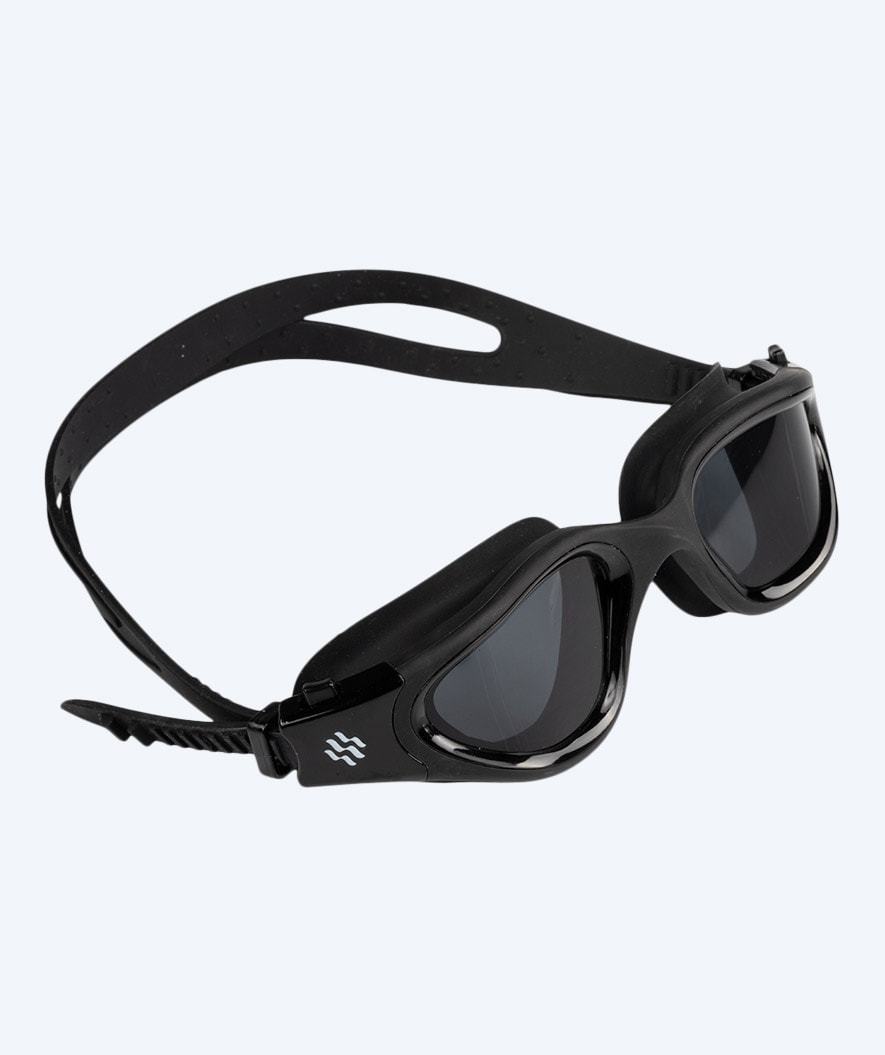
If you want a pair of swimming goggles that simply… work, check out Raven Active (smoke). They have soft 3D-moulded silicone gaskets that seal gently without pinching, so you avoid both leaks and red marks. The polarised smoke lens cuts through glare and protects against UV, yet remains versatile on overcast days, making them great for both pool and open water. The field of view is wide (180°), so you can easily spot buoys and the pack, and the flexible nose bridge feels comfortable even on longer swims. And if you prefer a mirrored look, this model is also available with a mirrored lens 😉
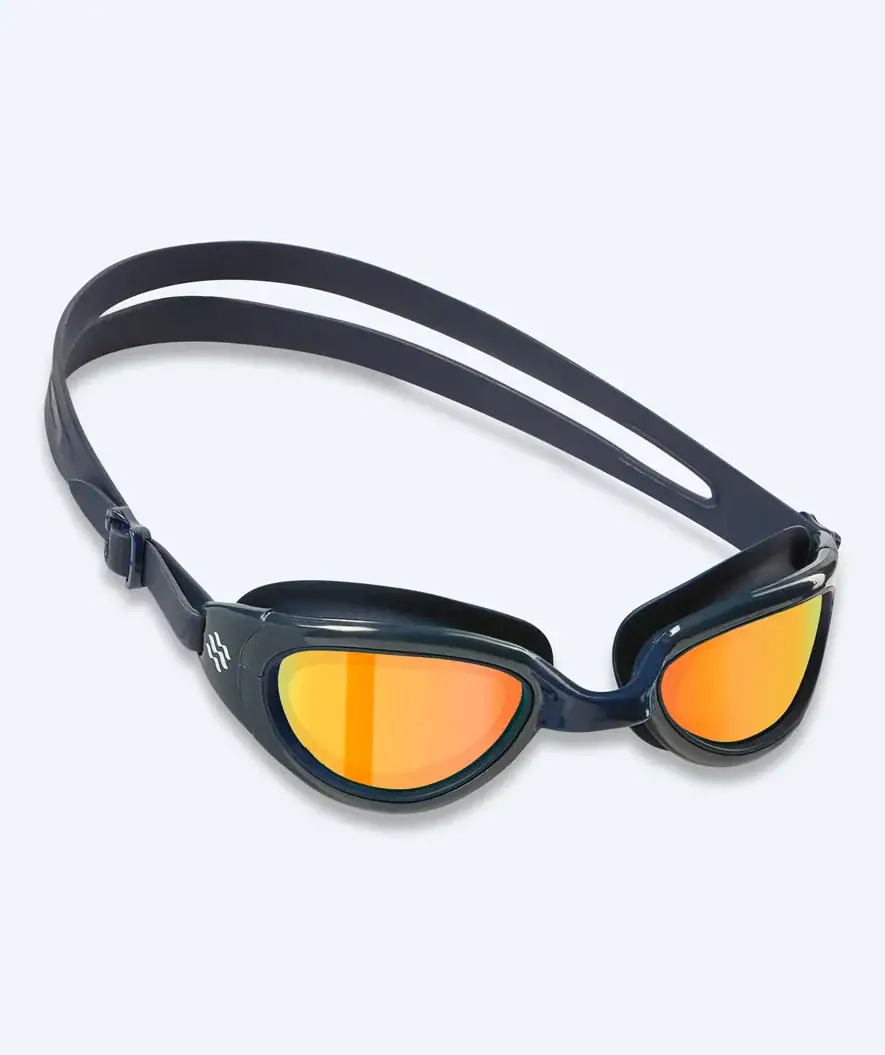
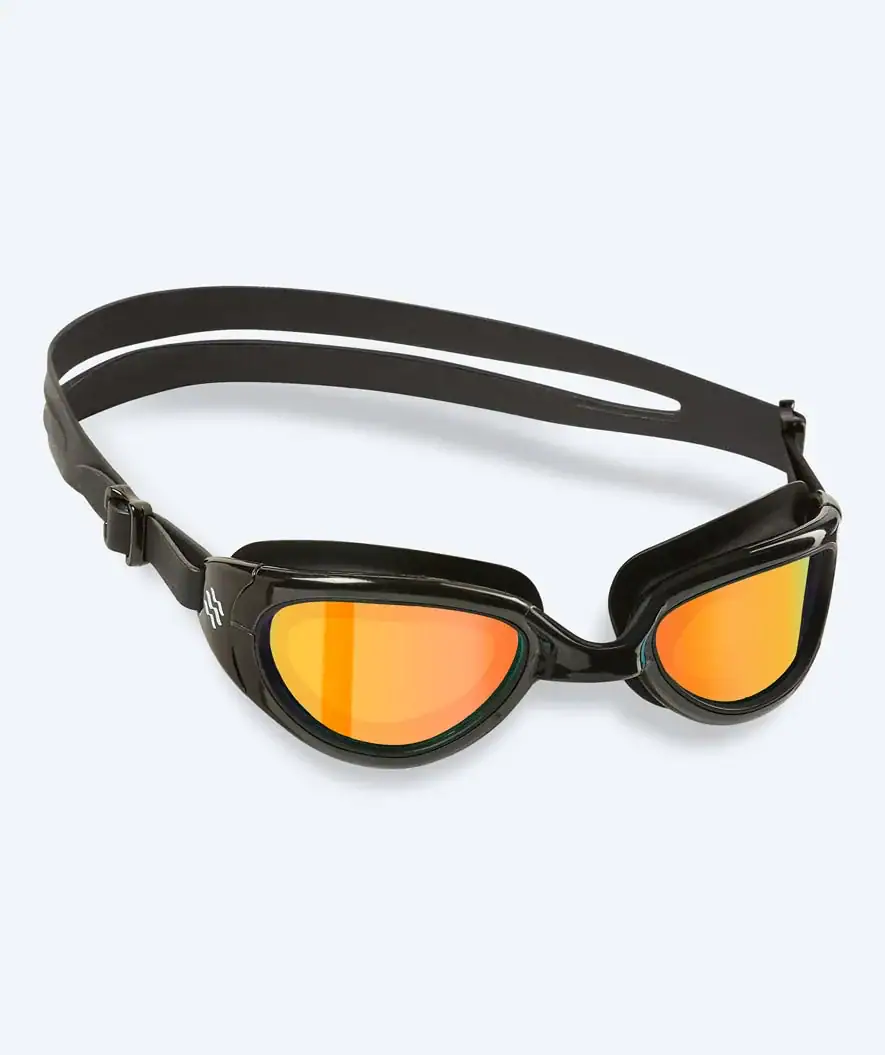
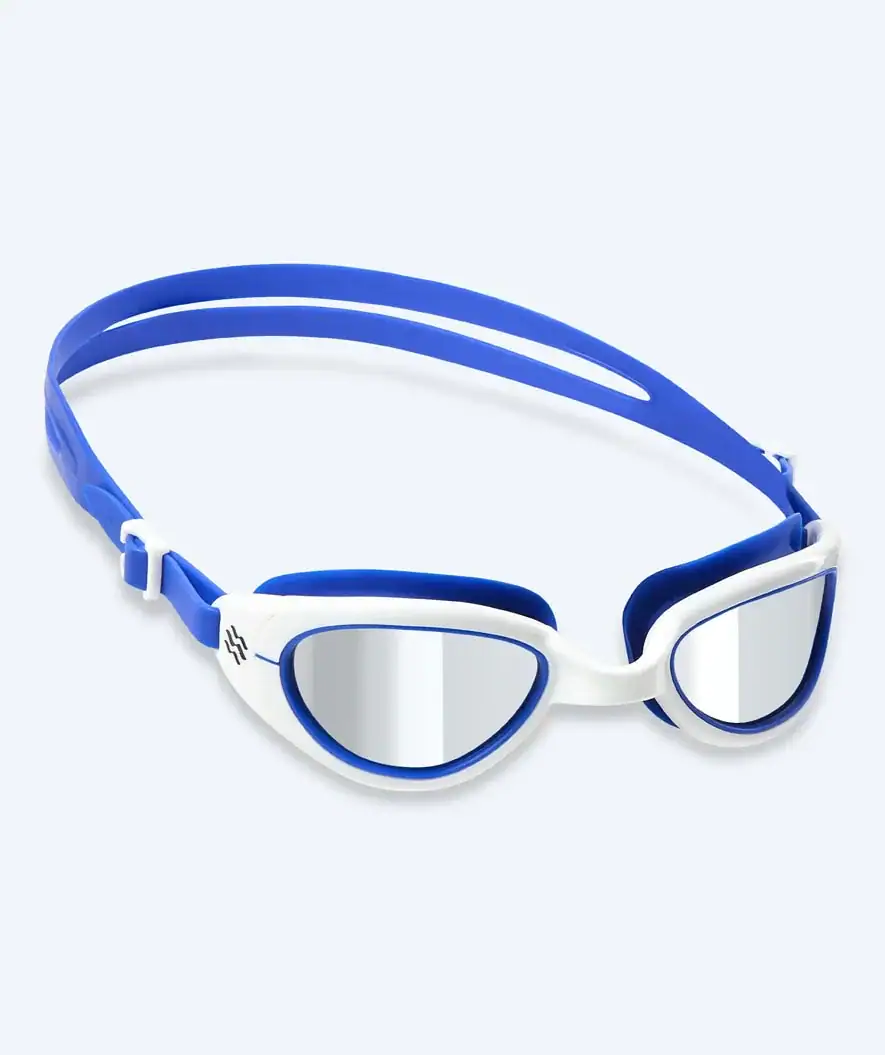
The mirrored lens features a photochromic + polarised coating, reducing glare and adapting to changing light—perfect for sun breaking through clouds and mornings with glare off the water. You get a wide 180° field of view, making it easy to keep an eye on buoys and competitors. The frame is made of soft, durable silicone with a flexible nose bridge that stays comfortable even on longer swims. In short, it’s another really strong choice! Solid, light-adaptive goggles for triathlon and open water that stay in place and give your eyes a rest. (Also available in a non-mirrored version as well as a kids’ model.)
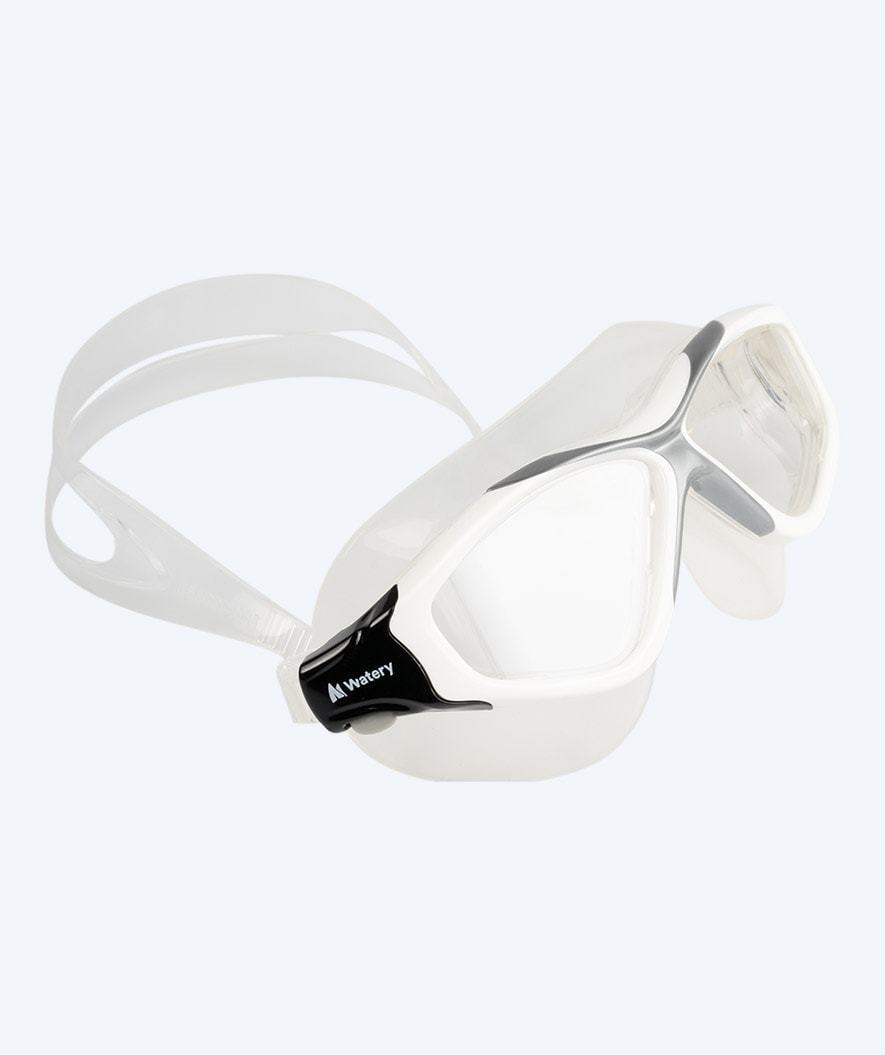
If you’re looking for maximum visibility and zero hassle with leaks, the Watery Mantis (clear lens) is a great contender, and yes, it’s a swim mask. This means the seal sits outside the eye socket (larger silicone skirt), distributing pressure more evenly and feeling much more comfortable than classic, narrower swimming goggles. For many beginners and tri/open-water swimmers, this means fewer leaks and far greater peace of mind.
Quick heads-up: a mask takes up a bit more room on your face than low-profile goggles, so it doesn’t have the most “race-aero” look. On the other hand, you get comfort, excellent visibility, and a reliable seal, which for many is far more important, especially in open water.
A swim cap keeps your hair under control and minimises drag. At most events, the organisers provide a swim cap that you are required to wear. Many people choose to wear their own thin silicone cap underneath the race cap for a better fit and a bit of extra warmth (a great trick is to put your goggle strap between the two caps, so your goggles stay extra secure at the start).
Open water visibility: opt for a bright colour (orange, yellow, pink), making you much easier to spot.
If you want a little extra warmth, you can, as mentioned above, wear your own silicone cap underneath the race cap. This provides a small but noticeable boost in warmth without adding bulk. If the water is really cold, a neoprene cap (2–3 mm) is the warmest option for training; if you plan to wear it during the race itself, remember to check the event rules first.
Chafing on the neck can ruin an otherwise great day (Trust me… it is not pleasant). Fortunately, the solution is simple: apply a thin layer of anti-chafe balm to your neckline, collarbones, and underarms before putting on your wetsuit. Apply it to dry skin 10–20 minutes before the start, allowing it time to settle.
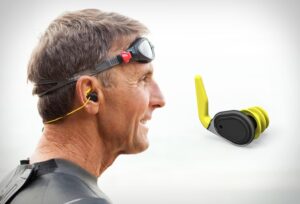
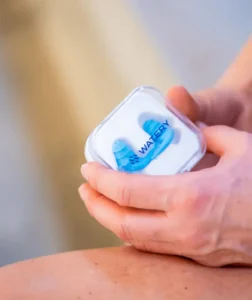
Earplugs are all about comfort, focus, and warmth. Many swimmers find that earplugs reduce cold shock and dizziness, especially in chilly or choppy waters. Choose a pair that is easy to insert and remove without hassle. I used to always get water in my ears when swimming front crawl, and earplugs completely removed that worry for me. Earplugs are usually permitted in triathlons, but always double-check the race briefing just to be sure.
So do yourself a favour—earplugs are usually very affordable and make a massive difference. Give them a try!
Check out my favourites right here
First things first: be visible, and never swim alone. Wear a brightly coloured swim cap (orange/yellow/pink), and make sure to bring a swim buoy / tow float in a high-vis colour (orange) on training swims. It makes you easy to spot for your swim buddy, lifeguards, and boats, and you can keep your phone/ID/dry clothes inside.
(Note: tow floats/buoys are usually not permitted during the actual race.)
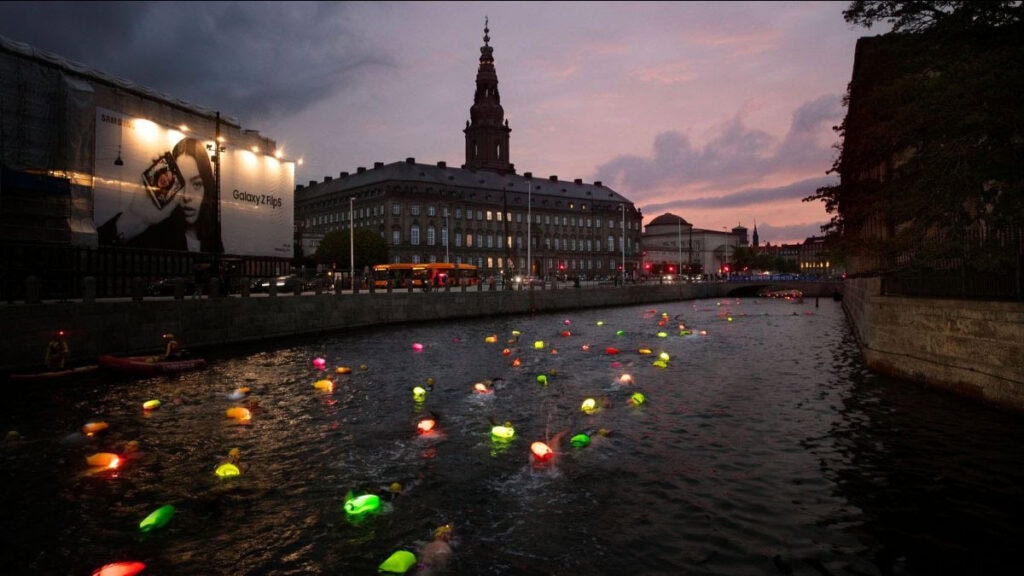
Always arrange to swim with a buddy or have someone on shore who knows your route and expected time. Swim parallel to the shore at a comfortable distance, set clear turning points, and agree on simple hand signals for “all ok” and “stop”. At dusk or in overcast weather, you can attach a small safety light onto or inside the tow float.
(Check out the picture to see how visible it makes you)
Plan your exit too: where will you safely get out, and what will you put on afterwards? Have warm clothes and a hot drink ready on shore, especially in cold weather. It sounds simple, but it can make the difference between a great training session and a miserable one.
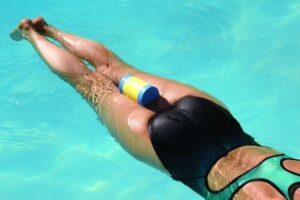
First things first: choose a few good pieces of equipment and use them for 10–15 minutes per session. A pull buoy is the number one choice for beginners because it elevates your hips and legs, helping you stay higher in the water so you can focus on arm strokes and breathing without sinking at the back. Combine it with short sets (e.g. 6×50 m easy) and focus on long, relaxed strokes.
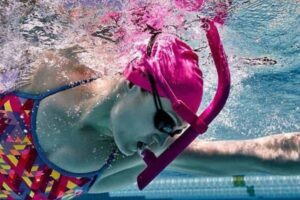
A centre snorkel is the second best investment. When you do not have to turn your head to breathe, you can maintain your body alignment and rhythm and really feel your catch (the initial hold on the water). Use it in steady technique sets or pair it with a pull buoy—they make a powerful duo for building composure and control.
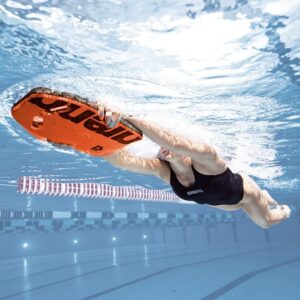
My final recommendation is a kickboard. The kickboard is the easiest technique tool to benefit from. Resting your arms on the board allows you to maintain good body alignment and practise small, hip-driven kicks without relying on propulsion from your arms. Use it for 5–10 minutes during easy technique drills, ideally together with a centre snorkel for full focus and even better stability.
Your most important companion is a tow float / swim buoy: it keeps you visible, allows you to take a quick rest, and has room for your phone/keys. Only use it for training, not during races.
If you are training in colder water, I highly recommend a neoprene hood (2–3 mm), neoprene socks, and possibly gloves. This brings calm and keeps your body warm. Wearing a double silicone cap can also add warmth. If you want to use neoprene in a race, be sure to check the event rules.
This might not sound like “training gear”, but trust me, it makes a huge difference! Good logistics simply make life easier: keep a changing mat / bucket by the car, a poncho for shelter from the wind, and a thermos with hot water/drink for after your swim.
Small habits: anti-fog on your goggles, a bit of anti-chafe balm on the back of your neck, a planned exit point, and having dry clothes ready – this will turn every open water session into something you look forward to.
Race day
Training
Think fit and shoulder flexibility first; many triathlon wetsuits are around 2 mm over the shoulders/arms and 3-5 mm on the body/hips. Always check the race rules.
Have two pairs: clear/light-tinted for overcast days and dark/mirrored for sun. If you’re unsure, photochromic is a good compromise.
Never touch the inside of the lens, rinse them in fresh water after use, let them air-dry, and use anti-fog on race morning. If they fog up, give them a quick rinse and carry on.
Earplugs are usually fine; the rules on neoprene caps vary. Always read the race briefing for the rules.