

Open water gear
Make the most of the many opportunities in the water

There is a vast sea of different wetsuits from many different manufacturers and across many different price ranges. In addition, there is also a difference in what the suit will be used for. It can therefore be difficult to figure out which wetsuit is just right for you and your needs.
That’s why we have put together this updated guide, where we help you find the best wetsuit for your needs – based on expert knowledge and customer reviews. In addition, you can also learn more about how to choose the right wetsuit and the rules for using wetsuits at triathlon events. Read all my recommendations below 👇
Best beginner wetsuits:
Best semi-pro wetsuits:
Best professional wetsuits:
👆 Click on each model to jump down to the section where we review each one in detail.
 Best wetsuit for breaststroke
  Best breaststroke wetsuit for women
  Best high-quality beginner wetsuit
  Best high-quality beginner wetsuit for women
  Good wetsuit at an affordable price
 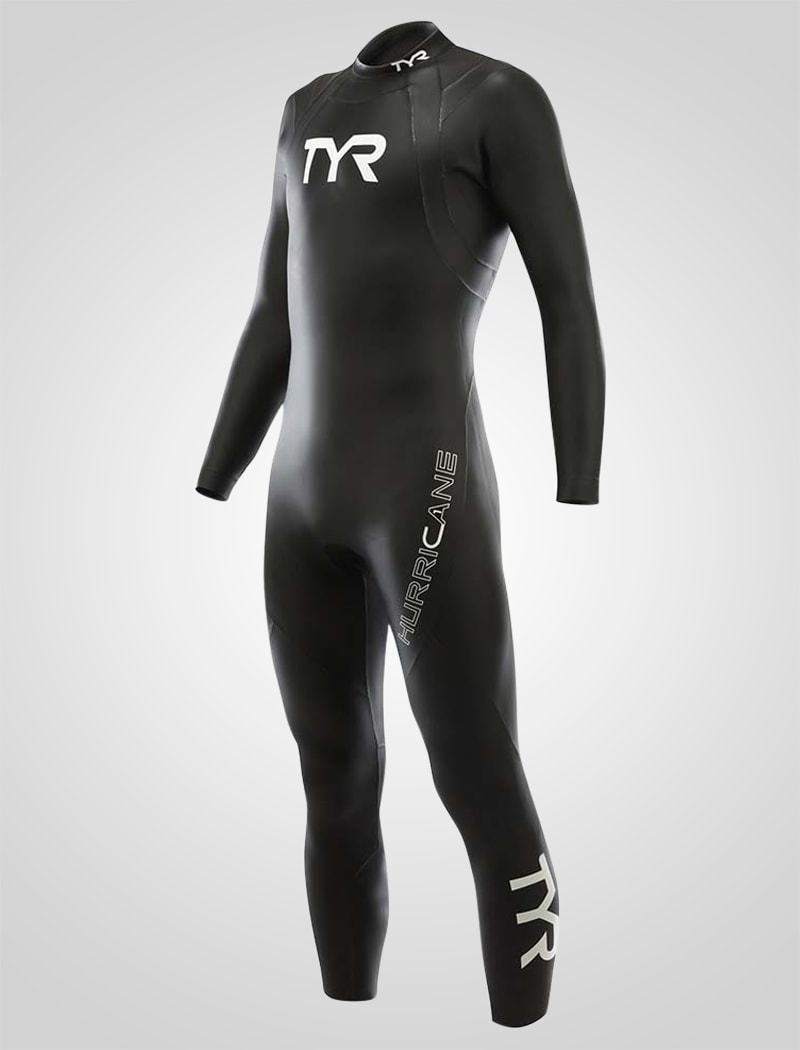 Best value for men
 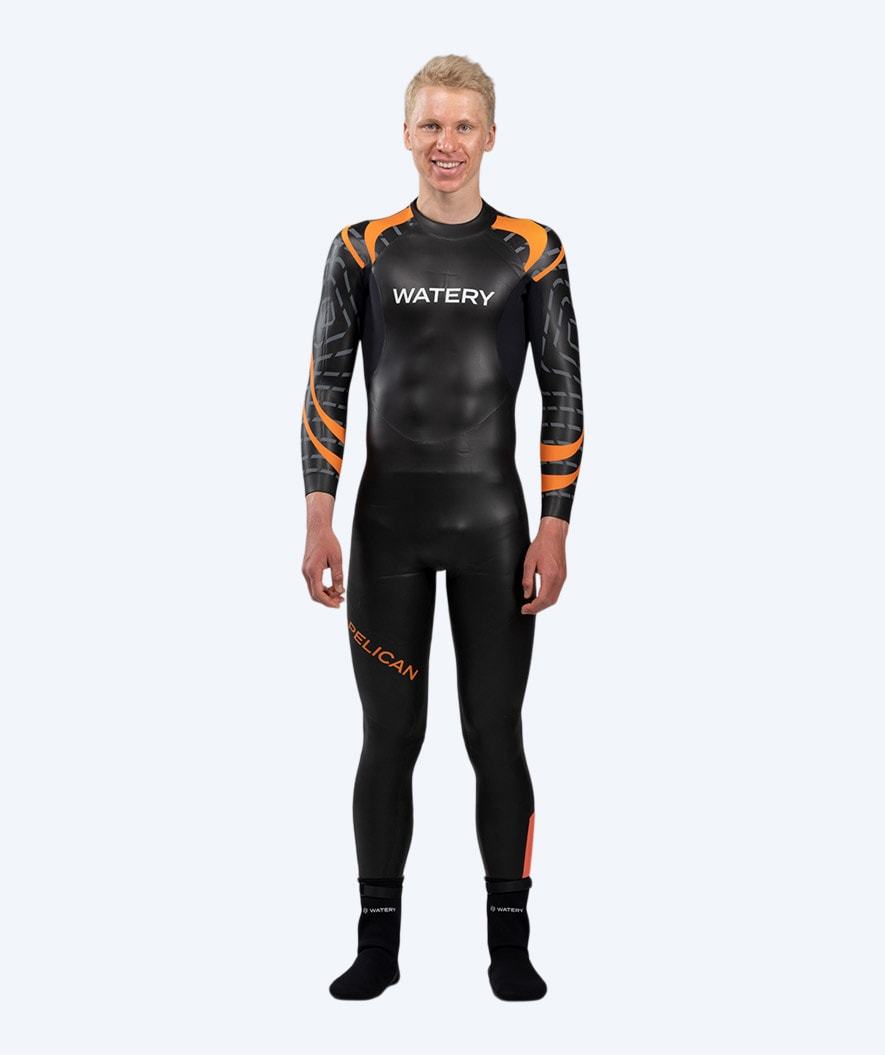 Best value for money for women
 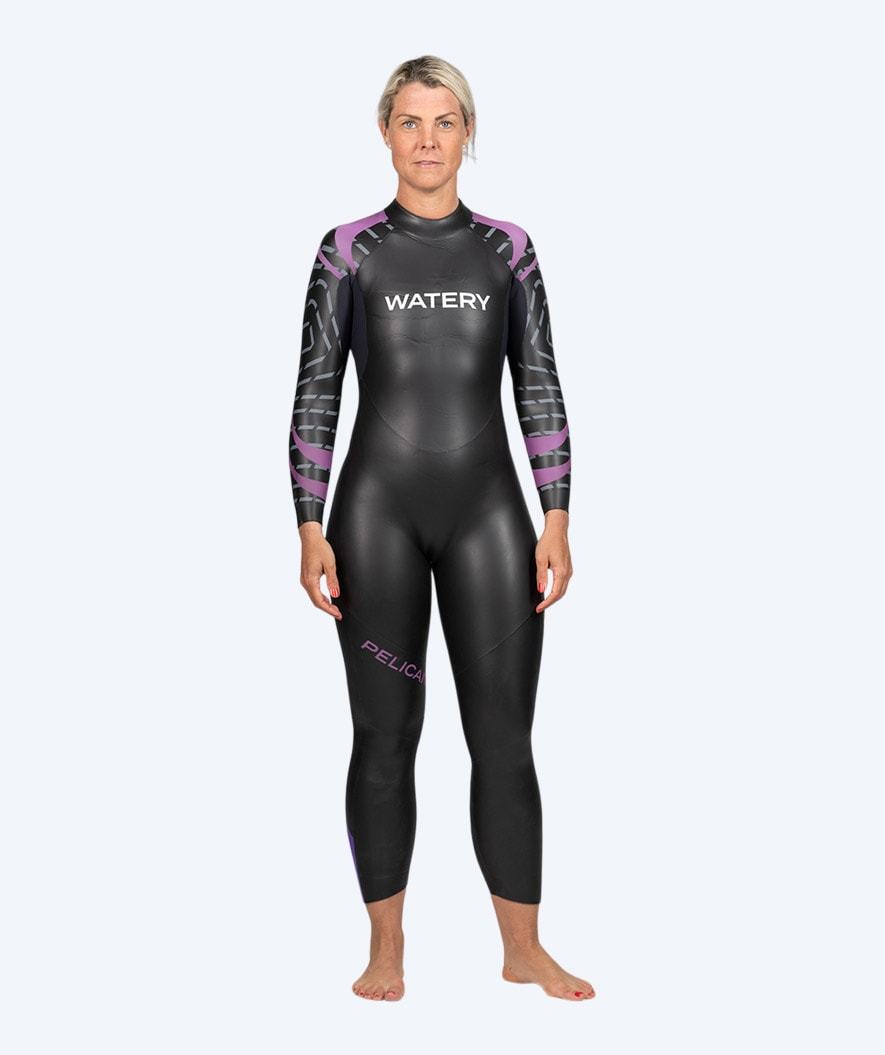 Best wetsuit for professionals (men)
 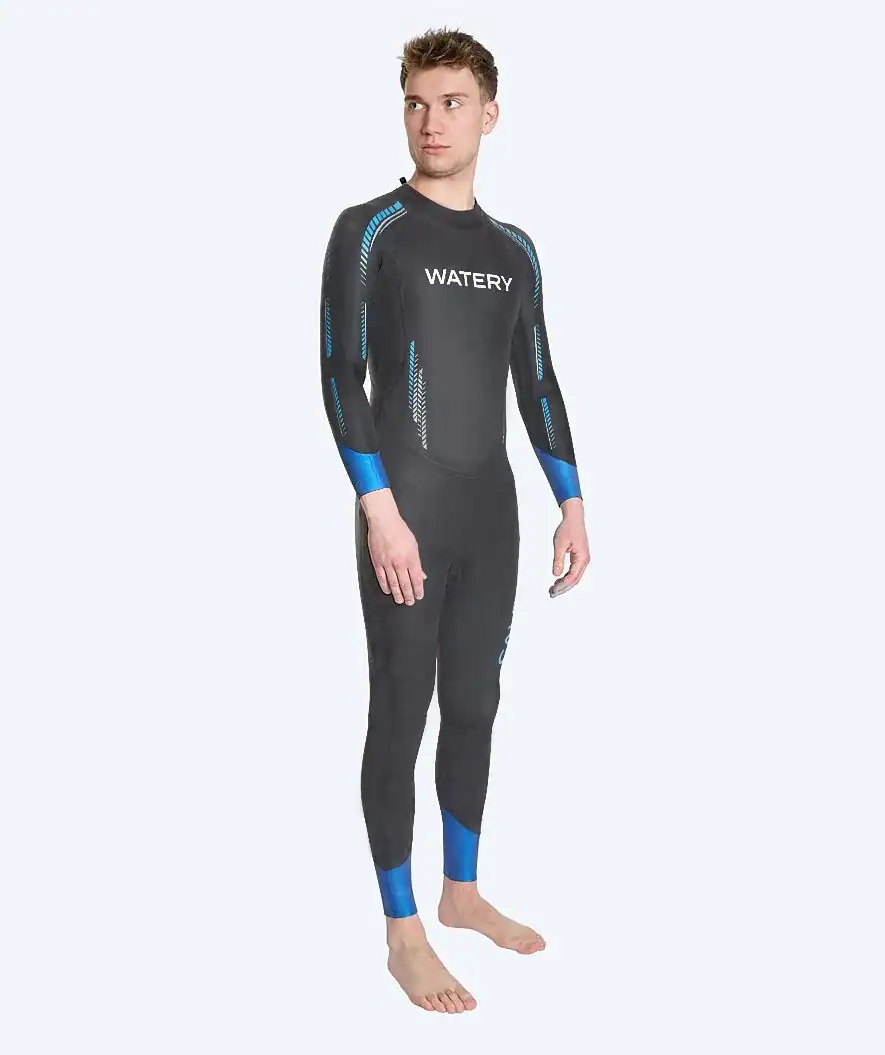 Best wetsuit for professionals (women)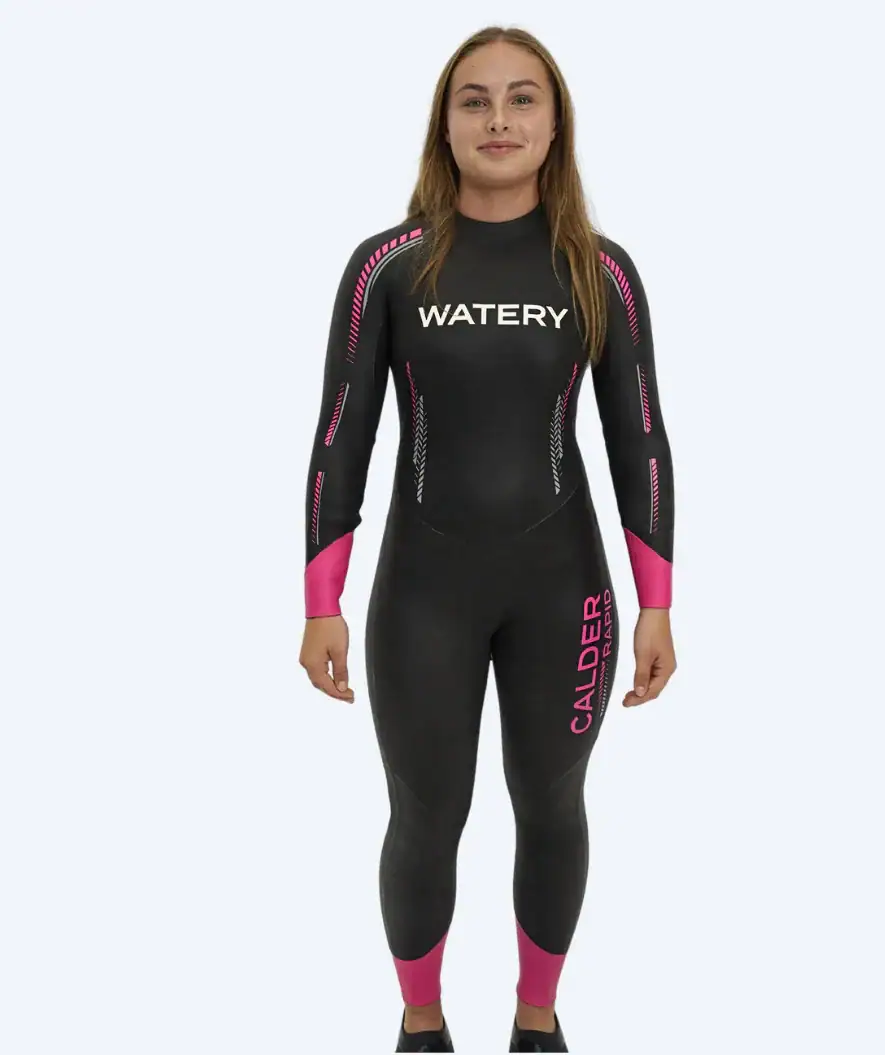
I have spent countless hours in open water and tested a variety of wetsuits to find the models I can best recommend for every experience level. This includes the cheapest, the most expensive, and everything in between.
The evaluations are based on factors such as buoyancy, protection, material, thickness, suitability for intermediate swimmers, professionals, and children, price and design – as well as my personal overall experience with each model.
Jump to the relevant level using the buttons below:
In this category, I have gathered the wetsuits that I found offered by far the best performance in terms of buoyancy, insulation, and freedom of movement – without costing an arm and a leg.
These wetsuits are the best suits in the “entry-level category“, meaning the price is low without compromising on essential features.
All suits comply with current thickness regulations, making them legal for competitions (and internationally approved by World Aquatics/FINA). In addition, they all feature the key qualities of increasing buoyancy, reducing water resistance, and retaining warmth inside the suit.
Furthermore, they still offer a great degree of freedom of movement, which is otherwise often compromised on budget suits. That being said, they do not offer quite the same flexibility as the most expensive “top-end suits” on the list.
I recommend these suits for new open water swimmers who want to test the waters and are not yet completely sure if open water swimming is right for them.
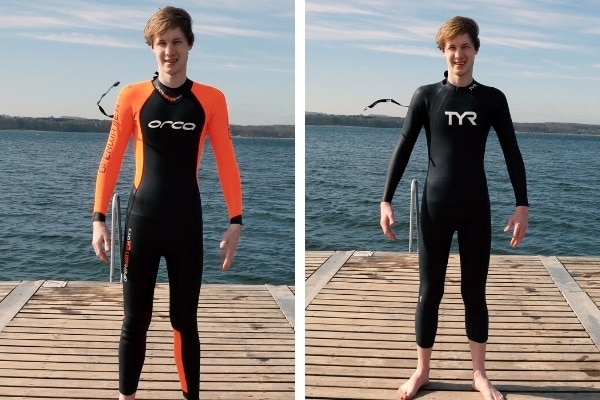
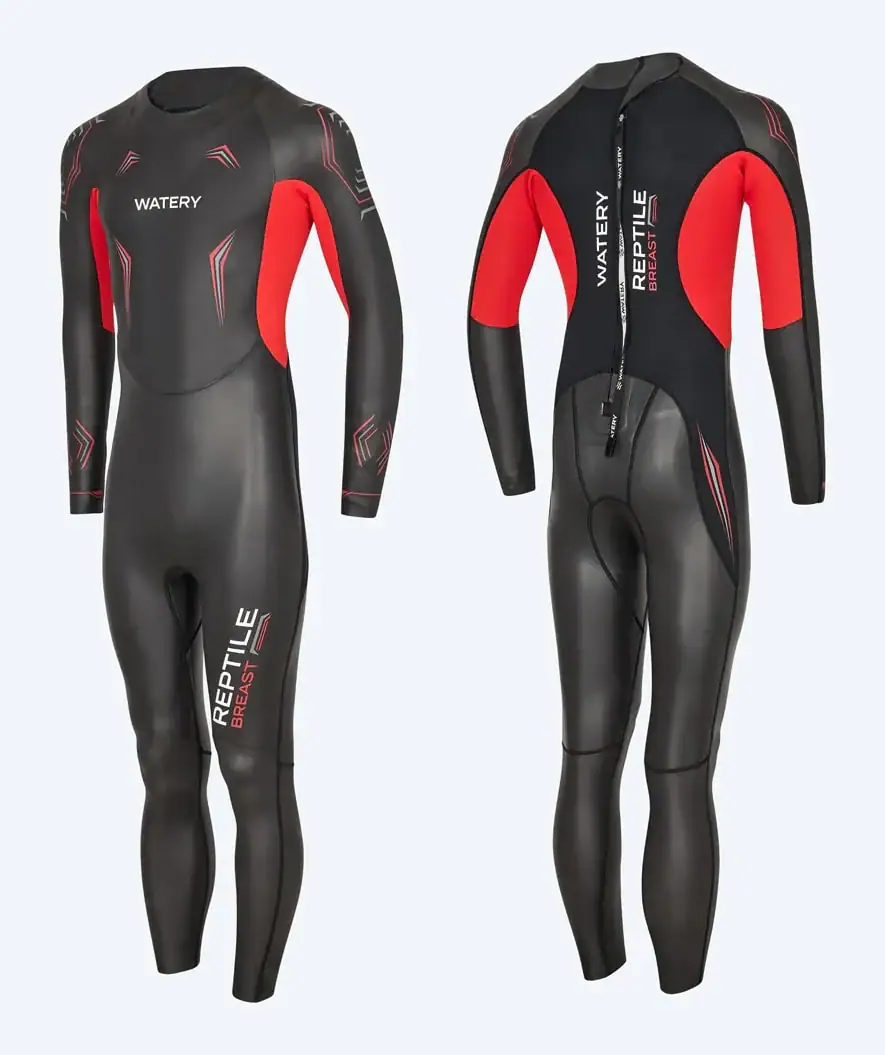
If you – like many other new swimmers – primarily swim breaststroke in open water, then the Reptile Breast is a suit you simply have to try. It has been developed specifically for beginners who prefer breaststroke, and this suit makes a massive difference.
While most wetsuits automatically lift your hips and legs to keep you flat in the water, this one does the exact opposite. The Reptile Breast is designed with 5 mm neoprene on the front of the chest, 3 mm on the back, and 2 mm on the legs. This means your legs stay submerged, allowing you to perform a natural breaststroke kick without fighting against the suit.
At the same time, it features flexible panels – what we call “flex-compound” – on the inside of the legs as well as under the arms. This provides a level of freedom of movement rarely found in wetsuits, which is absolutely essential for swimming breaststroke without resistance.
The suit is made from durable and warm Jako neoprene, known from other top-tier wetsuit models, ensuring genuine quality.
The surface features a smooth-skin treatment, so water glides right off when you are swimming or when the suit is drying.
You also get the small yet crucial details: no-leak panels at the neck, wrists, and ankles, a low and comfortable neckline, a YKK zip on the back, and high-visibility orange accents to keep you easily spotted in the water.
So if you primarily swim breaststroke, the Reptile Breast is truly the best choice for you! It naturally works for front crawl too, but it is above all designed for those who swim breaststroke and want to feel free and natural in the water.
“The wetsuit is truly well-suited for breaststroke! Bought it a week ago and use it for my daily swim in Stadil Fjord (freshwater).” – (Harald M.)
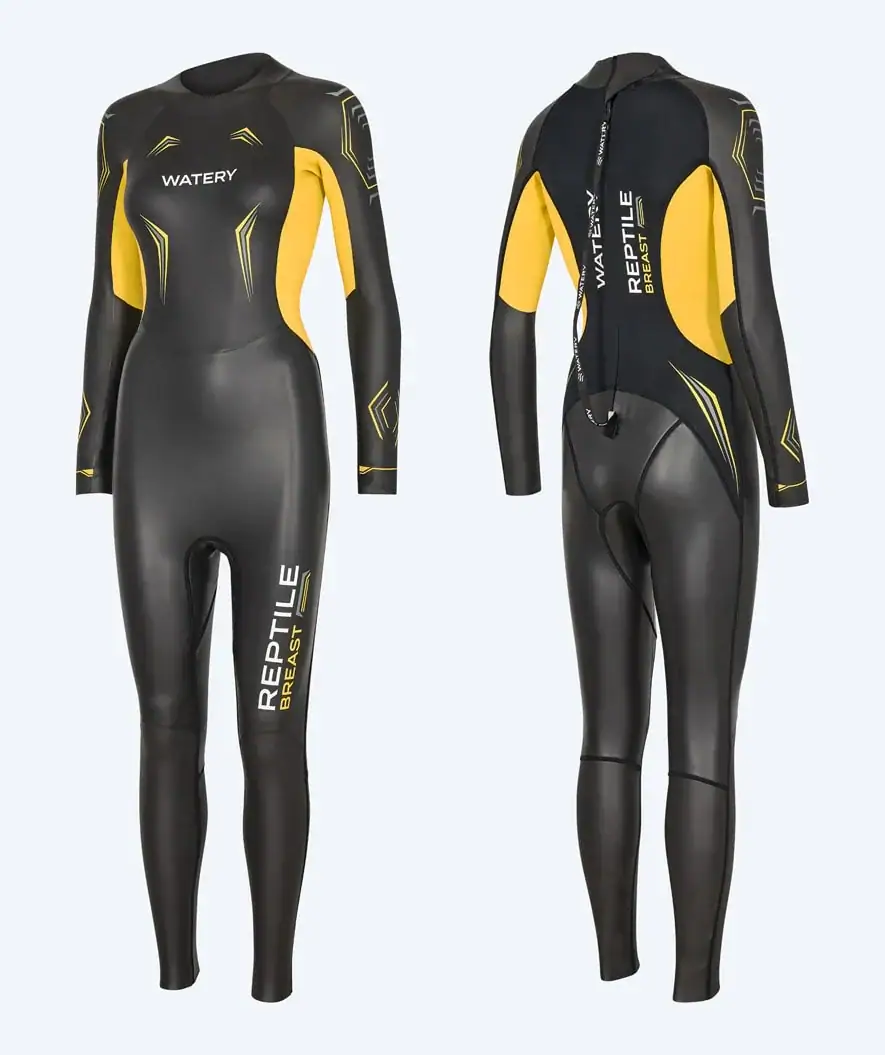
We completely understand why so many people are thrilled with the Reptile Breast for women. According to both experts and users, the Reptile Breast for women is the first wetsuit that truly feels like it was designed specifically for breaststroke. It is comfortable, warm, and lets you move naturally without having to fight against the suit when swimming breaststroke.
It is especially the distribution of neoprene that makes the difference: You get 5 mm of neoprene on the chest to keep you warm and provide slight buoyancy, while there is only 2 mm on the legs, allowing you to easily perform the characteristic breaststroke kick without resistance.
The suit is also equipped with extra stretchy panels at the hips and armpits, providing the necessary mobility for both arm strokes and leg kicks. Several swimmers highlight how little you notice the suit while swimming – it moves with the body without pinching or pulling.
The smooth-skin surface featured on the suit prevents water from soaking into the neoprene, keeping you light in the water, and the drying time is pleasantly short. It is all wrapped up in a sleek black design with yellow details that offer high visibility in the water and look fantastic.
If you primarily swim breaststroke in open water – and are a beginner – and you want a suit that supports your breaststroke rather than restricting it, then the Reptile Breast is an obvious choice that we warmly recommend. And yes, it works for front crawl too, but it really is made for breaststroke swimmers.
“I am very pleased, as I can now extend my sea swimming well into November; the wetsuit keeps me warm while still giving me full freedom of movement” – (Michelle K.)
“Small fitting, so I’m glad I sized up as recommended. Worked great for swimming. Good not to have to worry about jellyfish stings.” – (May)
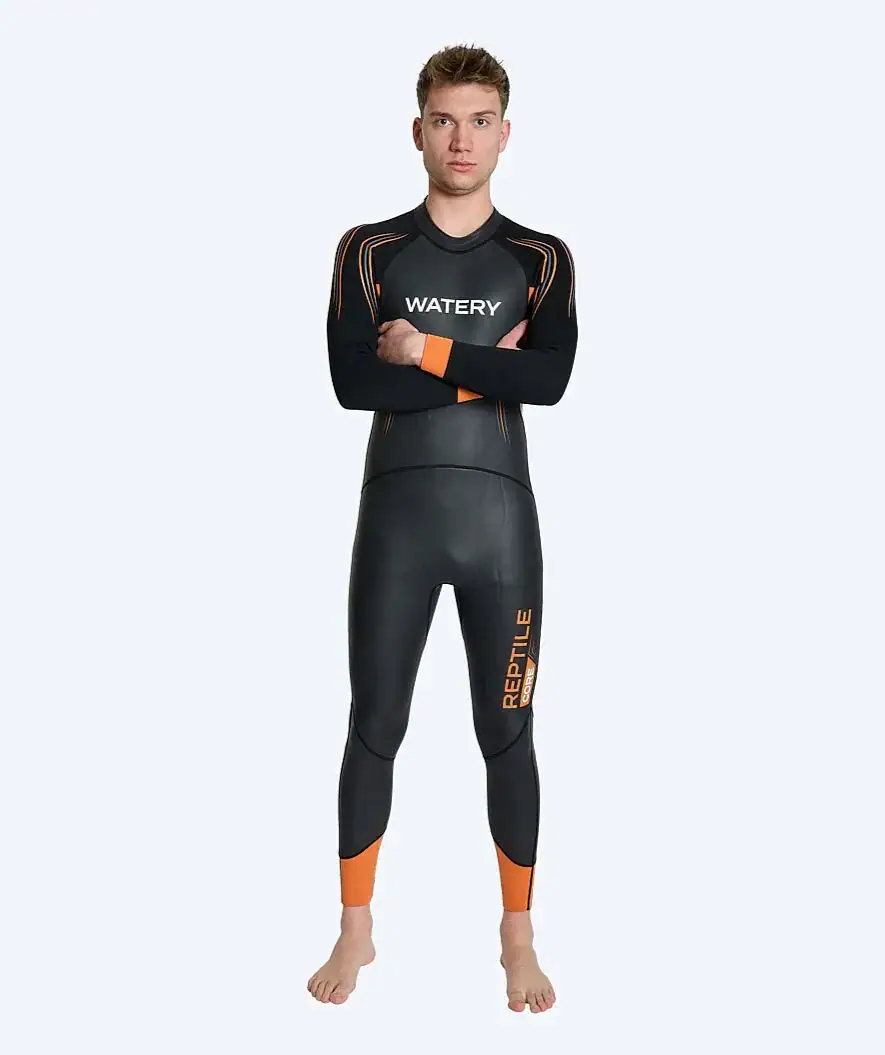
If you are new to open water swimming or triathlon and looking for a suit that is flexible, comfortable, and easy to use, we definitely recommend the Reptile Core as one of the best options on the market. It is made from limestone-based Yamamoto neoprene, which is far more flexible than traditional neoprene.
The suit features 2 mm neoprene on the arms and 2.5 mm on the rest of the body. This makes it super comfortable to swim in – whether you swim front crawl or prefer breaststroke. We particularly noticed how easy it is to take long, relaxed strokes without feeling restricted.
In addition, the manufacturer has added speed-cuffs at both the arms and legs, making a big difference in transition times – something you really appreciate in triathlon. The suit has a smooth-skin coating, so water glides right off and it doesn’t get heavy while swimming. It’s also a major plus that it dries quickly.
The Reptile Core is also one of the most visible suits on our list. It features orange details on the arms and legs, making you easy to spot by both boats and onlookers.
The suit also has a snug collar with no-leak panels to prevent cold water from flushing into the suit. Always choose a suit that fits nice and close!
We included this suit on the list because it is a top-class beginner wetsuit that gives you everything you need WITHOUT breaking the bank.
“Swam 2,200 metres in a 25-metre indoor pool today and it was a great experience, with my new suit fully living up to my expectations. Especially the orange panels under the arms were extremely comfortable to swim in. Highly recommended.” – (René N.)
“The Reptile Core wetsuit is a truly successful and positive swimsuit! I even managed to get the right size. The colour is a treat for the eyes, and I hope to test it out in practice soon. It completely lives up to my expectations! Thanks once again to the team. ” – (Manfred R.)
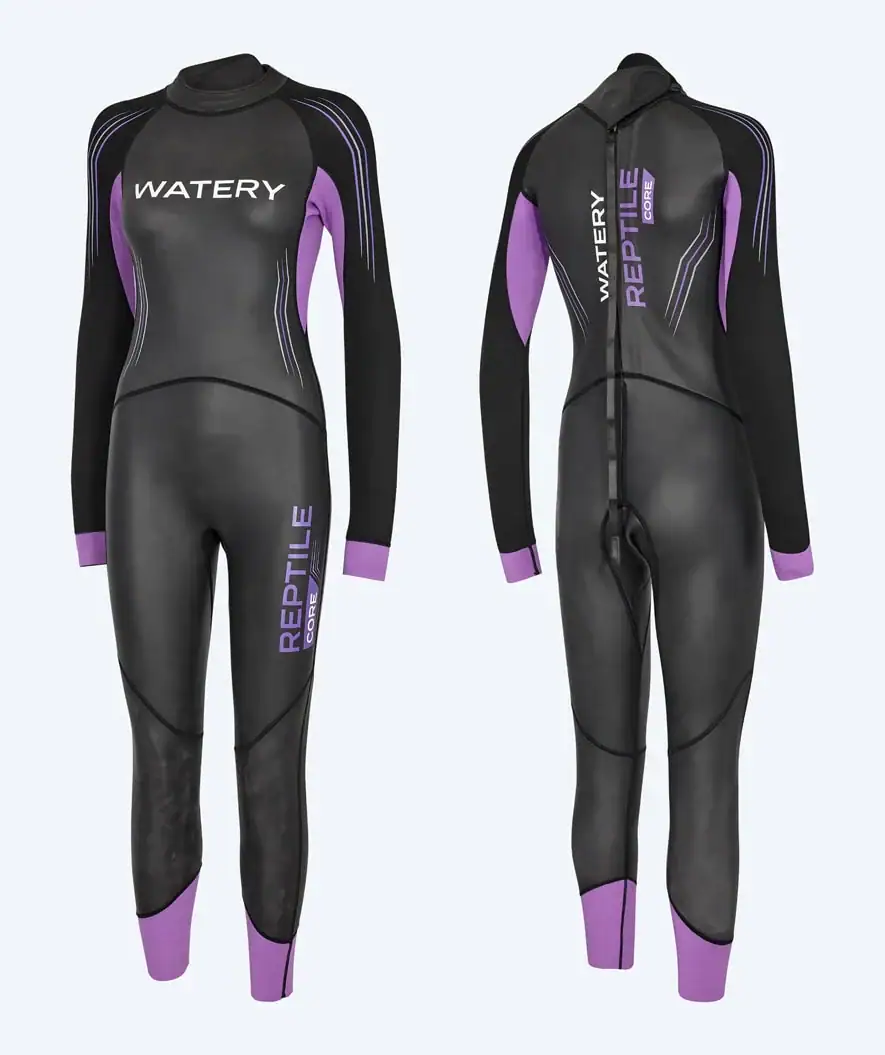
We just wrote about the men’s model, and now it’s time for the women’s version of the Reptile Core, which deserves the exact same praise. This is the perfect wetsuit for anyone new to open water swimming who still wants something that performs solidly and lasts well – both for training and competitions.
The suit is made from flexible Yamamoto neoprene: 2 mm on the arms and 2.5 mm on the chest, back, and legs. This means you can take long, natural arm strokes without feeling resistance, while still getting plenty of buoyancy in your legs to maintain the correct swimming position in the water. It also makes the suit well-suited for breaststroke, as highlighted in the customer reviews.
There are purple colour details on both the arms and legs for high visibility in the water, although we still recommend bringing a high-visibility tow float to make yourself even easier to spot.
In addition, it is designed with speed-cuffs on the arms and legs, making it quick and easy to get on and off. Which is essential for triathlon!
The neckline is lowered and crafted with no-leak panels, sealing tightly without chafing or irritating your neck.
If you are new to open water swimming and looking for a suit that is comfortable, flexible, and safe, we definitely recommend the Reptile Core!
“Fits well, flexible under the arms, perfect for 15-degree water” – (Charlotte D.)
“Comfortable and high quality, definitely recommended.” – (Tine)
In our opinion, the TYR Hurricane C1 is one of the best wetsuits under €270. The fact that it costs roughly €70 more than the Orca Open Water Core is justified by a superior technical neoprene composition.
At its thickest points around the chest, abdomen, and legs, the neoprene is 5 mm thick. Under the arms, 1 mm neoprene is used, while 2 mm is used around the shoulders and on the arms themselves. Last but not least, the neoprene on the back is 3 mm. This provides you with an excellent combination of buoyancy, insulation, and flexibility in all the critical areas.
Additionally, it features elastic cuffs at the wrists and ankles to keep cool water from seeping in at these points. It is also equipped with Speed Wrap panelling around the upper arms and shoulders, giving you dedicated zones of extra mobility.
All in all, the TYR Hurricane C1 is a really great suit for beginners, without costing an arm and a leg.
“I am a beginner / intermediate open water swimmer. I have done a few short tri-swims in a full, long-sleeved wetsuit, but always felt restricted. I wanted to try a sleeveless one without spending a ton of money. This suit is perfect!” – (Mathias J.)
If you’ve moved past the beginner stage, have started swimming in open water on a regular basis, and perhaps also compete in open water events, you can benefit from choosing one of the slightly more advanced wetsuits.
On these wetsuits for advanced swimmers, you will find, among other features, a more advanced type of neoprene. Furthermore, these types of wetsuits are designed with special panels that significantly reduce water drag in critical areas.
These suits are slightly more expensive, but in return, they offer greater freedom of movement and less water drag.
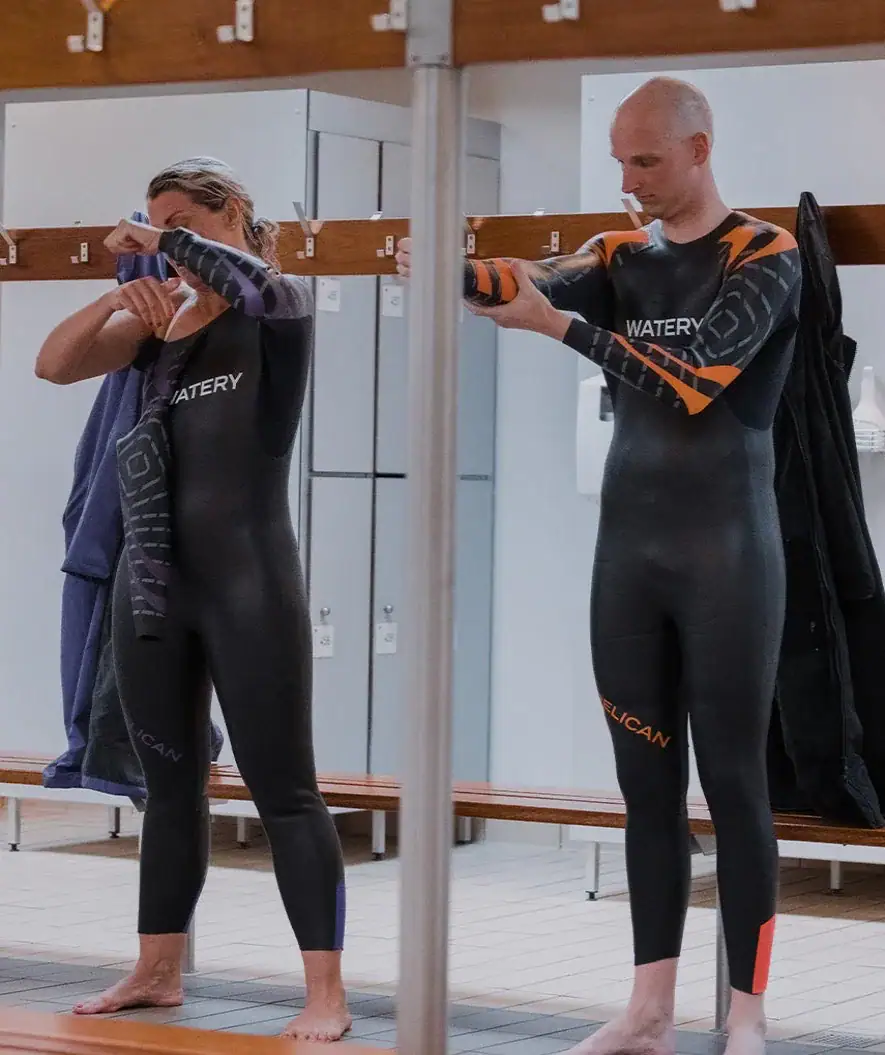
This Pelican wetsuit is made from top-quality materials. Renowned for its high quality, durability, as well as increased buoyancy in the suit. This means you float to the surface more easily, while the suit remains flexible.
With these neoprene thicknesses, our Pelican wetsuit becomes super flexible, while also being highly durable and retaining heat well around the torso.
Thanks to the choice of JAKO rubber material, you get a wetsuit designed to lift the lower half of your body when you are in the water. This improves body position, reduces drag, and increases speed while saving energy. All this without compromising on flexibility when you are in the water.
“This wetsuit allowed me to swim the 1.9 km course of Rapperswil 70.3 comfortably yet quickly. It provides perfect mobility, and I had no issues with the water temperature of 17°C.” – (Emanuele P.)
“First time swimming in a real swimming wetsuit, pure pleasure, I lie better in the water and don’t have to worry about getting cold. I am strictly a hobby swimmer, with neither technique nor speed.” – (Jens S.)
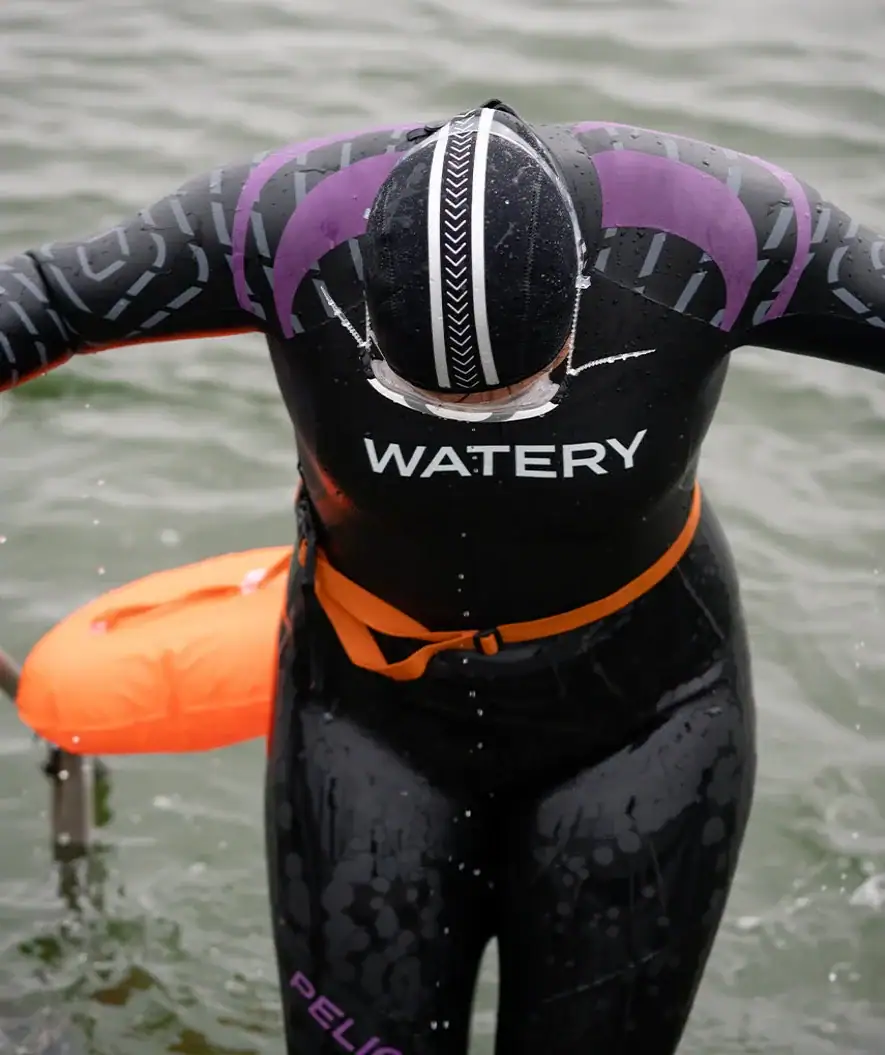
We have already named the Pelican suit for men as “best value for money” – and the women’s model deserves the exact same praise. With tailored adjustments to fit and detailing, it is designed for women looking to get started with open water swimming or triathlon – and who want to feel secure, warm, and unrestricted in their movements.
One of the things highlighted again and again is the great balance between flexibility and buoyancy. With 4 mm neoprene around the hips and thighs, you are naturally lifted to the water’s surface – which helps tremendously with both body position and energy efficiency. And with 2.5 mm around the shoulders and arms, your stroke feels light and unrestricted.
The purple colour contrast isn’t just there to look good: it also provides high visibility in the water, which is essential if you are swimming in open areas. The suit also features speed-cuff panels, which help improve your feel for the water and make it quick to take off – seriously a major advantage if you plan to use it for triathlon.
The neckline is comfortably low and seals tight without chafing, and we love the subtle details like no-leak panels and the smooth-skin surface that keeps water out and makes the suit quick to dry.
Our assessment is that the Pelican wetsuit for women delivers on all the most important parameters – and more – especially for the price. It is perfect for you if you are new to open water swimming but want something durable that performs at a high level.
“Really great wetsuit for the money.” – (Lene)
“Nice design and visible when swimming in a lake..” – (Grith)
If you are looking for the absolute best of the best in wetsuits, you should go for a high-end suit. In these suits, you will find top-of-the-line technology that provides maximum buoyancy, maximum freedom of movement, and minimal drag.
Specific types of neoprene are used in different areas of the suit to maximise performance. Elasticity is the top priority, giving you a level of freedom of movement only surpassed by swimming without a wetsuit. Furthermore, the surface of these suits is crafted from specialised water-repellent materials to ensure as little drag as possible.
These wetsuits are designed with a single goal in mind: the highest possible speed in the water. Nothing else.
The Calder Rapid is one of the most advanced wetsuits in our range, and you can feel it the moment you put it on. It is developed for experienced swimmers and triathletes who want to get the absolute most out of every single metre in the water. In other words, when you REALLY want to optimize everything while swimming!
The suit is made from premium Yamamoto #39 neoprene, which is among the most flexible and durable on the market. It simply doesn’t get any better.
In addition, the suit features a smart thickness distribution (with 1.5 mm in the armpits and collar and up to 3.5 mm on the thighs), combining buoyancy and freedom of movement in a well-thought-out way.
The difference is especially noticeable around the arms: here, the neoprene is thin enough that it almost feels as if you aren’t wearing a suit at all. And with Speed-cuff panels on the forearms, you get a great feel for the water during your arm stroke.
The breakaway zip on the back is another great feature: ESPECIALLY relevant for triathletes who need a quick transition from water to bike.
The Calder Rapid is designed for those who have put in the kilometres and know what they want. It is not primarily aimed at beginners, but in return, it offers high-level performance – right from the very first metre in the water.
“Very comfortable wetsuit in great quality” – (Mathias)
“Highly recommended.” – (Marc)
We just wrote about the men’s model of the same wetsuit. And this one is at the exact same high-end level, simply tailored to the female body. If you do triathlons or swim open water regularly, the Calder Rapid women’s edition is one of the best choices you can make.
The suit is built for speed and flexibility: with 100% Yamamoto #39 neoprene and a special thickness distribution that supports a natural flow through the water. Extra care has been taken with comfort around the neck and shoulders, giving you maximum freedom of movement without sacrificing buoyancy where it really counts.
Many women highlight that the fit in this model works exceptionally well: it contours to the body without pinching, which means less fatigue and more energy—both for training and competition.
Then there are the small details that make this suit extra triathlon-friendly: speed-cuff panels at the wrists and ankles that make stripping it off super easy. The special breakaway zip at the back that actually works when you have sweaty fingers and a racing pulse. And SCS smoothskin that glides through the water and reduces the suit’s weight when you exit.
The Calder Rapid for women is for anyone who is a natural in the water and looking to achieve maximum performance with minimal fuss.
“I competed in a triathlon yesterday wearing this wetsuit and was very satisfied! I had plenty of freedom of movement and could quickly and easily get out of the wetsuit after the swim.” – (Clara B.)
“Very comfortable wetsuit in great quality.” – (Dorte)
Besides the wetsuit itself, there is also a range of products designed to help you enjoy a safer and more comfortable open water swim. Because let’s be honest, we all know that swimming in the sea and lakes can be a chilly experience in Ireland.
That’s why I’ve rounded up a selection of products below that I regularly use myself during my open water swims.
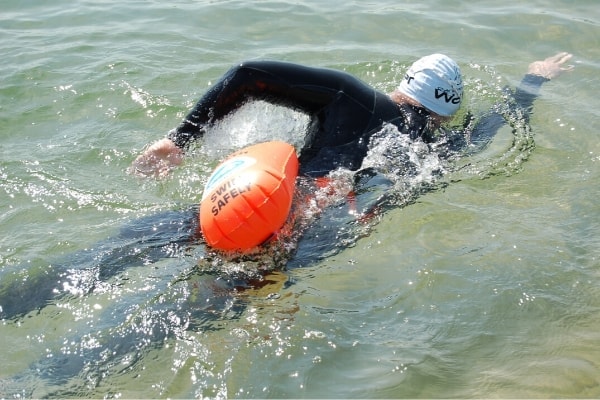
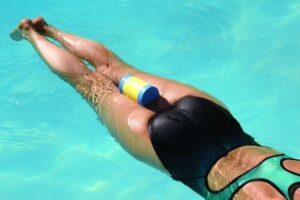
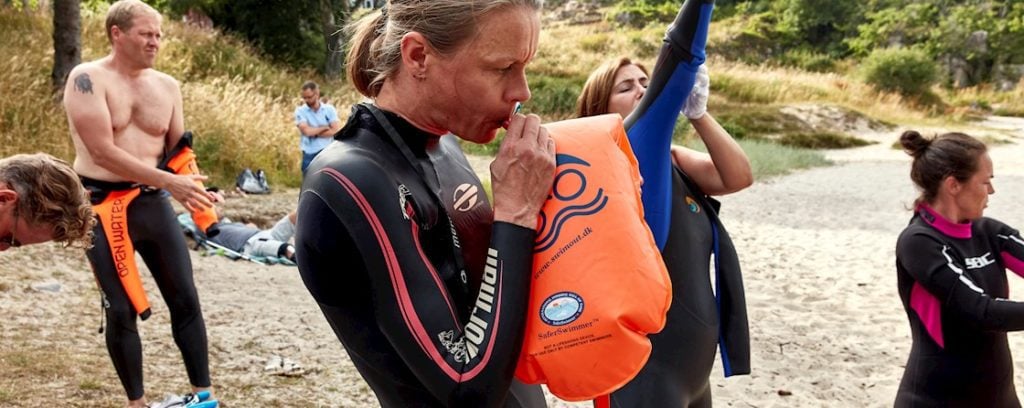
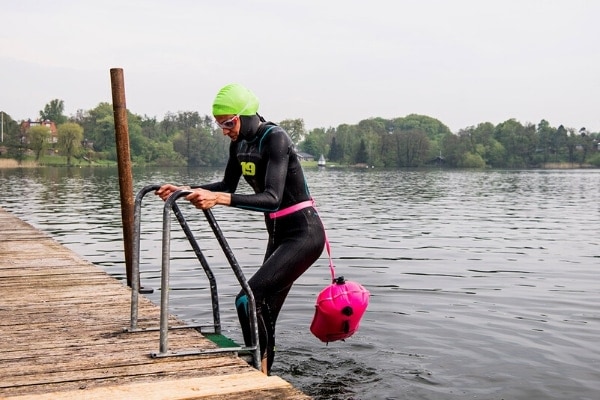
With a swim buoy – also known as a SafeSwimmer – you gain several advantages. First and foremost, it makes you significantly more visible to other water traffic. It does this because you strap it around your waist with a belt, and it trails right behind you wherever you swim.
By having this type of buoy constantly floating alongside you, it makes it much easier for boat traffic, jet skis, and other swimmers to spot you. Even if you have brightly coloured sleeves on your wetsuit, a swim buoy will still make you considerably more visible since it stays on top of the water at all times.
In addition, you will also be much easier to spot for people watching from the shore.
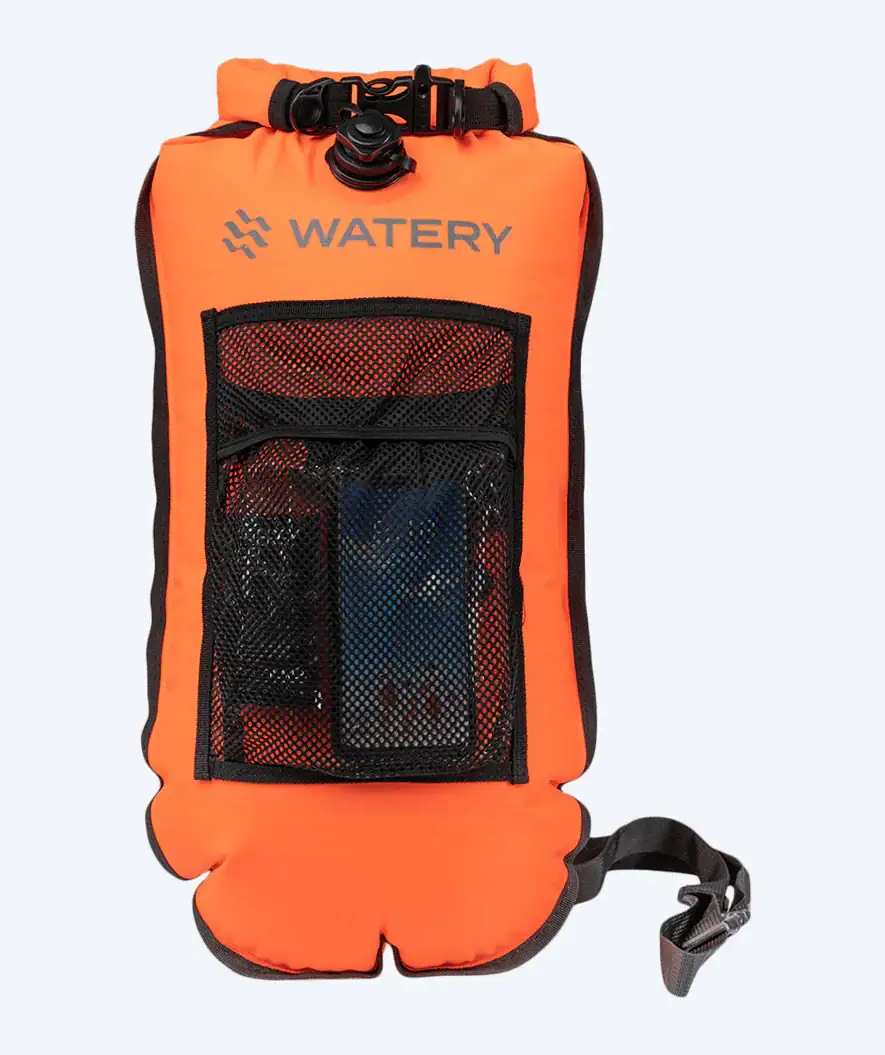
Beyond the safety aspect, a swim buoy also serves the very practical purpose of letting you bring your wallet, keys, and phone out onto the water thanks to its built-in dry storage compartment.
Having your phone with you can also be a vital safety benefit, as you can quickly grab it and call for help if you ever find yourself in trouble at sea.
That makes a swim buoy an absolute must-have whenever you swim in open water, regardless of the season.
On top of that, a swim buoy is an affordable investment – especially considering your personal safety.
The vast majority of us wear a swim cap when swimming in the pool. And even more people wear a swim cap in open water.
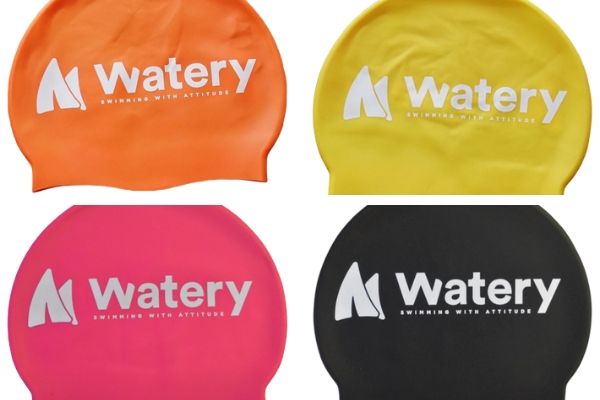
Besides protecting your hair, the swim cap also serves the purpose of making you easier to spot in the water. Just like a swim buoy, provided you remember to use a swim cap in bright, vibrant colours that are easy to see.
I personally use this swim cap in orange, as orange in particular makes it exceptionally easy to spot in dark water.
So besides looking after my hair, it also helps me stay visible to other water traffic.
Colours like yellow and pink are also great choices that are easy to spot in the water. On the other hand, steer clear of colours such as blue, grey, black, or other dark shades. They quickly blend in and disappear against the dark water.
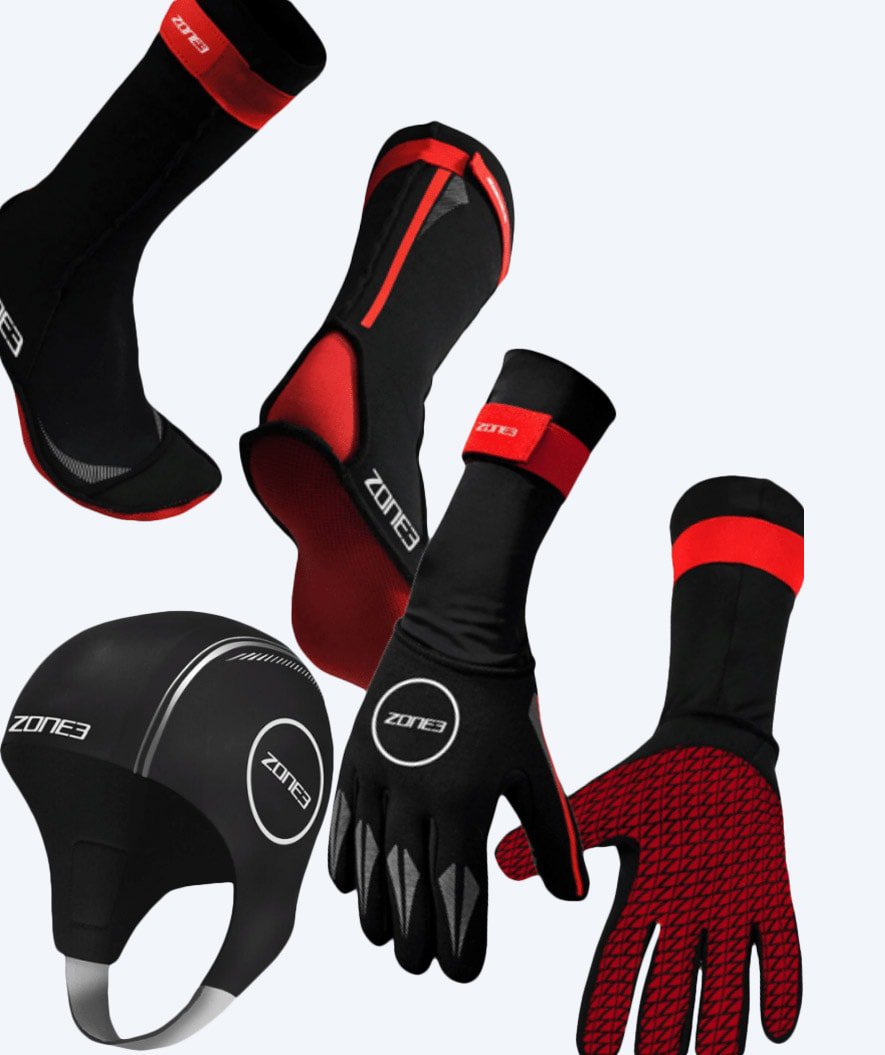
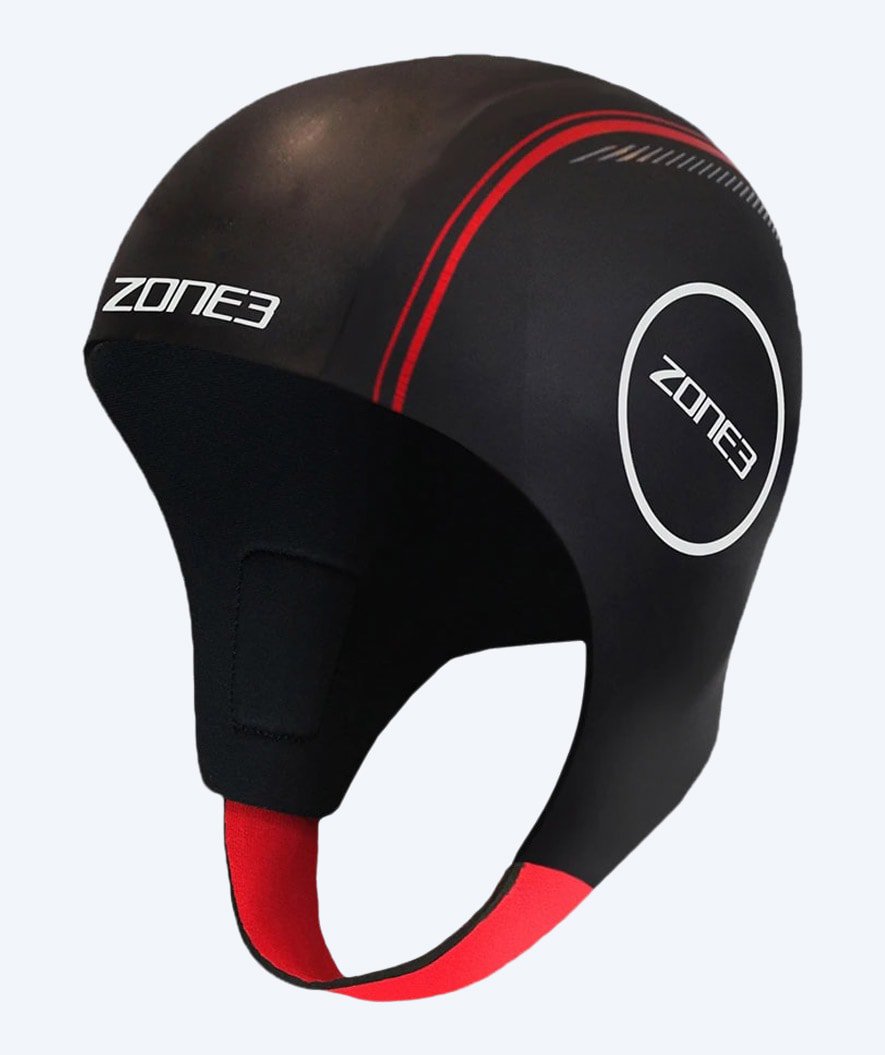
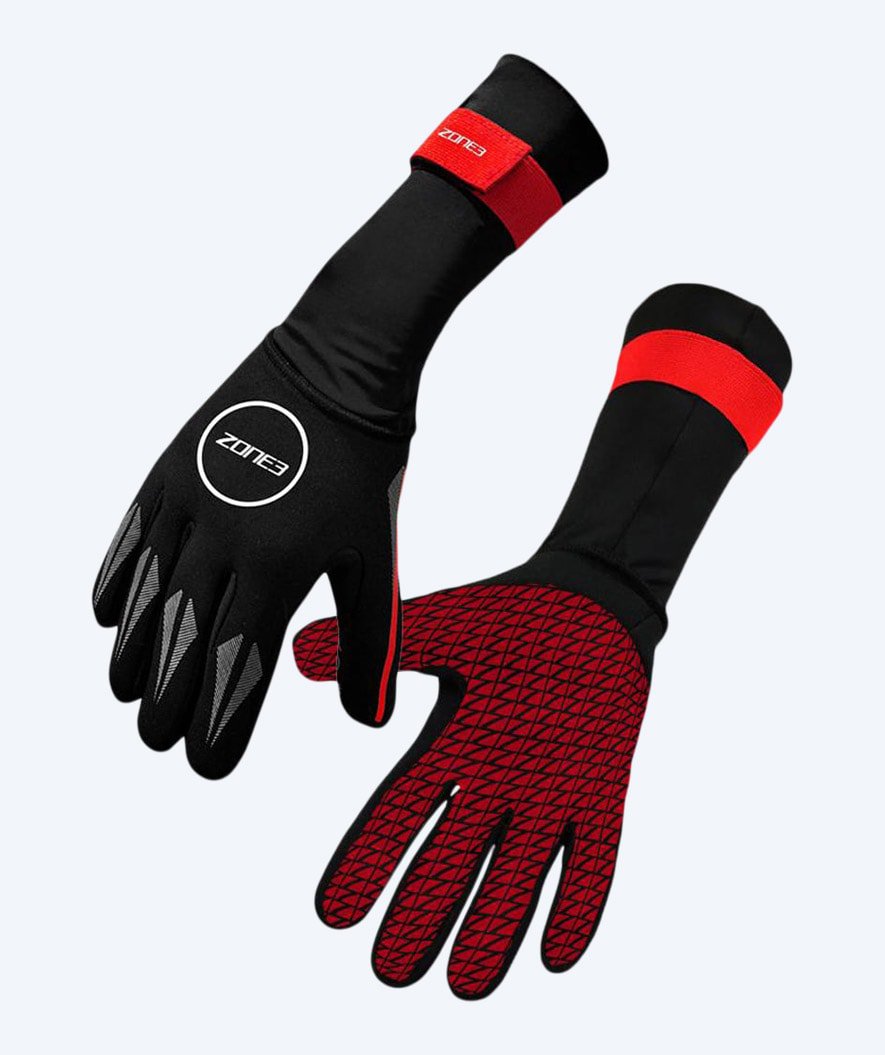
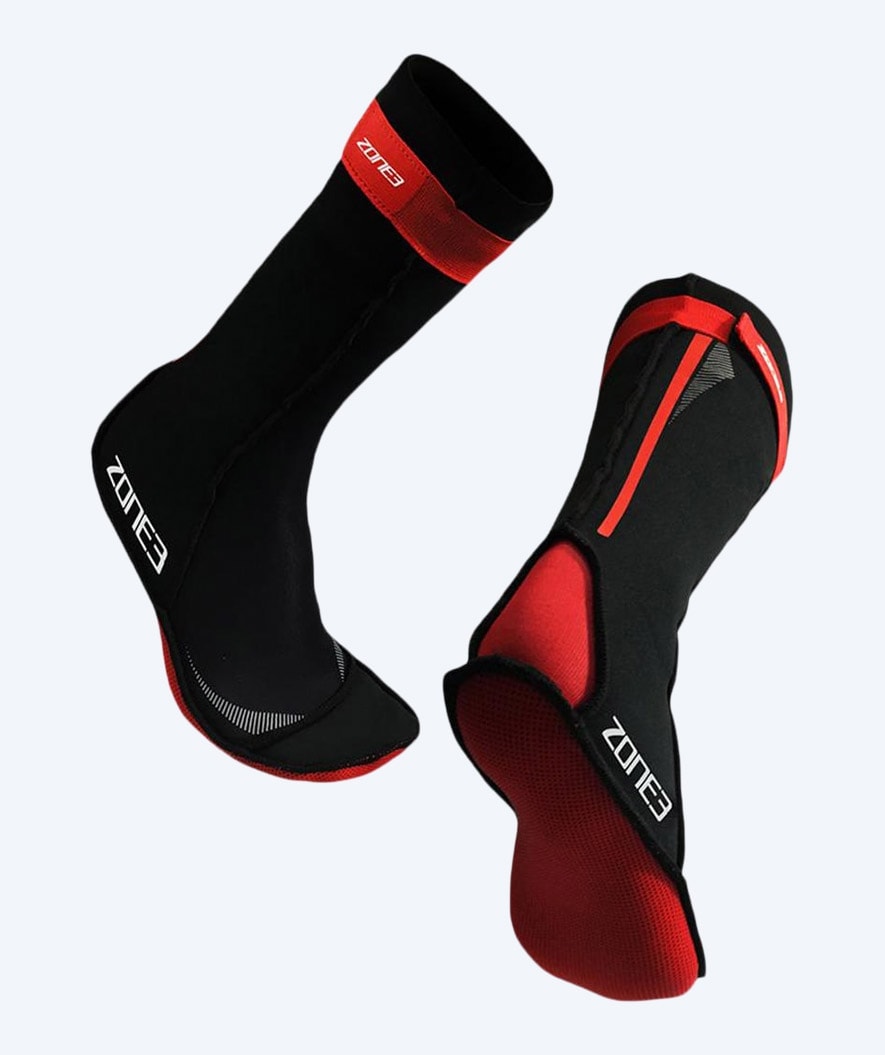
Particularly during the shoulder seasons—meaning spring, early summer, late summer, and autumn—I use neoprene boots, a neoprene cap, and gloves. They help keep me warm in the water, which in early and late parts of the year isn’t at the most ideal temperature for staying in for long periods.
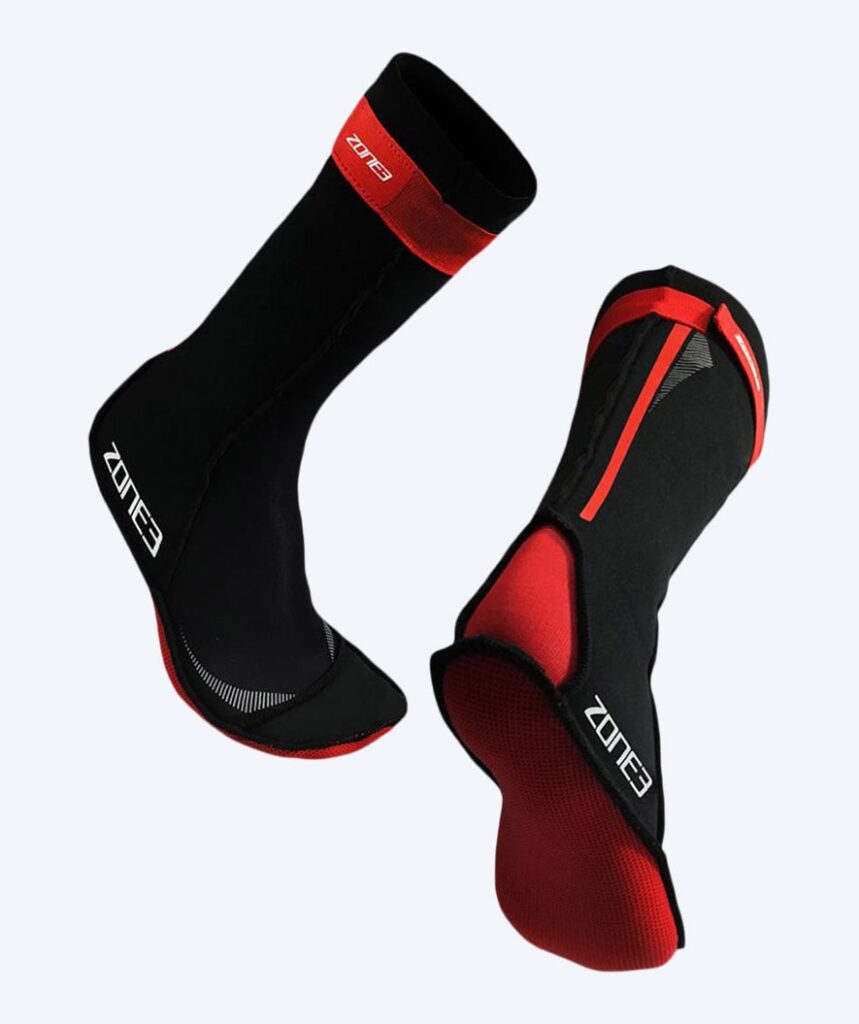
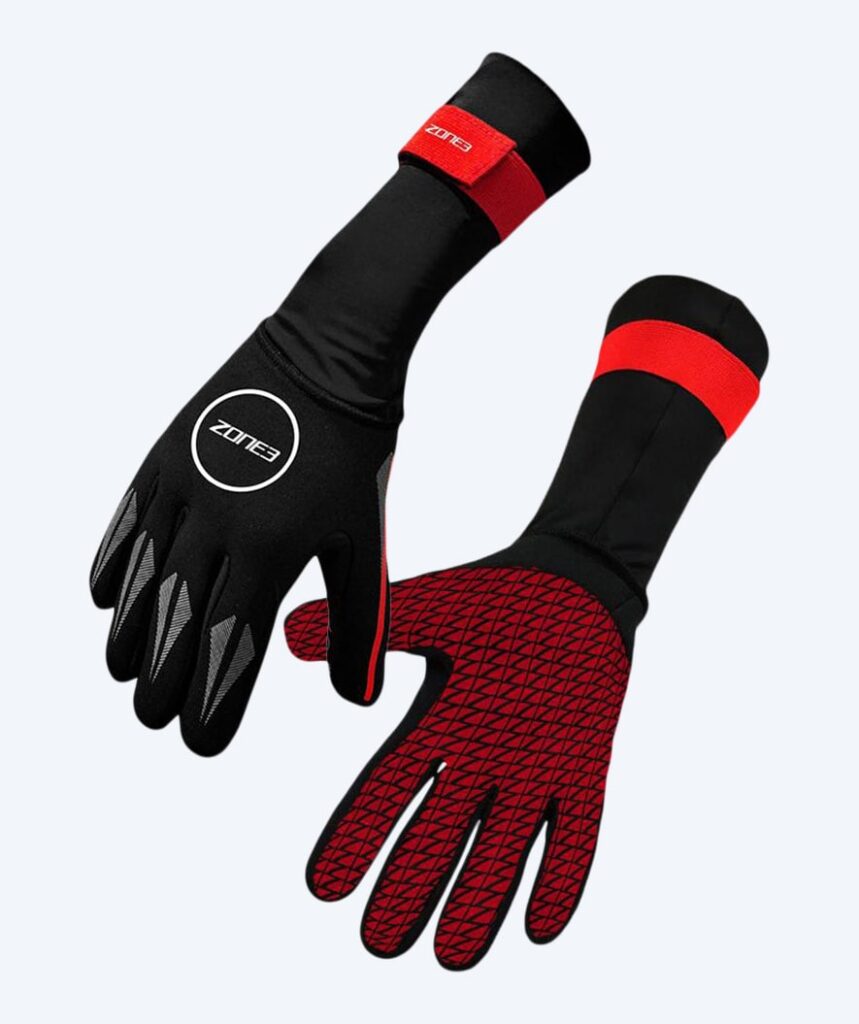
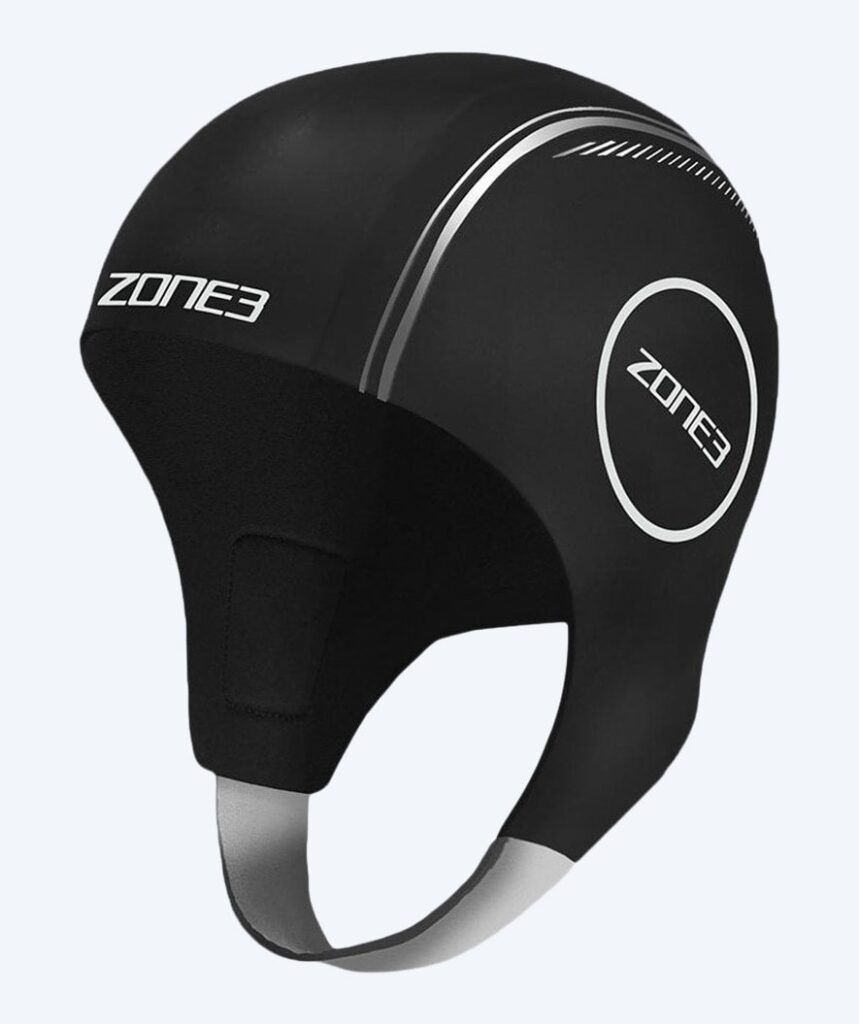
I am especially fond of the cap and foot protection, as they truly extend the amount of time I can spend in the water during the shoulder seasons. The gloves, however, reduce your feel for the water slightly, so I only use them when the water is cold enough that I feel they are necessary. It is a matter of personal preference though, and if gloves help you stay in the water longer, they are definitely worth the investment.
Please also note that neither gloves, caps, nor boots are permitted for use during official competitions. Gear like this is therefore purely for training purposes, for which it is exceptionally well suited.
The neoprene swim cap I use is this one from Orca. The neoprene gloves I use are these from Zone3. And the boots I use are these neoprene swim socks from Zone3.
When I swim in the pool, I don’t need much peripheral vision. On the other hand, I really need it when swimming in open water so I can better navigate, spot other swimmers, boats, or potential hazards.
Traditionally, pool goggles don’t offer a particularly wide field of vision. Triathlon goggles, however, have a larger frame with wider lenses that help provide a broader view.
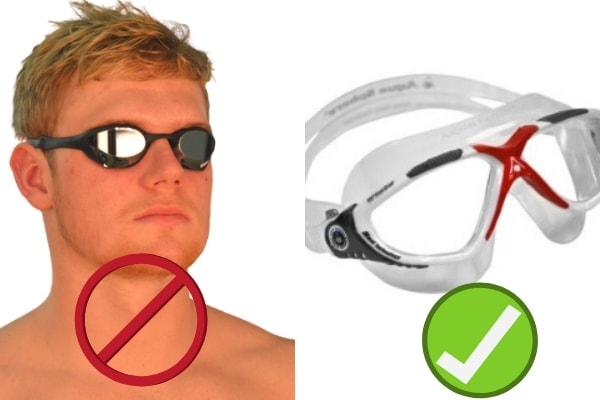
In addition, triathlon goggles usually come with Smoke, Mirror, or Polarized lenses, all of which help prevent glare from the sun.
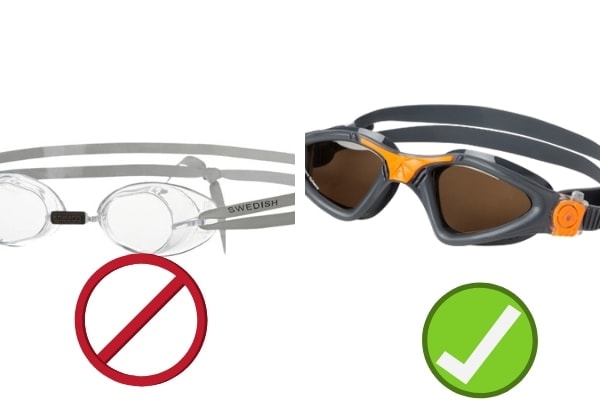
Ever since I started using tri-specific goggles, it has made a world of difference for my open water swimming. And I’m certain they will do the same for you.
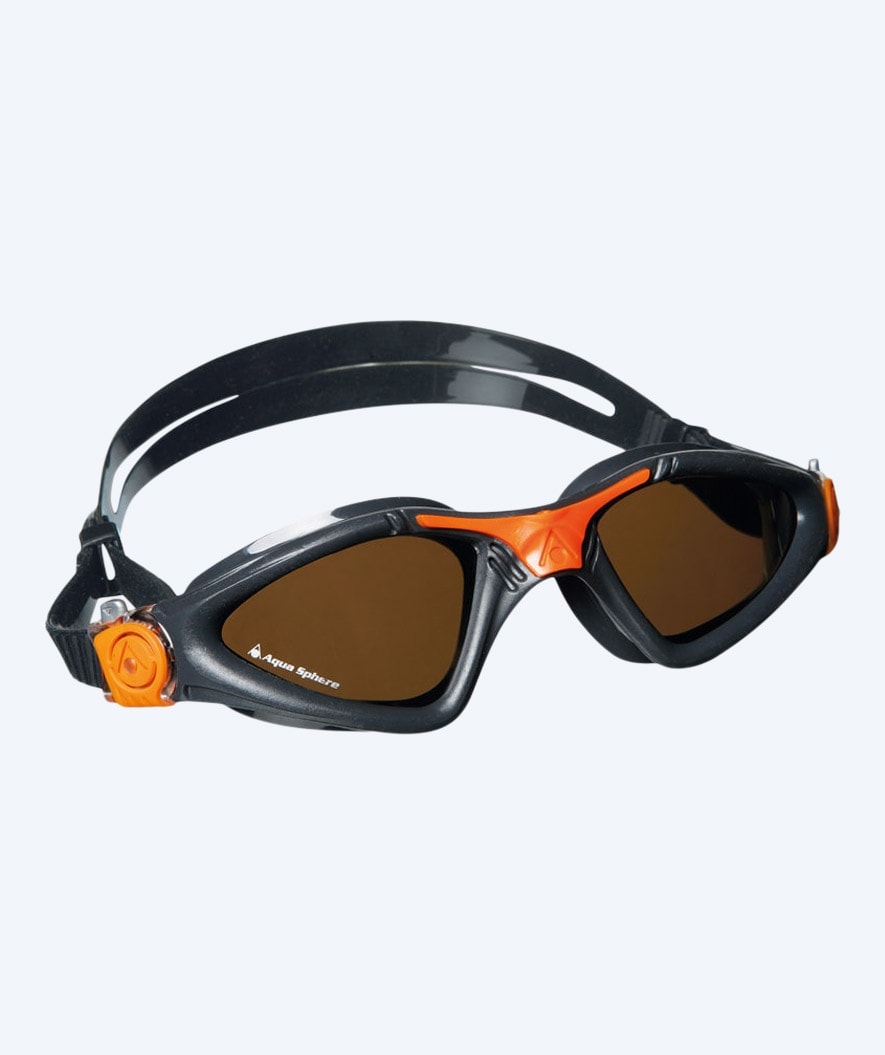
The goggles I use for open water swimming are these Aqua Sphere Kayenne.
Thousands of years ago, entire groups of people migrated across Europe and settled in cooler northern climates. What they didn’t realize back then was that a few thousand years later, their descendants would take to the surrounding waters and lakes for sport.
This is despite the fact that Irish waters are, for most of the year, far too cold to stay in for long periods without the risk of hypothermia.
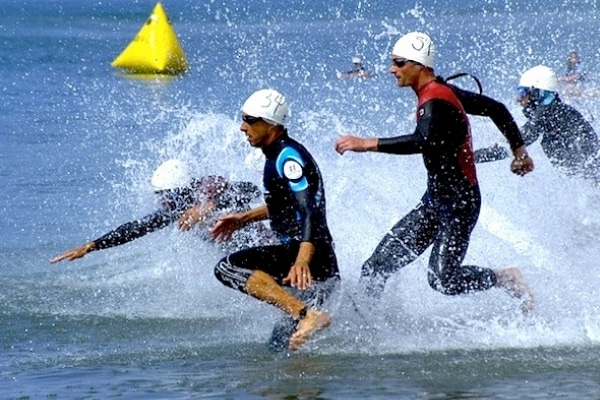
Fortunately, wetsuits have since been invented to help swimmers stay warm for hours in the water. Moreover, wetsuits have the added advantage of providing significant buoyancy, keeping you much more streamlined in the water.
In particular, the buoyancy and reduced water resistance mean it is not uncommon to shave two minutes off your usual time over 1,000 metres. And for some swimmers, even more.
The fact that buoyancy and reduced drag can take a substantial chunk off your normal swimming times brings me to the next point: What is a wetsuit actually made of that gives it such great properties?
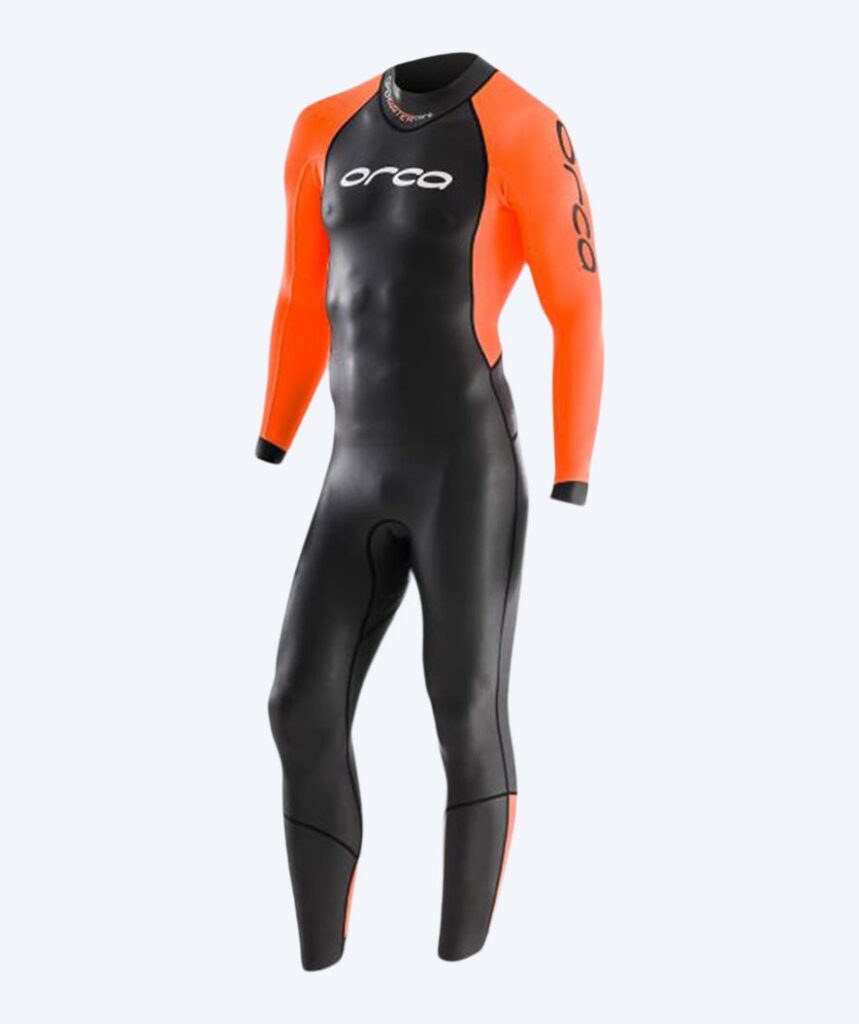
Well, the answer is short and simple. It is made of neoprene and nylon.
The primary material used in a wetsuit is neoprene. Neoprene has a very smooth outer surface, which allows water to glide past more easily, reducing drag as you swim through it.
However, the greatest strength of neoprene—at least when it comes to speed in the water—is that it contains countless tiny air bubbles inside, naturally pulling the suit towards the surface and giving you buoyancy.
Among other things, this buoyancy keeps your legs from sinking, which would otherwise be the main cause of drag.
In addition, neoprene is insulating, helping your body retain heat much more easily.
On the other hand, neoprene is quite a fragile material. That is why nylon is also used in a wetsuit—simply to reinforce it so it doesn’t tear when you pull it on.
A select few suits are made entirely of Lycra from top to bottom, inside and out. However, these provide no buoyancy and are mostly used for spearfishing in tropical waters, where the main purpose of the suit is protection against the sun and jellyfish.
So for open water swimming, both here in the cooler Irish waters and in warmer waters further south, a traditional neoprene wetsuit is by far the best choice.
With the material and its properties covered, it’s time to take a closer look at the thickness of the suit itself. Wetsuits come in different thicknesses, each with its own pros and cons.
In short, wetsuits are generally available in 3, 5 or 7-millimetre thicknesses. These are certainly the primary standards. Each thickness has its own distinct advantage, but with that advantage also comes a drawback.
Keeping these pros and cons in mind, why not just go for the middle-of-the-road 5 mm thickness, which gives you a bit of the best of both the thinnest and thickest models?
That is indeed what many open water swimmers do. However, there are still ideal use cases for each wetsuit thickness, which I will outline for you here:
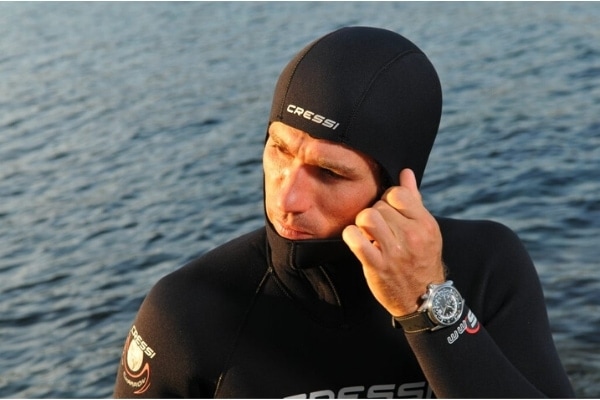
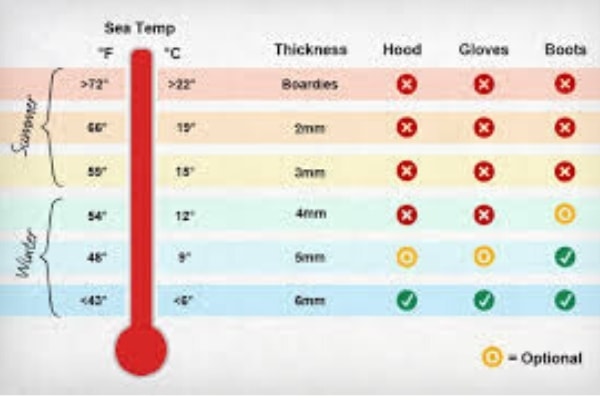
With the properties and uses of the different thicknesses established, the choice for divers is fairly straightforward. If you are a diver, all else being equal, you should choose the thick suit.
On the other hand, if you are a triathlete or open-water swimmer, the choice is between 3 mm and 5 mm, primarily due to the need for a balance between freedom of movement and buoyancy.
Fortunately, manufacturers have cleverly combined the two thicknesses in most suits. Around the shoulders and arms, where maximum flexibility is essential, 3 mm neoprene is used. Meanwhile, on the legs, chest, stomach, and hips, 5 mm neoprene is used to increase buoyancy without compromising freedom of movement around the shoulders and arms.
In my opinion, a wetsuit combining 3 mm neoprene around the shoulders and arms with 5 mm neoprene around the legs, stomach, hips, and back is the absolute best type of wetsuit for triathletes and open-water swimmers.
Please also note that if you plan to use your wetsuit for both national and international triathlon and open-water swimming competitions, the suit cannot be thicker than 5 mm. More on that further down in the section on wetsuit regulations.
If you want to use your wetsuit in competitions governed by Triathlon Ireland (or equivalent national bodies), there are very clear rules regarding when you can wear it. This applies to dedicated triathlon events as well as general open-water swimming competitions, Swimrun events, and other open-water swimming races.
These rules stipulate when wearing a wetsuit is mandatory and when it is permitted or prohibited. The rules also state how thick a wetsuit is allowed to be for competitive use.
You can find the rules here, but I have listed the most important points below:
Maximum thickness of wetsuit: A wetsuit you intend to use in competitions may be a maximum of five millimetres thick anywhere on the suit. If your wetsuit has specific areas where it exceeds 5 millimetres in thickness, it is strictly forbidden to use and you will not be allowed to start.
If you have tried putting on and taking off a wetsuit even once before, you know without a doubt that it can be quite a hassle. Both putting it on and taking it off. At least if you want to take proper care of it.
It is the neoprene that makes it so difficult to get on and off, but conversely, it is also that snug fit against the body that allows the wetsuit to help you move quickly through the water.
It obviously takes quite a bit of practice before you can put on and take off a wetsuit in your sleep. Even after several years of open water swimming, I can still struggle a bit with it. But it has gotten much better the more practice I have had, so practice really does make perfect here.
As a general rule, I would recommend taking it easy and giving it all the time it needs. The neoprene in a wetsuit is quite delicate, so if you are too eager, you can easily end up poking holes in it. And that would be a shame on a brand-new wetsuit.
Once you have the wetsuit on, it also has to come off again. And in triathlon competitions where every second counts, there’s no time to fiddle around carefully removing the suit.
Here, it is simply important to remove the wetsuit in the right steps. To help with this, two of Denmark’s best triathletes have made a video that illustrates the process very well.
Essentially, you just push your goggles up onto your forehead as soon as you exit the water, unzip your wetsuit, and pull it down off your upper body so it hangs around your hips while you run. Then take off your swim cap and goggles the moment you enter the transition area, after which you strip the rest of the wetsuit off your legs as soon as you reach your transition spot.
It takes practice, and many of the top triathletes can take off the suit while putting on their bike helmet. They do this to save as much time as possible in the transition zone, allowing them to get out onto the bike course faster.
Practice makes perfect. Practice it many times at home, and it will go smoothly on race day.
A wetsuit can quickly become an expensive investment, which is why we all want to get as much life as possible out of our suits. There is no doubt that a wetsuit is a delicate piece of gear, but if you follow my six tips below, you will significantly extend the lifespan of your new suit.
I follow my own advice to the letter, and it really works.
If you follow every single point to the letter, there is no doubt you will significantly extend the lifespan of your new wetsuit.
If bad luck strikes and you get a tear or a hole in your wetsuit, it can usually be repaired. Fortunately, because it would be a shame to throw away a wetsuit worth several hundred euros over just a single hole or tear.
Whenever I have managed to tear or put a hole in my own wetsuit, I have followed the video guide below to repair the damage. And it works.
Best of all, it is a fairly simple job that only requires a permanent marker and a tube of neoprene glue. And of course, your damaged wetsuit.
The size of your new wetsuit is absolutely essential for getting the most out of its features. If the wetsuit is slightly too small, it will feel too tight around the shoulders and arms, restricting your freedom of movement. It will also make it harder to breathe properly.
If the wetsuit is too large, on the other hand, it will let water in more easily. This causes discomfort as cold water enters the suit, and small pockets will automatically form inside the suit itself (typically under the arms and in the groin area), where water gathers and thereby increases drag.
That is why it is important to choose the right size, which, on the other hand, can almost be a science to figure out.
However, below I have gathered links to the major brands’ size guides, making it easier for you to find out which suit size to choose based on your own measurements.
Please note that these size guides are based on height and weight, which is usually a fairly accurate indicator of the size you need. If you happen to fit into several different sizes, a good rule of thumb is to go for the one that best fits your weight among the suits that match both your weight and height.
Your circumference is usually the decisive factor in how well the wetsuit fits. So in this case, height is more secondary.
When you try on a wetsuit for the first time, it is important to feel how well it fits your body. And the most important thing here is that it sits snugly around the neck. If you can barely fit your index finger between the wetsuit and your skin, it fits correctly.
If the suit does not fit snugly around the neck, cold water will constantly flush through. That destroys the insulating effect of the wetsuit, which is far from ideal.
By the way, it is completely normal for a wetsuit to feel very tight on land. Once you get into the water, a small amount of water will naturally enter the suit, causing it to expand slightly so it becomes more comfortable.
Therefore, the first thing you should do with your new wetsuit is to jump into the water with it. That is where you can truly feel whether the size is right or not.
If you are completely new to open water swimming, it can be very tempting to try out the discipline with a used wetsuit before investing in a brand new one. In itself, it’s not a bad idea, as buying, renting, or borrowing a used wetsuit is an inexpensive way to find out if open water swimming is for you.
However, the open water swimming experience won’t be quite the same in a used suit compared to a new one. Just like with shoes, a wetsuit adapts to the user over time, which doesn’t take much more than a few uses.
When you slip into a used wetsuit, it is therefore practically guaranteed not to fit you the way it would if it were new. It will have shaped itself to the previous user(s), who might share your height and weight, but have a completely different build.
If you rent a wetsuit, you should also be aware that it is rarely possible to test the suit before an event, unless you rent it for several days (which can quickly become expensive).
A good rule of thumb is that you should never use new gear during a competition unless you have tested it during training beforehand. And if you rent a wetsuit for race day, it will be impossible for you to try it out in advance.
It can therefore be a bit of a gamble with a used wetsuit, where your experience can go either way. Regardless of whether you buy, rent, or borrow a used suit.
If you’ve previously done a longer swim session in a wetsuit, you’ve probably experienced chafing from the suit. Especially on the back of your neck. I have certainly experienced that plenty of times.
Since I started using Body Glide, however, it’s very rare that I get chafing. When it happens, it’s usually because I didn’t apply enough in the right spots.
Chafing occurs from the friction between your skin and the wetsuit, which inevitably happens as you rotate in the water, turn your head, or sight ahead. It really can’t be avoided when the wetsuit fits as snugly as it’s supposed to.
By applying a generous amount of Body Glide to the most critical areas—primarily the back of the neck, throat, wrists, backs of the knees, and ankles—you significantly reduce friction. Think of it like a dry bike chain versus a well-lubricated one. The lubricated one runs much more smoothly with less resistance.
The same applies to the contact between your skin and the wetsuit. By applying Body Glide to the areas most prone to chafing, the suit glides more easily over your skin and you avoid those annoying chafe marks.
It is crucial, however, that you use dedicated anti-chafe balm like Body Glide. Over the years, I’ve seen many open water swimmers use Vaseline, but that really isn’t a good idea.
Vaseline certainly helps in the moment, but it washes away relatively quickly in the water, leaving you back at square one. In addition, Vaseline is harmful to wetsuit materials, so you’ll also gradually ruin your suit.
If you do triathlons, there’s also a bonus to using Body Glide: by applying a good layer to your wrists, ankles, insteps, and the outside of the lower legs of the wetsuit, taking off the suit becomes much quicker and easier. That will save you precious seconds in transition.
Therefore: If you’ve been using Vaseline until now, stop and switch to Body Glide instead. Both your skin and your wetsuit will thank you for it.
Body Glide can also be purchased here.
The vast majority of this guide has focused on wetsuits for swimming, with very little mention of other types of wetsuits. However, the range of uses for the many different types of wetsuits is quite broad, so to wrap things up, I’ll explain a bit about the different types of suits and what they are used for.
Dedicated open water swimming requires a warm and flexible suit that helps you stay in the water for long periods and maintain as natural a swimming stroke as possible. These suits are generally 5 millimetres thick or less and feature a zip on the back.
The zip usually fastens from the top down on high-end race suits, but many suits also zip up from the bottom.
Since dedicated race suits always feature quite thin neoprene, their lifespan is also typically somewhat shorter than that of thicker, more affordable suits. It is therefore worth considering whether you should get a thin (and expensive) race suit for use in competitions, and a cheaper, slightly thicker suit for your day-to-day training.
Performance doesn’t matter as much during training. And with an affordable, durable suit for training alongside an expensive, more delicate suit for race day, you’ll feel like you’re flying across the water during competitions when wearing the high-end suit.
A wetsuit for scuba diving differs significantly from a swimming wetsuit in its choice of materials and where they are placed. Neoprene between 3 and 5 millimetres is still used, but nylon is often incorporated around the neoprene.
The exterior is often made of standard nylon to protect the neoprene, while the inner lining against your skin will feel plusher and softer to ensure maximum comfort.
Like a swimming wetsuit, a wetsuit for regular scuba diving is a full-body suit.
These suits are often used in water temperatures of at least 25 degrees, which is very rare in Ireland. However, they can be used effectively for shorter dives of under 30 minutes or during dive training, where plenty of movement and activity help you stay warm.
In Irish conditions, using a drysuit is recommended if you plan on doing deeper dives, such as exploring wrecks or reefs. The deeper you go, the colder the water gets. In these situations, a drysuit will keep you much warmer than a traditional scuba diving wetsuit.
Unlike a traditional diving wetsuit, a spearfishing wetsuit stands out by being two-piece, having an integrated hood, and having no zip.
It is very tight-fitting and usually needs to be put on using water and soap.
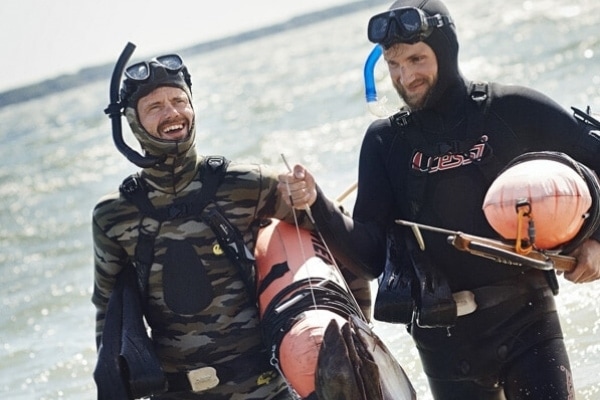
Insulation is paramount, which is why 7 mm thick neoprene is typically used in Ireland. This means that freedom of movement is not particularly great, but in return, it helps keep the spearfisher comfortably warm almost all year round.
On the other hand, the reduced freedom of movement means that even standard arm strokes, as seen in breaststroke or front crawl, are quite difficult. Propulsion is therefore primarily achieved through kicking.
A spearfishing wetsuit often features reinforced knees and elbows, and it frequently includes a loading pad on the chest.
When it comes to freediving, the most important thing is being able to achieve a long, effortless glide. A freediving wetsuit is therefore often very tight-fitting in order to be as streamlined as possible.
Thermal insulation, on the other hand, is not a key property, as freedivers are limited in how long they stay underwater at a time. Buoyancy in a freediving wetsuit is also not the main priority, as it will simply pull the freediver upwards.
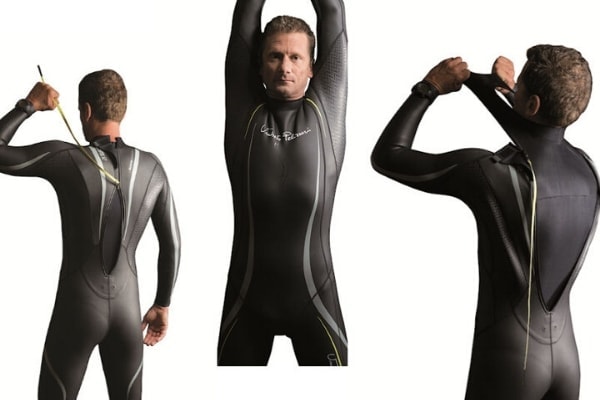
These suits are therefore designed for three purposes: to achieve as long and effortless a glide as possible, to provide good freedom of movement for powerful breaststroke kicks and pulls, and to help keep the freediver’s core stable to remain as streamlined as possible.
A kids’ wetsuit, as most people know it, is often a slightly misleading term. Frequently, it is not the properties of a wetsuit that parents are looking for, but rather UV protection. That is why most of these suits are called sun suits.
Sun suits certainly provide plenty of UV protection, but the amount of neoprene in these suits is relatively low, meaning they do not offer much warmth. A sun suit is therefore primarily suitable for use on the beach or by the pool in warmer climates.
Sun suits often feature short arms and legs (most commonly on suits for children up to 6 years of age), which means the insulation of these suits is very limited. In return, they provide a bit of buoyancy, which can be reassuring for both the child and parents.
From age 6 and up, it is easier to find proper wetsuits that fully cover both arms and legs. This significantly improves insulation and can help extend the beach and pool season considerably.
We have put together a comprehensive guide to the best wetsuits for children, which you can see here.
There are now quite a few retailers selling wetsuits, so it can be difficult to figure out where to shop.
At Watery.ie, we generally offer low prices and a product range that is carefully selected with a focus on quality. The company is backed by a former elite swimmer, which helps ensure that the gear meets the demands of many water sports enthusiasts. This provides peace of mind when investing in a new wetsuit – which is often a major expense.